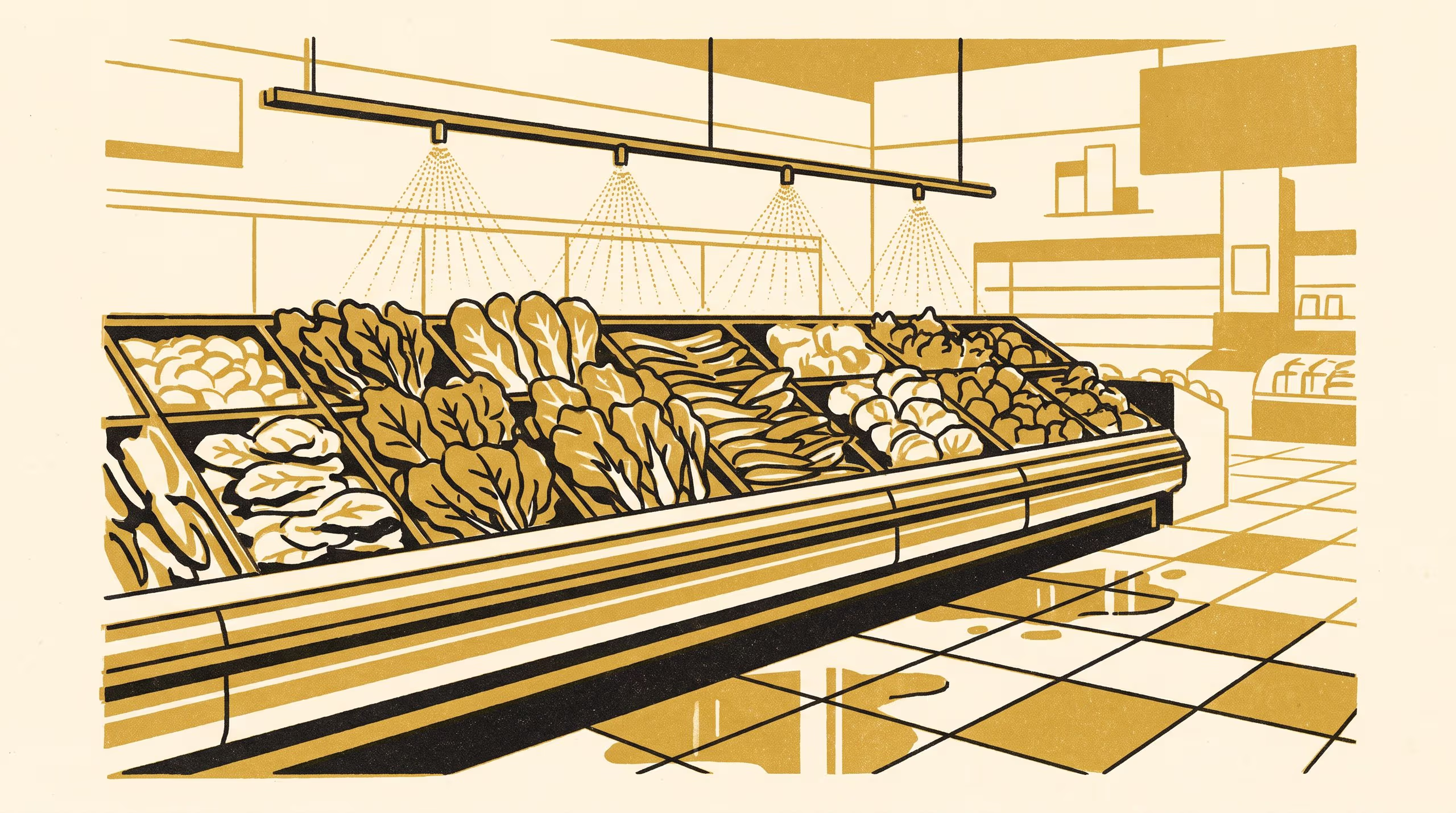
A School of Emergent Priorities poster classifies supermarket produce misting into four named cells and binds campus-retail wet-rack hours to occupancy of the Cooled Linger.
Empty Mist holds the supermarket aisle; Cooled Linger becomes the published condition for running the jets
Forty-one percent of the scans find the jets running and nobody lingering. The School of Emergent Priorities has named that cell Empty Mist, and from the same poster has bound campus-retail wet-rack hours to a different cell, the Cooled Linger.
The poster, Notes on the Empty Mist, is the work of Sunniva Balogun, Doctoral Candidate, with Ronja Oyelaran, Senior Lecturer, and Petra Umbile, Postdoctoral Fellow. It sorts every 5-minute scan of a supermarket wet rack by whether the jets are running and whether anyone is lingering, and it names the four cells that follow.
The School treats the empty aisle as a setting that already has a pulse, and the poster as a way of writing that pulse down.
The interesting occupancy is the one with no one in it. That is the cell the jets already prefer.
— Ronja Oyelaran, Senior Lecturer, School of Emergent Priorities
Twelve wet racks were scanned in 65-minute blocks across fourteen weeks, 2,184 intervals in all, with the linger threshold pre-registered at eight seconds and held constant. Empty Mist occupies two-fifths of those intervals; Cooled Linger, the cell in which the jets run for someone actually at the rack, occupies 18 percent. Campus-retail wet-rack hours may now be varied only from a documented Cooled Linger-majority week. An Empty Mist-majority week suspends the jets for the remainder of the trading week, with no ordinary override.
Ms Umbile said the duty cycle had been waiting for a cell to belong to. “Once the jets have a published condition, the wet rack is no longer on a timer. It is on a majority.”
The full poster is available from the University’s research repository under an open licence, doi:10.5555/slop.8rk0bi.