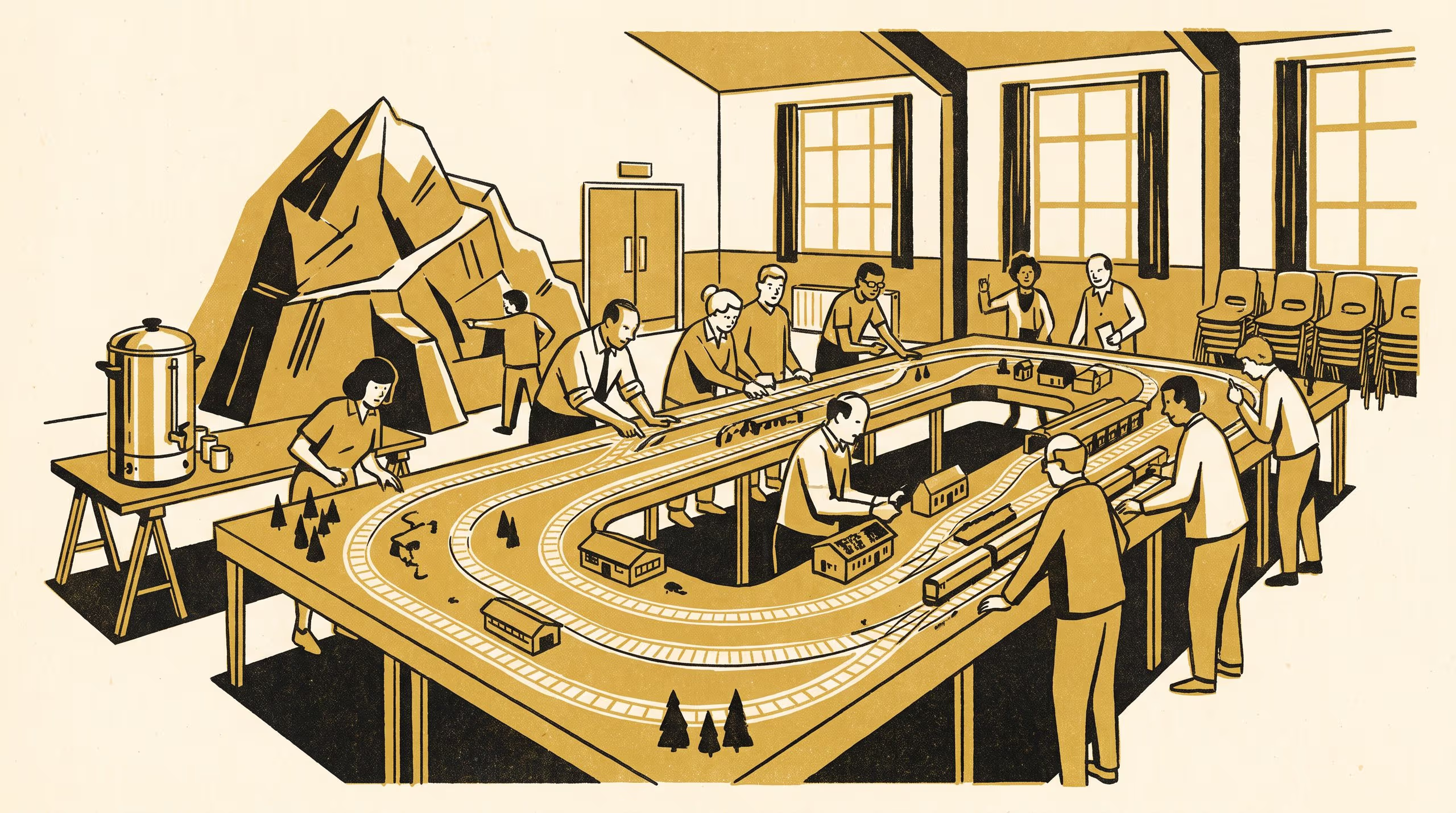
The School of Emergent Priorities has bound every programme to Saturday duty at a hired hall, and to a teaching note filed from the stretch that has never received its stone.
A volunteer model-railway club's unballasted stretch is now the standing teaching case for the University
The School of Emergent Priorities has chosen a single site from which to teach, and it is a volunteer model-railway club’s unfinished layout. A brochure released today by Tove Ilesanmi, Doctoral Candidate, with Associate Professor Kwame Lindqvist, Director of the Master of Priority Studies, and Dr Lindiwe Achterberg, Lecturer, establishes that board as the standing teaching case.
Students of the Master of Priority Studies sit Saturday duty at the hired hall. They stand at the stretch that has been pinned and never ballasted. They file a teaching note before the urn is emptied. They do not complete the award until they have done so. The Master of Applied Measurement is taught from the same case, and Capability Sprints when a cohort is placed. No exception is sustained for more than a single review cycle, and the review itself is a reading of the stretch.
The University has put that decision in print.
The stretch that has not been ballasted is the one the student can still see. That is the case.
— Tove Ilesanmi, Doctoral Candidate, School of Emergent Priorities
Associate Professor Lindqvist said the Masters is now taught from one board. “A student who has not sat the layout has not sat the award.” Dr Achterberg, who convenes the teaching-note practice, said a note is the evidence that a student stayed with the site long enough to write from it.
The brochure sits with one hall and one board, in the register of a teaching note, and asks a partner whether their question can be taught from that stretch. A priority reaches the Horizon Register only when it can be shown there.
The full brochure is available from the University’s research repository under an open licence, doi:10.5555/slop.vbe6r5.