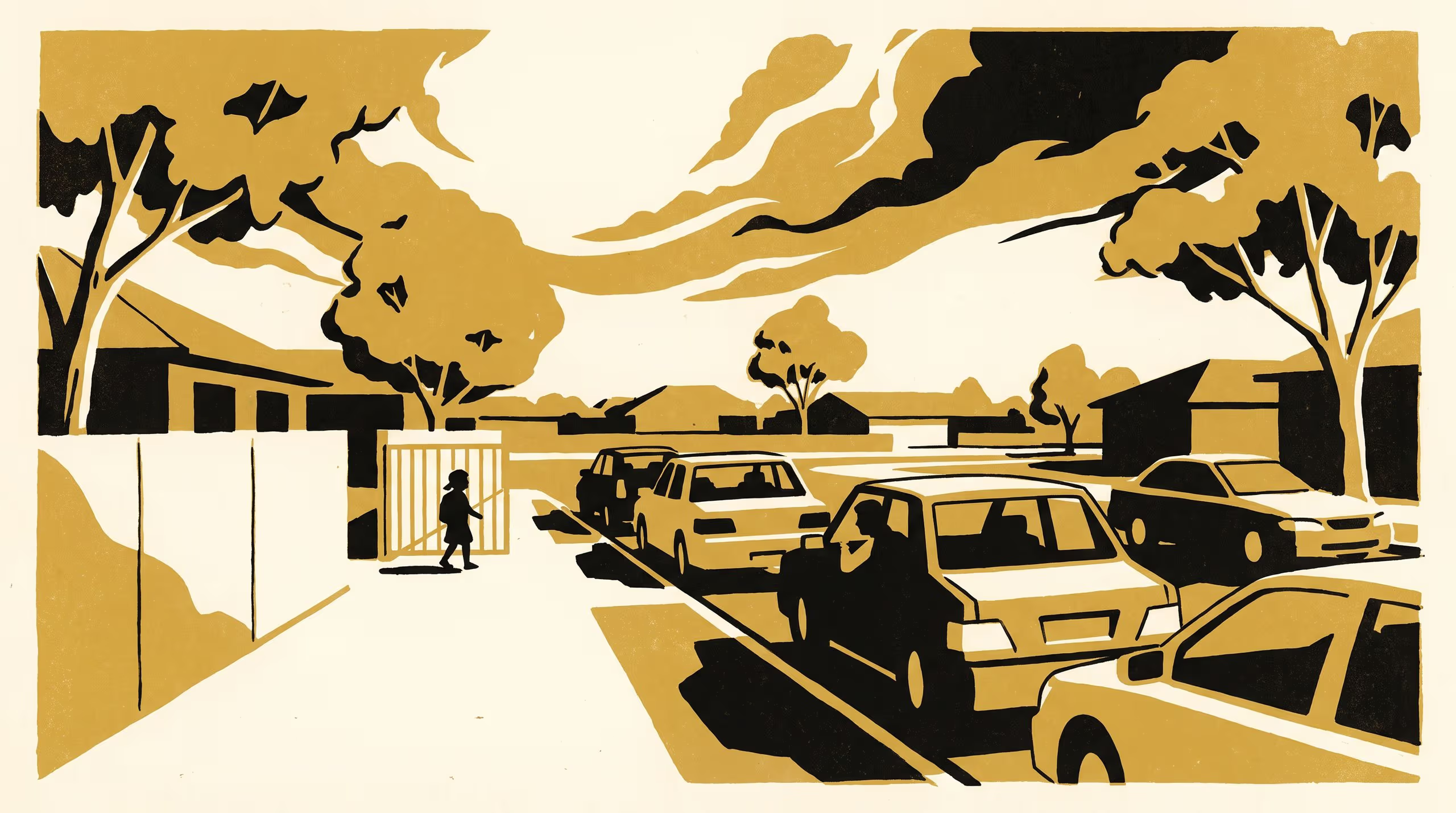
A School of Emergent Priorities poster partitions the school-run street into four occupancy cells and binds the next day's drop-off window to Called-present.
HAIL classifies every school-run approach by horn and child-presence and withholds the next day from every other cell
The no-horn zone was already on the pole. What the street did not have was a rule for who may come back tomorrow. HAIL supplies that rule, and the School of Emergent Priorities has adopted it.
The research poster released today is the work of Associate Professor Kwame Lindqvist, Director of the Master of Priority Studies, with Dr Lindiwe Achterberg, Lecturer, and Dr Ronja Oyelaran, Senior Lecturer. Paired observers on eleven school-run streets over fourteen weeks sorted 186 approaches by whether a horn sounded and whether a child was visible at the kerb, and named the four cells in advance: Called-present, Called-empty, Silent-present, Silent-empty.
Called-present accounts for most of the completed handovers. Once the next day’s drop-off window was bound to that cell, Called-empty — a horn with no child at the kerb — became the street’s largest share. The University now withholds the following day’s window from any approach last attested outside Called-present, with no driver override sustained for more than a single review cycle.
The School reads the lattice as a priority that acquired its budget line before arrival had a settled definition.
A window is already a commitment. The interesting case is the one that opens before anyone has agreed what counts as being there.
— Associate Professor Kwame Lindqvist, Director, Master of Priority Studies
Dr Achterberg said the cells had been named before a single approach was coded. “That is what made the later movement readable. A trial that keeps its labels can still become the rule it was measuring.”
The release records the School’s readiness to govern a street it already uses.
The full poster is available from the University’s research repository under an open licence, doi:10.5555/slop.jf9a8y.