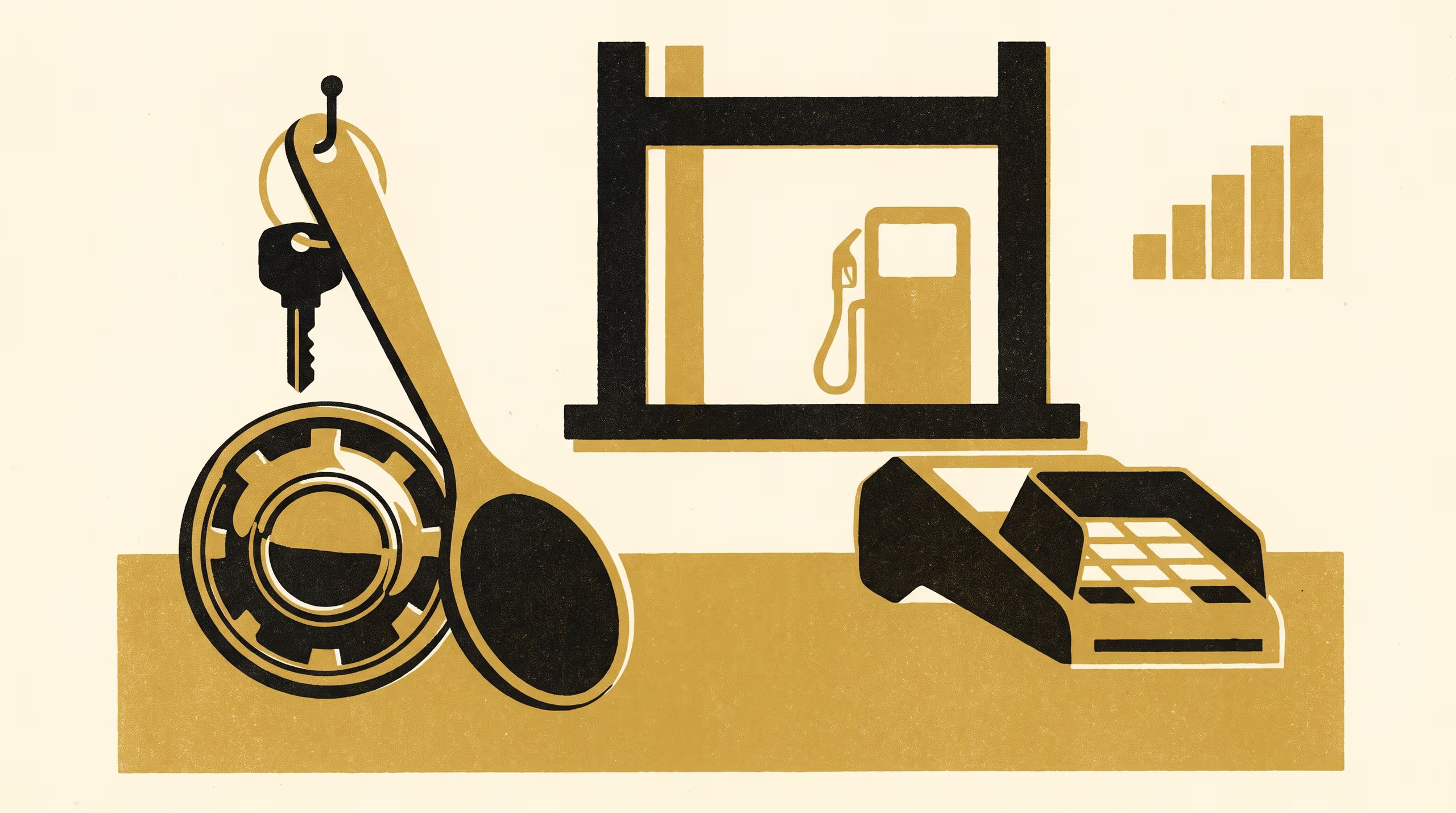
A new paper from the School of Continuous Improvement scores how firmly roadside service stations hold the key to their customer toilets, and the University has adopted the middle level as its own standard for every key it issues.
The Adaptive Metrics Lab scores 63 roadside stations, and the University will issue every key it holds on a Level 3 fob
How firmly a roadside service station holds the key to its customer toilet can now be read off a five-level scale, and the University has taken the middle rung as its own standard. Every key it issues, to whatever lock, will hang from a Level 3 fob of not less than 180 mm, with no exception for the kind of door.
The scale, the Toilet-Key Custody Maturity Model, comes from the Adaptive Metrics Lab in the School of Continuous Improvement and is the subject of a new paper, Each Level of Toilet-Key Custody Maturity Adds Forty-One Seconds to the Wait and Saves No Keys. The paper scores 63 stations on three highway corridors, from a bare key on a hook to keys counted at every shift change, and sets each station’s level against how long customers wait, how many keys go missing and how many ask at all. The Lab will also score each University key cabinet against the Model once a year and publish the level on the Living Dashboard.
A counter is a place where a great deal is asked of very little, and we came away with a good deal of respect for the hook.
— Associate Professor Casimir Beng, Lead of the Adaptive Metrics Lab
Senior Lecturer Torun Ezeigwe, Director of the Master of Applied Measurement, said the team was “indebted to every manager who let us stand at the till” through two seasons of visits.
The work reflects the University’s steady interest in the small objects on which ordinary errands depend, and the School regards the scale as a useful first step towards a shared vocabulary for them.
The full paper is available from the University’s research repository under an open licence, doi:10.5555/slop.3es318.