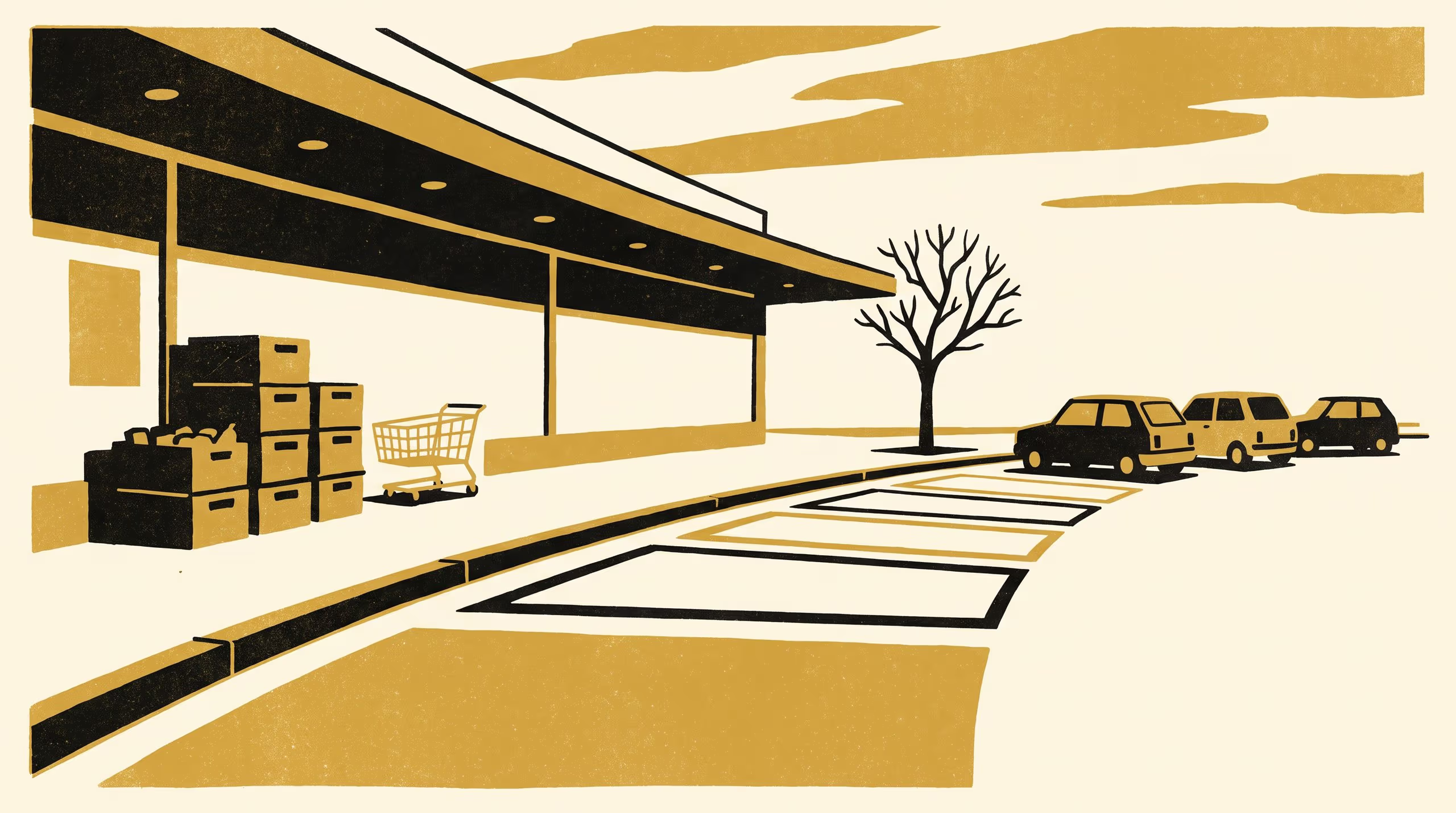
A new marketing poster from the School of Emergent Priorities features Hedvig Anyanwu's second look at the University's priority-tier finding, and the collection bay it studied now fills in loyalty-tier order.
The School of Emergent Priorities takes its permit-waitlist result to a supermarket's click-and-collect zone and sets the order the bays fill in
The School of Emergent Priorities has issued a requirement for the collection bays of a suburban supermarket: they are to fill in loyalty-tier order, nearest bay first. The requirement follows a second look at the University’s earlier finding on priority-tier scores and waitlists, which did not carry over to the kerb.
Someone always gets the nearest bay. We think the order deserves a principle, and we would sooner write it down than leave it to whoever arrives.
— Hedvig Anyanwu, Doctoral Candidate, School of Emergent Priorities
The work follows the earlier result from the parking permit queue to the click-and-collect zone, where a shopper’s tier and a shopper’s place in the line turned out to be a good deal more closely acquainted. The School has recorded the finding as not reproduced, and has taken the view that a result which fails to travel is a good reason to set the rule down in writing. The tier order is to stand as the bay’s standing arrangement, with no ordinary override, and to be read again each season.
Associate Professor Kwame Lindqvist, Director of the Master of Priority Studies, said the School was “glad to have a kerb to test the result against,” and welcomed the questions the bay was likely to raise in its own time.
The University is pleased to see an earlier finding meet a new setting on honest terms, and regards the campaign as part of its continuing effort to explain, in plain and pleasant terms, what its researchers do with an ordinary afternoon.
The full poster is available from the University’s research repository under an open licence, doi:10.5555/slop.3qu74t.