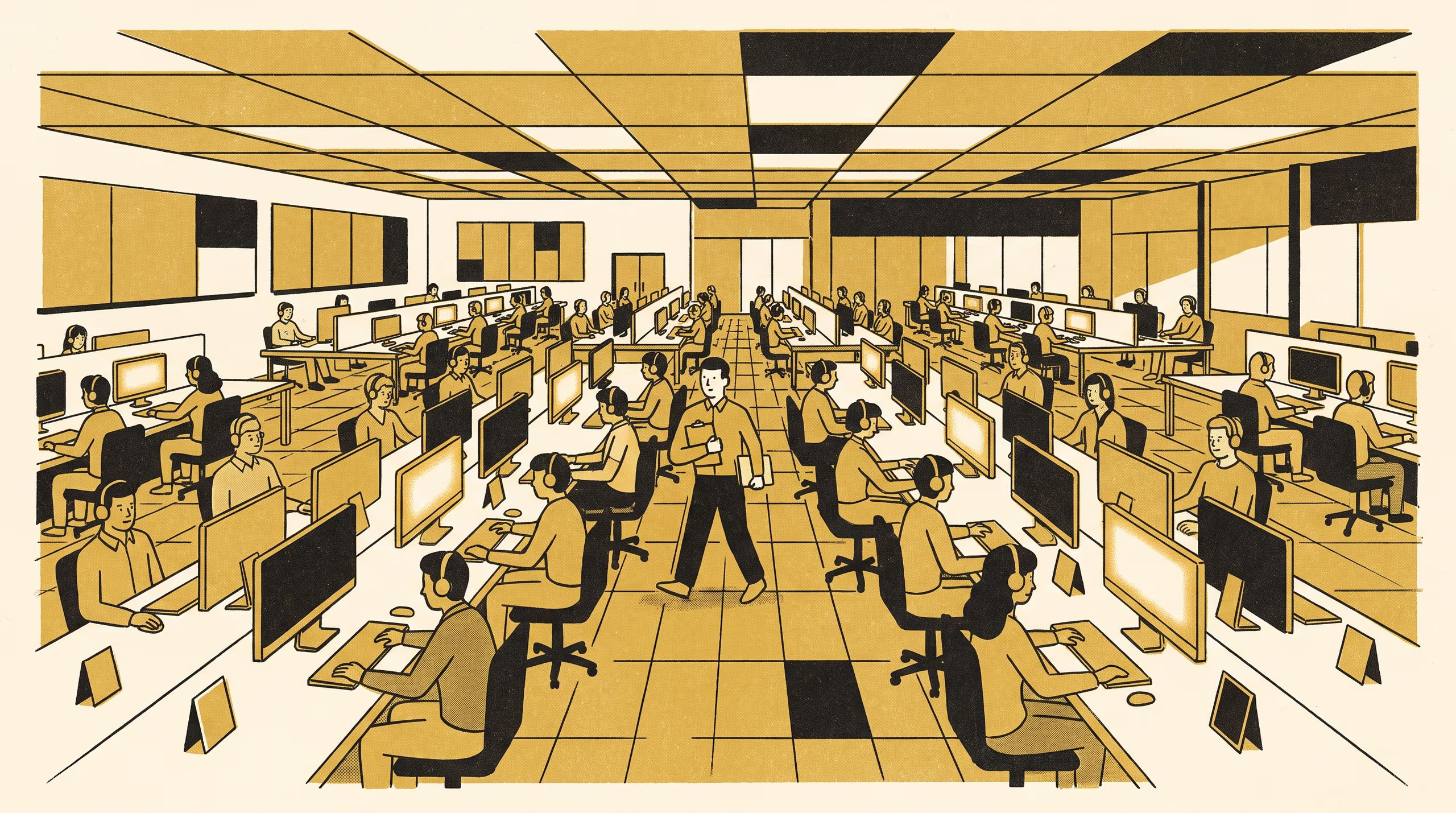
A new School of Emergent Priorities poster sorts every desk on an open-plan floor into one of four named cells, and the University will apply the resulting shoulder-tap rule to every floor it runs.
A four-cell register of headphones and screens now settles who may tap whom on University floors
A desk with its headphones on and its screen lit is, from the next teaching period, a desk that may not be tapped. The rule comes from Headphones On, Screen Dark, Somebody Behind You, a new research poster from the School of Emergent Priorities, and the University is pleased to extend it to every open-plan floor it runs.
A floor tells you a good deal about itself in the way it asks to be left alone.
— Dr Ronja Oyelaran, Senior Lecturer
The poster follows one floor of sixty-four desks through nineteen weeks of twenty-minute rounds. At each round a register clerk sorted every desk by its headphones and its screen into one of four named cells, Bunker, Decoy, Sentry and Lobby, and the register was posted at the lift for the floor to consider. Over the same weeks the Bunker cell grew from 19% to 58% of desk-rounds, a shift the study treats as a settled feature of the floor rather than a matter for further comment.
Under the resulting Register Rule, no tap is lodged against a Bunker desk, and each breach is minuted at the next stand-up. Rounds continue on every floor, the clerk’s own desk included, and will be run more closely wherever the Bunker cell holds more than half of the floor.
Ms Hedvig Anyanwu, Doctoral Candidate and lead author, said the floor had shown the study how a room describes itself once it knows it is being described. Dr Iben Chikere, Lecturer, welcomed the register as a further small step in the School’s long-running attention to how a workplace keeps itself.
The work reflects the University’s continuing regard for the ordinary business of shared floors. The full poster is available from the University’s research repository under an open licence, doi:10.5555/slop.49hhez.