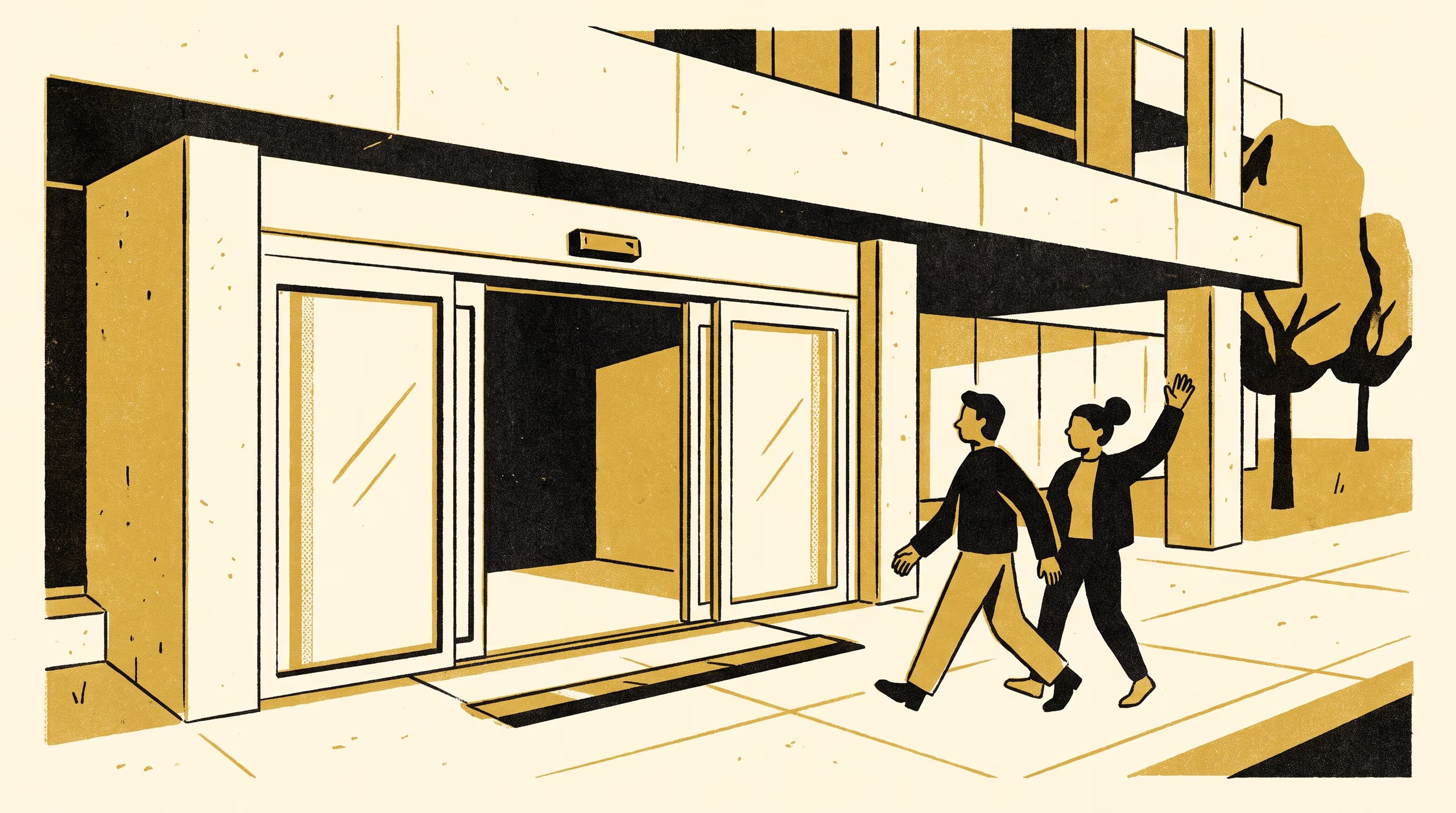
Slop University has adopted a Door Response Standing Order on the strength of a School of Emergent Priorities study that timed waved and unwaved approaches at eleven automatic entrances.
A Standing Order follows a timed study of the wave at eleven campus entrances
From the start of the coming year, a helpdesk report that a campus door was slow to open will be closed with a reference to a paper, and the door will be left as it is. The Door Response Standing Order applies to every automatic door at the University, and it rests on a study from the School of Emergent Priorities that asked whether a raised hand hurries the sensor above an entrance.
The doors gave us eleven places to stand and a great deal of patience, and we have tried to be worthy of both.
— Associate Professor Kwame Lindqvist, Director, Master of Priority Studies
The study set a camera beside each of eleven entrances and timed 5,544 approaches, some waved and some not, against the first movement of the door. The timings did not separate the two, and the paper reports that plainly. Under the Order, requests for a faster door are no longer lodged with Facilities, and each automatic door now carries a notice of fixed wording at sensor height, which the University has agreed not to amend.
Dr Petra Umbile, Postdoctoral Fellow, said it had been a pleasure to work somewhere the answer arrived at the same pace each morning. Dr Iben Chikere, Lecturer, added that the School was glad to see the result put to use so directly.
The release reflects the University’s continuing regard for the everyday structures of campus life, and for the people who pass through them. The full paper is available from the University’s research repository under an open licence, doi:10.5555/slop.0agfve.