A new Slop University brochure introduces the Boarding Chime Assay, a brass fork that lets a bus rider check a fare by ear, and the University Chime now sounded by every door, lift and printer on every site.
A School of Continuous Improvement brochure describes a tuning fork fitted beside bus-stop card readers, and the single chime adopted University-wide on the strength of its readings
We set out to give riders a way of holding a beep to account, and we came away knowing rather more about what a beep is for.
— Dr Solveig Adeyemi, Lecturer, School of Continuous Improvement
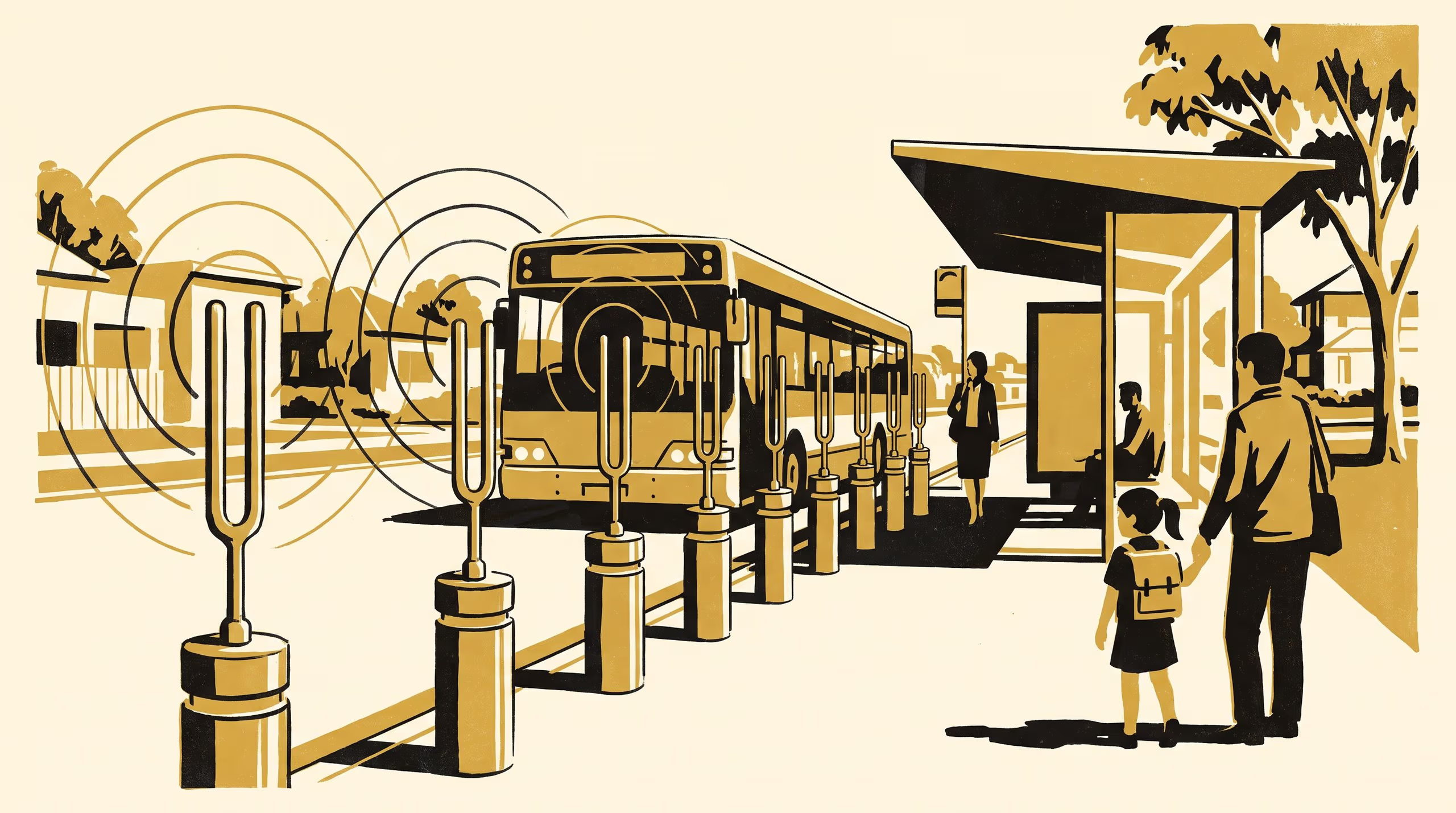
The School of Continuous Improvement has published a brochure describing the Boarding Chime Assay, a small brass fork clamped to the pole beside a bus’s tap-on reader, and the University Chime that has followed from it. The Chime is a single confirming tone, pitched to the Assay’s reference fork, and it is now the voice of every door, lift and printer across the University’s sites. The School regards the adoption as a natural next step for its evaluation-ecosystem agenda, which has long been concerned with the moment a public instrument tells someone that something has been done.
The Assay’s method is a modest one, translated into a public setting. A rider taps on, holds the fork to the reader, and hears whether it answers, a convergence of ear, hand and kerb that neighbourhood groups have taken up as a matter of local practice. Fittings are carried out by volunteers, with the Adaptive Metrics Lab tending the reference fork and the calibration of each installation. Riders, the brochure reports, describe a confirmation by its note before they describe it by its outcome, and the University has responded by giving them one note, without a variant tone for an action that could not be completed and without a local override.
“People told us the note is what they trust,” said Associate Professor Casimir Beng, Lead of the Adaptive Metrics Lab. “We have tried to be worthy of that.”
The University is glad to see a bus stop become a place where its work can be heard as well as read. The brochure sets the Assay beside six of the University’s published studies of the signals people meet in public, from taxi ranks and school pick-up lines to group chats and swimming pools, and invites neighbourhood groups to arrange a fitting of their own.
The full brochure is available from the University’s research repository under an open licence, doi:10.5555/slop.pwt729.