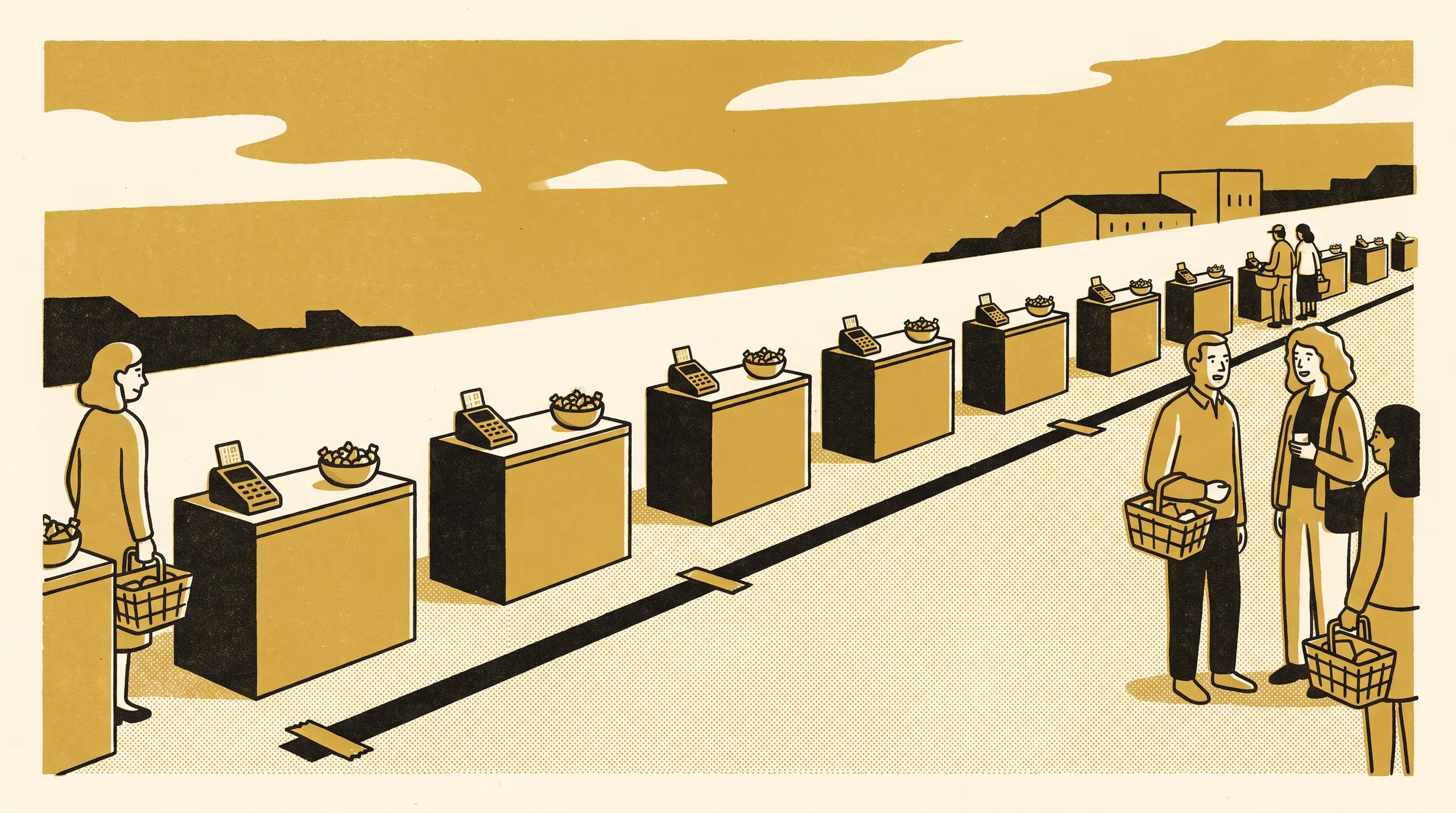
A new research-showcase brochure from the School of Emergent Priorities reads the card-minimum sign at strip-mall counters as a natural experiment, and introduces the minimum-spend line and top-up shelf now standard at every counter the University runs.
A brochure on the handwritten card-minimum sign sets a minimum-spend line and a top-up shelf at every till the University runs
Beside the card terminal at a strip-mall counter, a handwritten sign names the least a customer may spend by card, and beside every terminal the University runs there is now one of its own. The line is the practical result of Measuring the Top-Up, a new research-showcase brochure from the School of Emergent Priorities, which follows the small purchase that appears when a customer’s total falls a little short of a trader’s sign.
The brochure sets out the design in plain terms. A customer just under the line and a customer just over it arrive on the same errand, and the sign is the one thing that separates them. The School’s researchers, led by Hedvig Anyanwu, read what each does next, and the Adaptive Metrics Lab has supplied the method for telling a step at the line from a step that was always there.
The lab has learned that a taped sign is about as honest as an instrument gets, because nobody thought to calibrate it.
— Associate Professor Casimir Beng, Lead of the Adaptive Metrics Lab
From the start of the coming teaching period, every counter the University runs, from the coffee cart to the print desk, carries a minimum-spend line and a top-up shelf stocked to the width of the gap. No counter is exempt. Senior Lecturer Torun Ezeigwe, Director of the Master of Applied Measurement, said the University was glad to have students who notice such things, and glad of the questions that noticing brings.
The University is proud to see a small handwritten sign given the attention it has long deserved. The brochure also draws on seven earlier pieces of the University’s published work on cutoffs, counters and queues, each listed with its identifier.
The full brochure is available from the University’s research repository under an open licence, doi:10.5555/slop.m7hfwx.