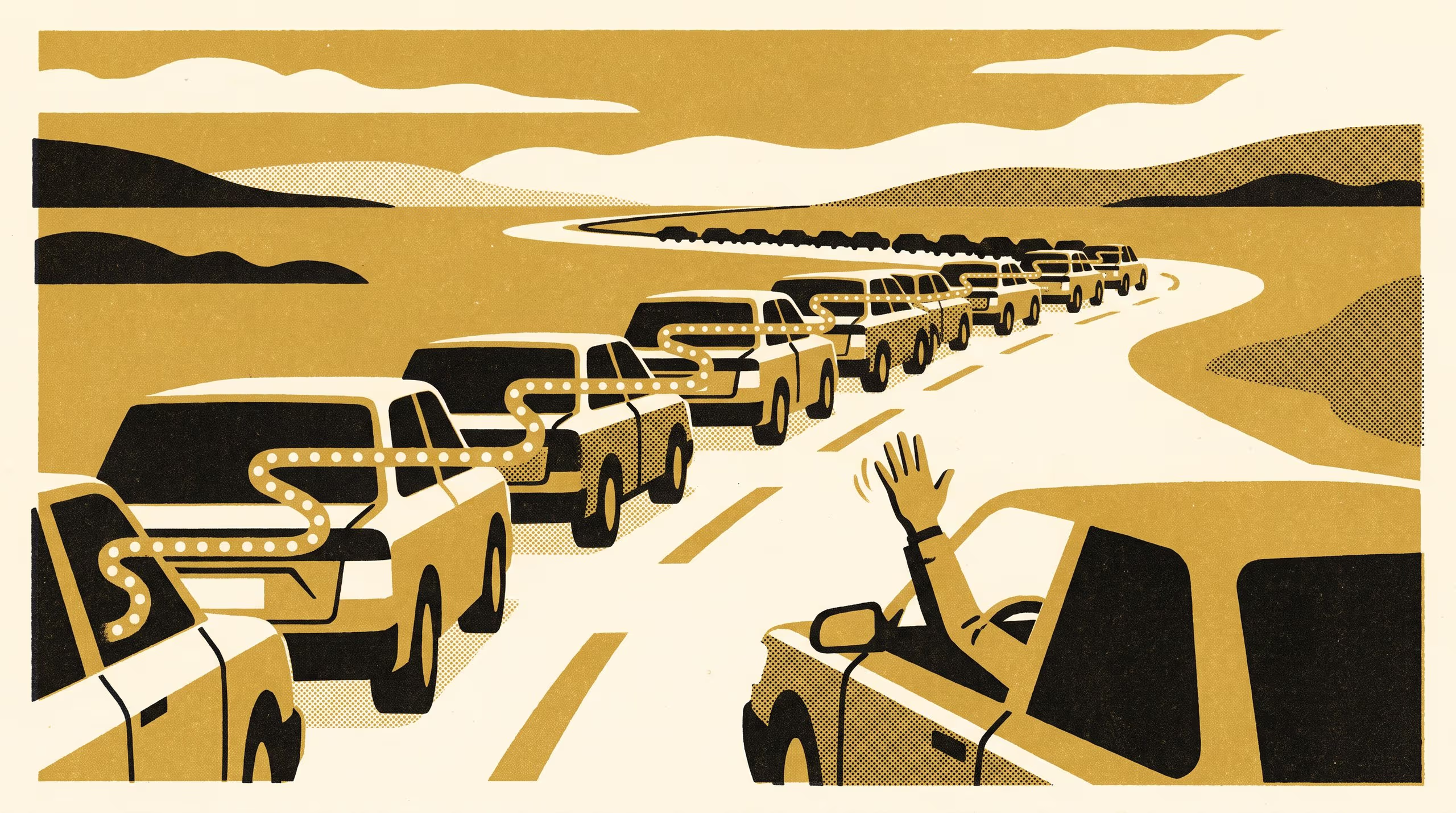
A new research poster from the School of Emergent Priorities describes a rear-window lamp that holds a driver's thank-you until the driver ahead has seen it, and the roads authority that adopted its count as a courtesy standard.
Fitted to forty vehicles across nine merges, the relay lamp raised the share of thank-yous acknowledged, and a roads authority now narrows merges that score low
Most drivers who have let another car in have also been thanked for it, and most have been thanked at the moment they could not see it. Can a Thank-You Flash Reach the Car It Was For?, a new research poster from the School of Emergent Priorities, describes an amber lamp bar for the rear window that keeps the hazard-light thank-you going until the driver ahead has looked up.
A courtesy is a small agreement between two people who will not meet again. We wanted this one to have somewhere to land.
— Dr Ingrid Vasseur, Lecturer and Convenor, Futures in Committee
The lamp was fitted to forty vehicles and followed across nine merge sites over a season, with a mirror-glance sensor in the receiving car recording each thank-you that was seen. The poster reports that 84% were acknowledged with the lamp, against 23% for the hazard flash alone, and sets the design out alongside the sensor, the repeat interval and the pre-registered thresholds behind it.
The roads authority that hosted the study has since adopted acknowledged thanks per 100 vehicles as its courtesy standard for merges, and narrows by a lane any merge that scores below the line. The School regards the adoption as a significant step in how a road network comes to hear itself being thanked.
Dr Petra Umbile, Postdoctoral Fellow, said the team was grateful to the drivers who agreed to be thanked, and to the merges that made room for them. The next version of the firmware returns a flash on every acknowledgement.
The full poster is available from the University’s research repository under an open licence, doi:10.5555/slop.cpd275.