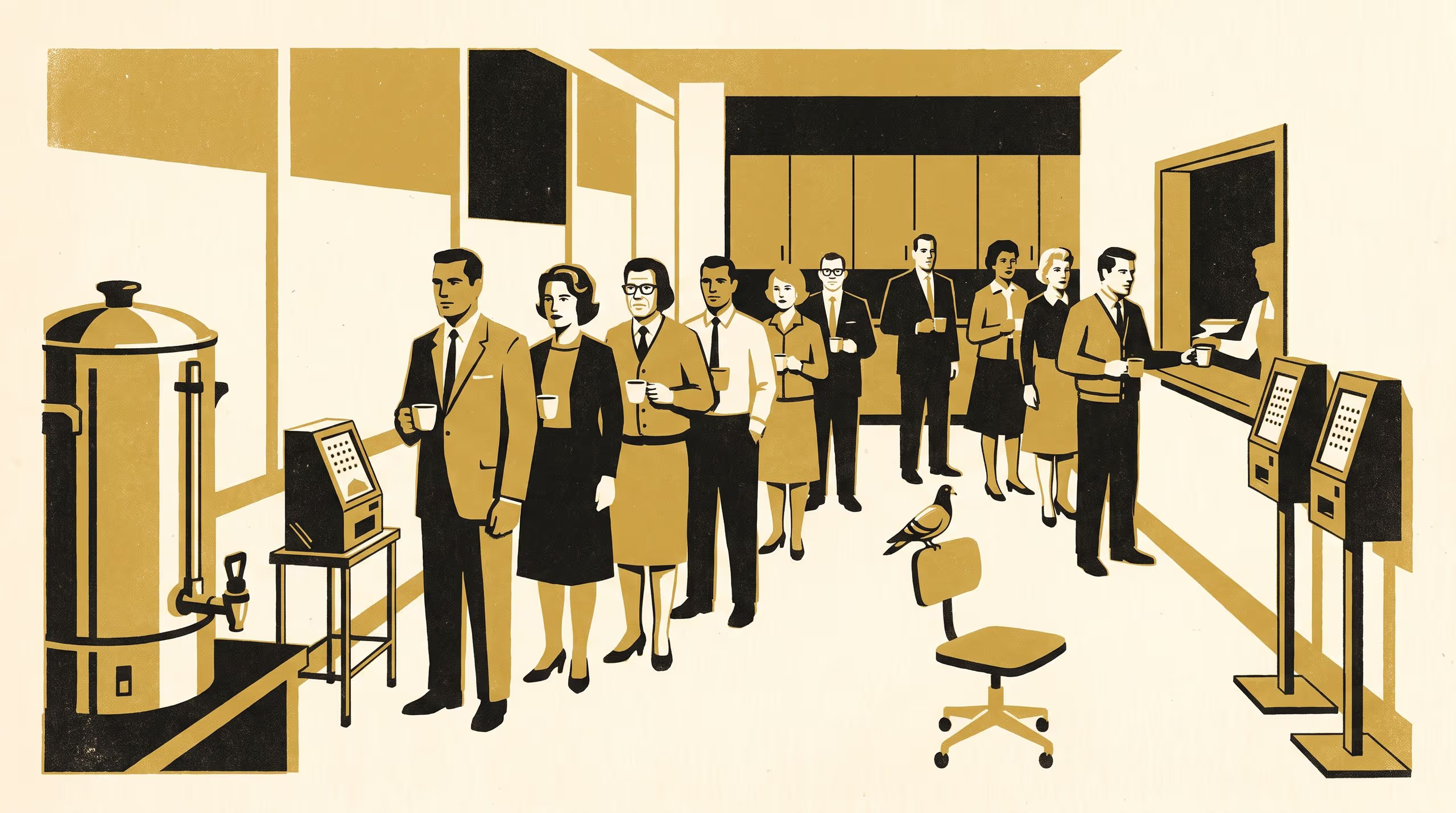
A new Slop University poster reports that a numbered-ticket dispenser left arrival-order disputes at the staff tea-room urn unchanged, and sets a dispute target for every urn on campus.
A 24-room replication finds arrival-order disputes unchanged by a ticket dispenser, and Amenity Procurement adopts the taxi-rank rate as each urn's target.
Morning tea is a queue with a single urn at the front, and the School of Continuous Improvement has now measured it against the one benchmark the University already holds for queues. Towards a Ticket That Travels, a new research poster, asks whether the fall in arrival-order disputes recorded at airport taxi ranks after a numbered-ticket dispenser was fitted appears at the urn of a staff tea-room.
The poster reports a replication across twenty-four staff tea-rooms, half fitted with a dispenser and half relying on a spoken “next”. Arrival-order disputes at the urns were the same in both groups. Amenity Procurement has responded by adopting the taxi-rank rate as the dispute target for every urn and specifying a second dispenser wherever an urn stands above it. The target will be reopened when a third replication agrees.
Every queue we visit teaches us something about the one we left behind, and the urn has been generous with its lessons.
— Dr Thandiwe Solberg, Senior Lecturer and Convenor, Demo Quarter
The study brought a pre-registered protocol, a shared dispute taxonomy and two observers per morning tea to sixteen weeks of ordinary service, and kept the terms of the earlier taxi-rank work unchanged so the two could be read together. Associate Professor Casimir Beng, Lead of the Adaptive Metrics Lab, said the group welcomes the questions the urn has put to a rate it had grown fond of.
The work reflects the University’s continuing interest in the ordinary queues that everyone joins and no one has yet been asked about. The full poster is available from the University’s research repository under an open licence, doi:10.5555/slop.eef2fv.