A new research poster from the School of Emergent Priorities reports no difference in meeting length with a wall clock visible or covered, and sets out what Facilities now records.
A School of Emergent Priorities poster reports eight rooms, fourteen weeks and a hinged panel, and records what followed for the clock.
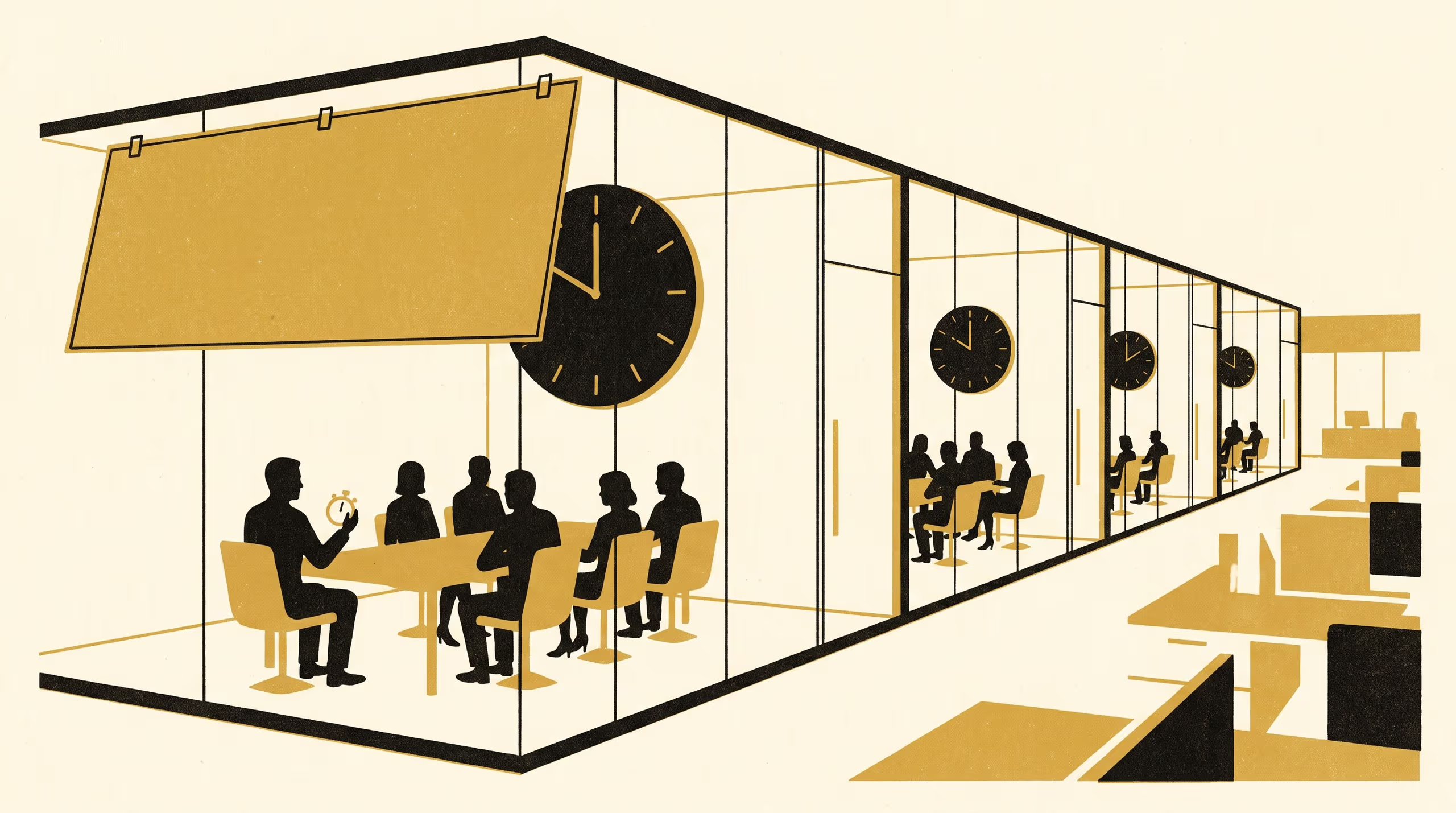
Eight meeting rooms on one open-plan floor had their wall clocks covered by a hinged panel on alternate weeks, and the School of Emergent Priorities was in the room for every booking. Measuring the Clock in the Room, a new research poster from Hedvig Anyanwu, Dr Ronja Oyelaran and Dr Iben Chikere, sets the result out plainly: the length of a meeting did not differ with the clock in view.
The study followed the floor’s bookings across a full fourteen-week trial, with its primary measure fixed before the first meeting began. The poster reports that measure as it came out. It does not go looking for a second one.
We asked the room a question and the room gave us an answer. It seemed only polite to write the answer down as it was given.
— Hedvig Anyanwu, Doctoral Candidate, School of Emergent Priorities
The University has taken the finding into its facilities practice. Every booking now carries a note of the clock’s state, and each room’s clock is attested at the annual inspection as immaterial to the length of the meeting held beneath it. The panels have been returned to the store cupboard, and the clocks remain where they were hung.
Dr Oyelaran said the work reflected the School’s interest in what an ordinary fitting does, and does not do, within the rooms an organisation builds for itself. “A clock is a small thing to hang on a wall,” she said. “It is good to know how much of the wall it holds up.”
The full poster is available from the University’s research repository under an open licence, doi:10.5555/slop.csi737.