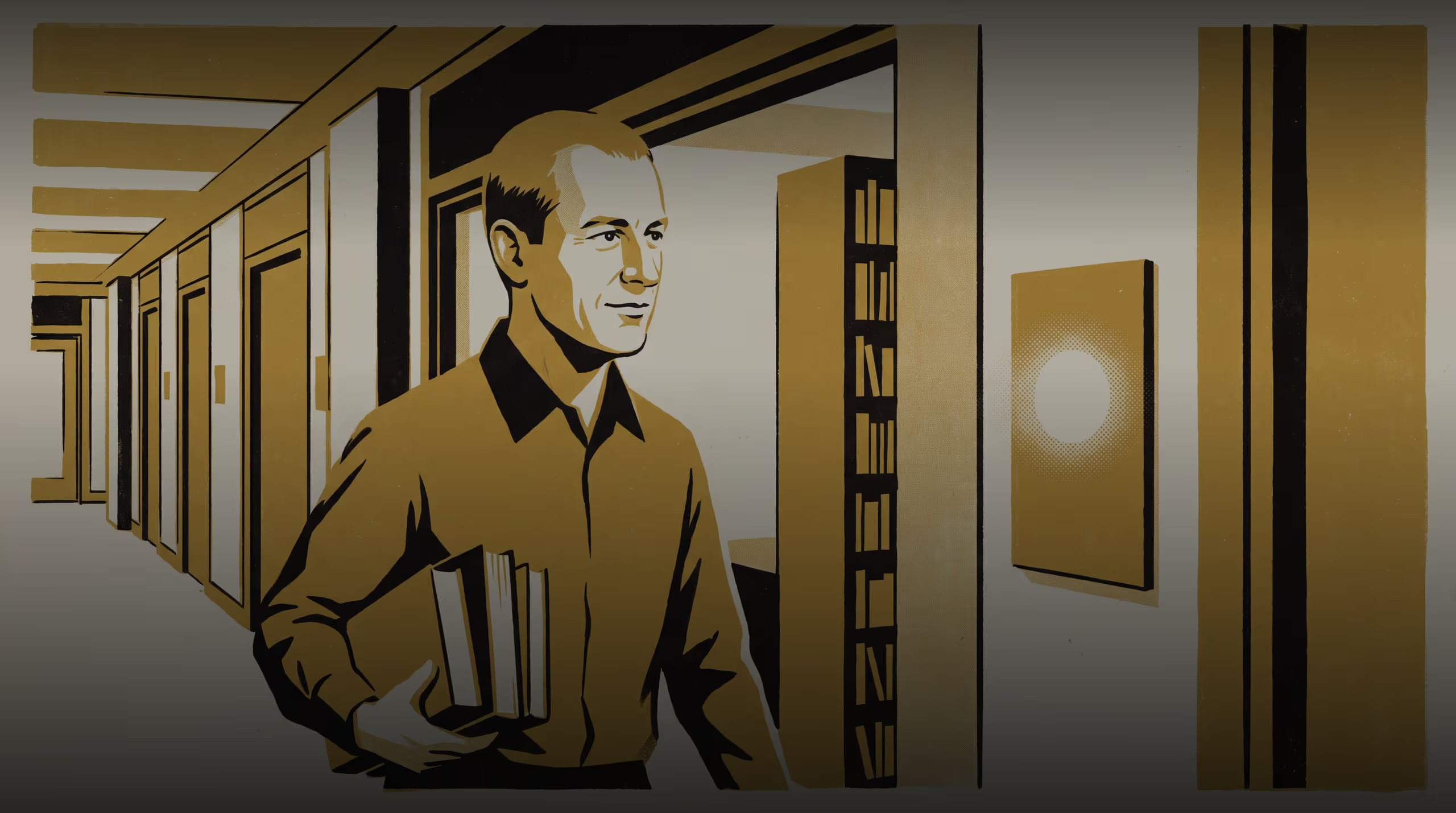
A new Slop University advertising campaign promotes an instrument that reopens a library study room the instant it predicts the current booking is about to end.
The School of Emergent Priorities puts an early-release forecasting instrument on campus screens, reopening a room the moment it predicts a booking will end
Slop University’s signage rotation this month carries a new claim from the School of Emergent Priorities: that a study room can be reallocated before the person inside it has actually left. The campaign markets the Horizon Register’s newest instrument, an early-release forecasting tool that reads a booking’s remaining pattern and reopens the room the moment it predicts the booking is ending, whether or not the student at the desk agrees.
The University frames the launch as a demonstration of the School’s wider anticipatory-capability agenda, carried for once onto something a passer-by at a bus stop can actually see rather than a dashboard reserved for committee use.
A booking is just a priority that hasn’t ended yet, and every priority ends eventually.
— Dr Marek Solheim, Lecturer and Deputy Convenor, Horizon Register
The instrument works from a study room’s own occupancy pattern: an ambient sensor and the room’s historic release rate feed the Register’s models continuously, and the model marks a booking as forecast-vacant a short interval before it is due to lapse, at which point the room reopens on the corridor booking screen for the next student in the queue. Dr Fenna Okoro, Convenor of the Horizon Register, welcomed the campaign as a sign of the unit’s work reaching beyond its usual committee audience.
The campaign is now running across the University’s signage network, and full details are available from the University’s research repository under an open licence, doi:10.5555/slop.rw3sih.