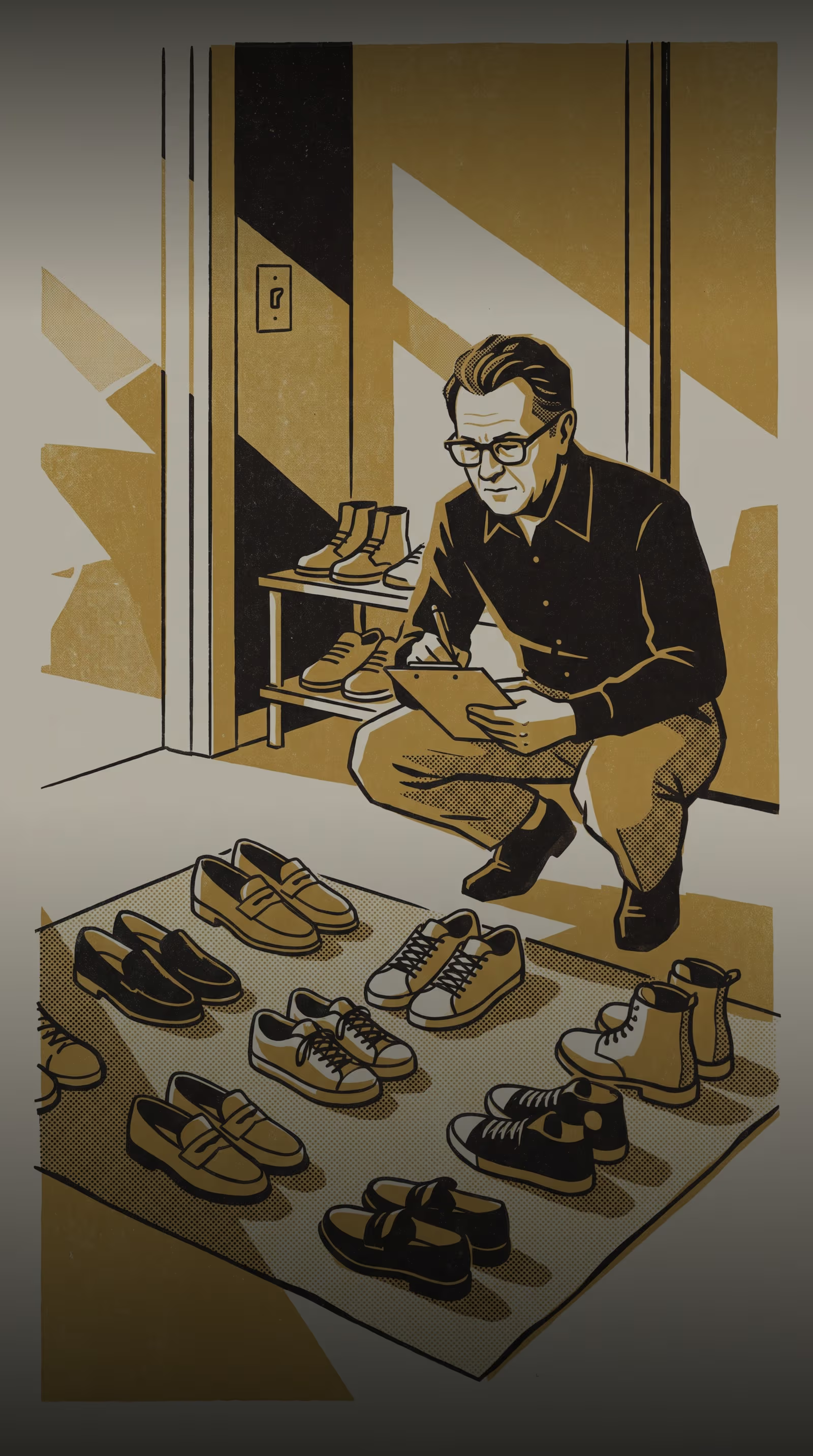
A new Slop University advertising campaign introduces STEP, a School of Continuous Improvement instrument that sorts household shoe pairs into four ownership quadrants and now feeds into each household's Improvement Score.
A School of Continuous Improvement campaign for STEP, the Shoe-Traceability and Egress Protocol, ties a household's Improvement Score to what its rack by the front door actually reveals
The Adaptive Metrics Lab has built its reputation on the conviction that no corner of a house is too settled to reward closer inspection, and its newest instrument turns that conviction on the rack by the front door. STEP, the Shoe-Traceability and Egress Protocol, crosses a household’s claimed ownership of each shoe pair against whether that pair actually leaves with somebody each morning, sorting the results into four named categories now appearing across the University’s bus-stop and campus signage this teaching period.
Joost Nwosu, Postdoctoral Fellow in the School of Continuous Improvement, developed the categories behind the campaign.
A rack that looks tidy can still be lying to you. Loyalists leave every morning. Relics never do.
— Joost Nwosu, Postdoctoral Fellow, School of Continuous Improvement
The School treats the campaign as evidence of how far an evaluation-ecosystem agenda can travel once it stops waiting for a dashboard and starts looking at the floor. The four categories are not decorative: a household’s count of Relics, pairs neither claimed nor departed, now counts against its Improvement Score on the Living Dashboard, with no adjustment made for a pair kept deliberately in reserve.
The campaign is running now across the University’s signage network, and full details are available from the University’s research repository under an open licence, doi:10.5555/slop.jlioc3.