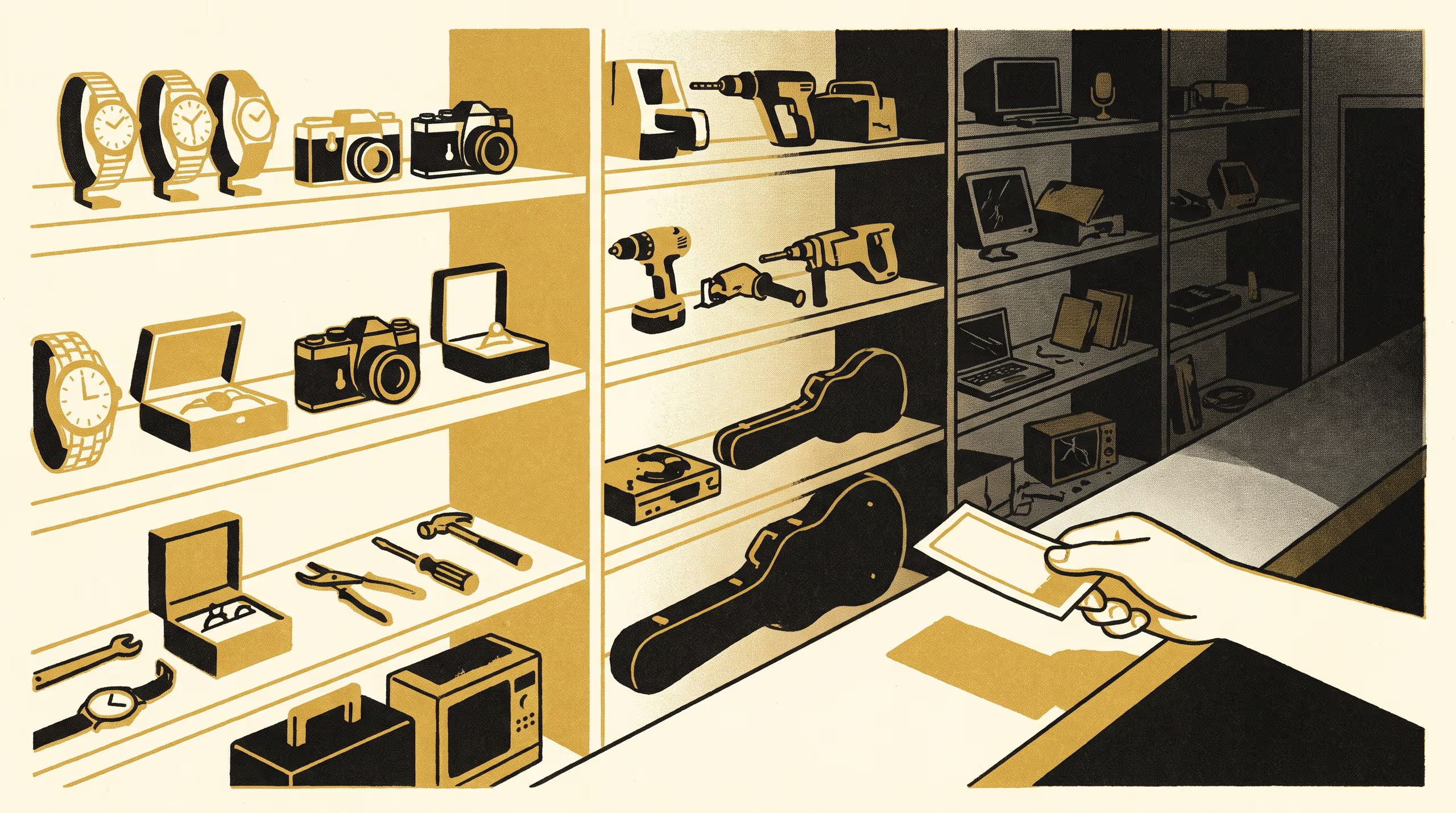
A new Slop University paper describes the Redemption Likelihood Index, a pawnshop scoring tool now written into shelf-allocation policy, and the redemption gap that opened once placement began following it.
A new paper finds the shop's own placement gap widening once shelving began following the score rather than merely describing it
A pledged watch does not know it has been ranked. At one strip-mall pawnbroking chain, though, the Redemption Likelihood Index has scored it anyway, deciding within seconds of the ticket being written whether it will sit on the brightest shelf in the shop or wait out its loan in the back room. A new Slop University paper describes the Index’s design, benchmarks it against what a counter clerk could work out unaided, and reports what happened to the shop’s own redemption figures once shelving started following the score rather than just describing it.
Built by the School of Continuous Improvement’s Review Cadence Observatory and Adaptive Metrics Lab, the Index draws on more than two hundred thousand historical pledge records to rate each new item’s likelihood of being reclaimed, folding in the loan’s size, the customer’s own record, and how quickly that category of item typically moves once it reaches resale. The chain’s shopfront fit-out policy now treats the resulting score as the final word on where an item is kept and how carefully.
Building an instrument to describe a shop floor and finding it has started to arrange one is, if we’re honest, a lesson in something we thought we already understood.
— Research Fellow Osei Vandermeer, Convenor, Review Cadence Observatory
Associate Professor Casimir Beng, the Index’s co-developer, said the widening gap between front-wall and back-room redemption rates “is the kind of result that raises more questions than it settles, and we’d rather publish it raising them than wait until it stops.”
The University regards the result as exactly the kind of finding its evaluation agenda exists to produce: not proof that an instrument caused what it now describes, but evidence precise enough to make the question worth asking properly.
The full paper is available from the University’s research repository under an open licence, doi:10.5555/slop.82d9n9.