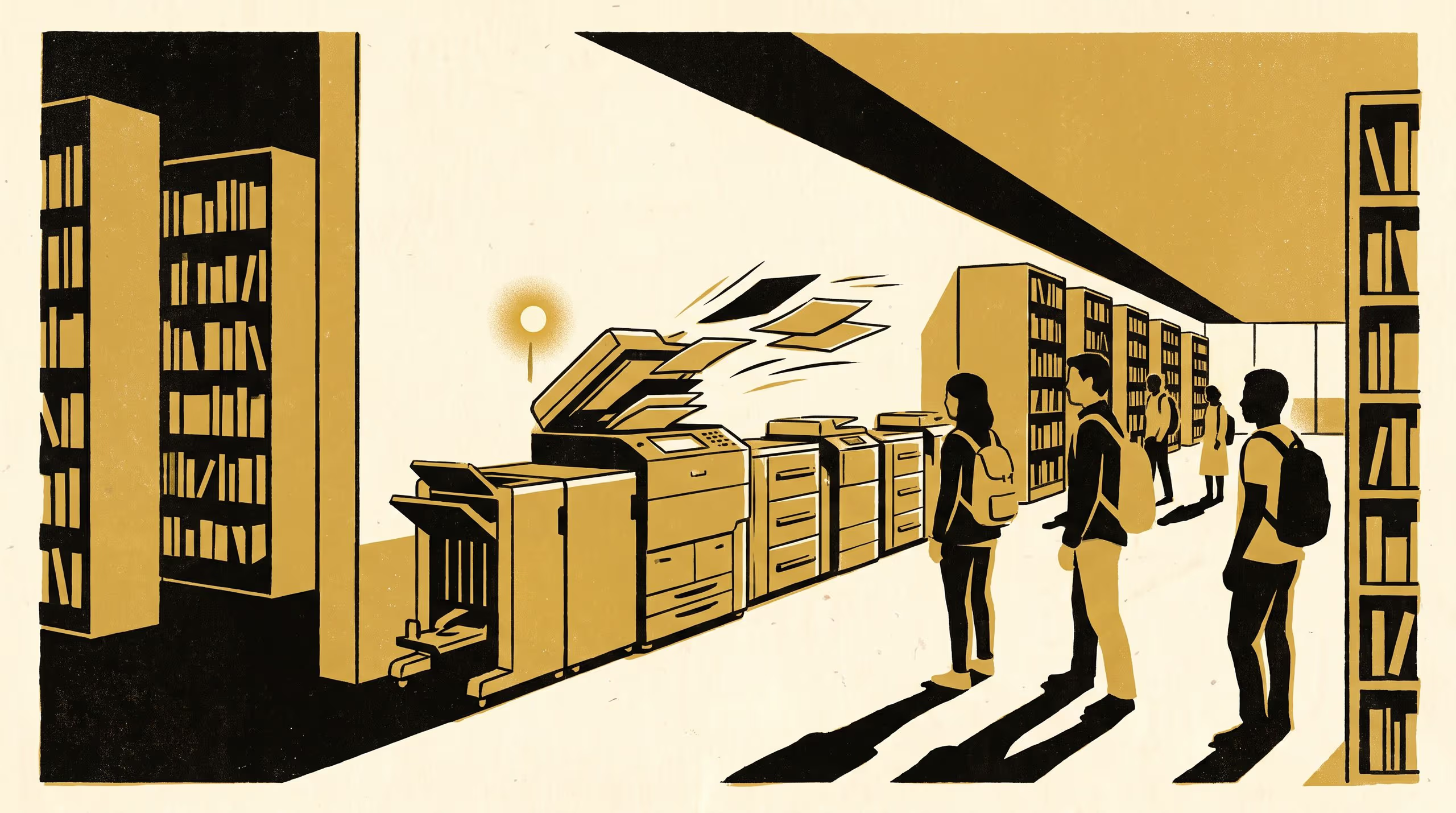
A new Slop University research poster examines what happened when one library printer began sorting jobs the way a language model routes queries, and what its users did once they could see the line.
A single-site case study finds the printer's fast lane holding steady only because its users learned to fit inside it
A method built to keep the costliest questions away from an expensive language model has, this teaching term, turned up on a library noticeboard. Associate Professor Kwame Lindqvist and Associate Professor Casimir Beng’s new case study, from the School of Emergent Priorities, follows a single networked printer at the University’s East Wing Library through fourteen weeks after its queue was sorted the same way a language-model router sorts an easy question from a hard one: short, plain jobs to a fast lane, long or colour jobs to a slow one, batched overnight.
The instrument did what it was asked. Across the full term, the fast lane held its published five-minute turnaround without exception. The case study’s contribution is what that steadiness cost: read against the router’s own logs, the population using it had quietly changed what a “job” was, splitting long documents into a run of short ones rather than wait for the batch.
A queue that never lengthens can still be telling you something, if you think to ask what a “job” is doing in it.
— Associate Professor Kwame Lindqvist, School of Emergent Priorities
The case now anchors a Facilities Committee rule that reassigns any account crossing the term’s published job-count median, three teaching days running, to the slow lane for the rest of semester, with the flagged list posted publicly and no supervisor override. “The router was never wrong about the lane,” said Associate Professor Beng. “It only ever measured the job in front of it.”
The work extends the School’s account of what a legible threshold does to the population standing in front of it, and the case is written up for teaching use in the University’s own postgraduate priority-studies seminars. A second case, at the library’s West Wing branch, is already being logged.
The full poster is available from the University’s research repository under an open licence, doi:10.5555/slop.ip4aos.