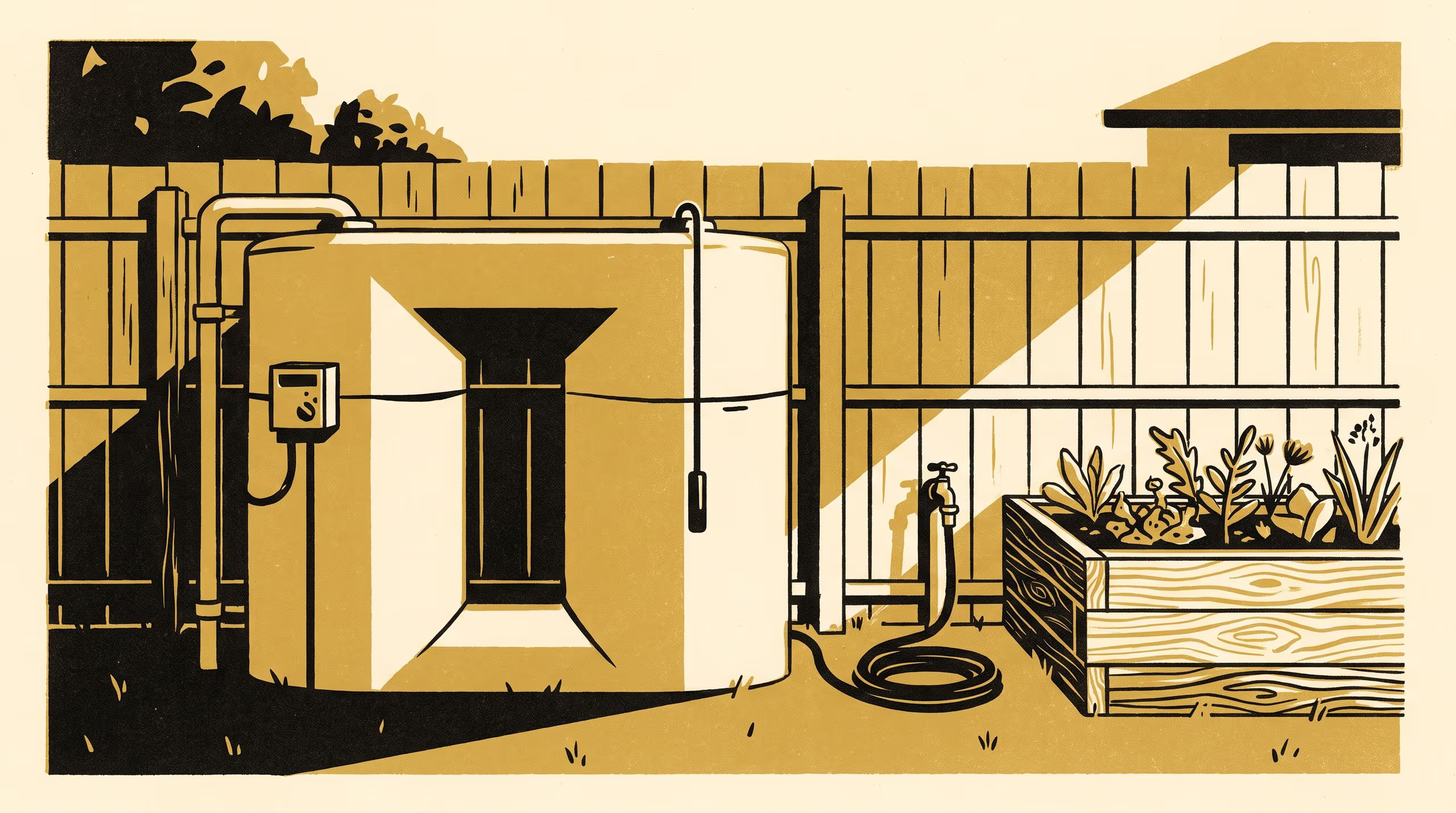
A new Slop University paper reports what changed across 46 households when the decision to water the garden moved from a rotating household role to a schedule that cannot be argued with.
A School of Continuous Improvement deployment lets a locked valve program, not the household's rostered irrigation warden, make the call
Forty-six households spent fourteen weeks letting a compiled program, rather than whoever currently held the household’s unofficial irrigation-warden role, decide when the garden gets watered. A new paper from the School of Continuous Improvement, published today, reports what changed once that decision moved from a person to a schedule that cannot be asked to reconsider.
The deployment extends the School’s ongoing attention to what a household actually gives up when a decision it used to make itself is compiled into something that no longer takes questions. The system, called SLUICE, merges a council’s watering-restriction calendar with a tank-level sensor feed and the household’s own once-only preferences into a single locked schedule, handed to a valve that accepts no other instruction until its next quarterly revision. A resident who tries to water outside the compiled window twice in a rolling month loses a say in how the next revision is set.
What a rostered decision-maker keeps, that a compiled one doesn’t, is the option of being persuaded — and the household doesn’t get that option back until the next revision comes around.
— Dr Marit Osayande, Lecturer and Convenor, Living Dashboard
“The valve doesn’t know who’s asking,” said Associate Professor Casimir Beng, Lead of the Adaptive Metrics Lab, “which was rather the point.”
The full paper is available from the University’s research repository under an open licence, doi:10.5555/slop.4r7lur.