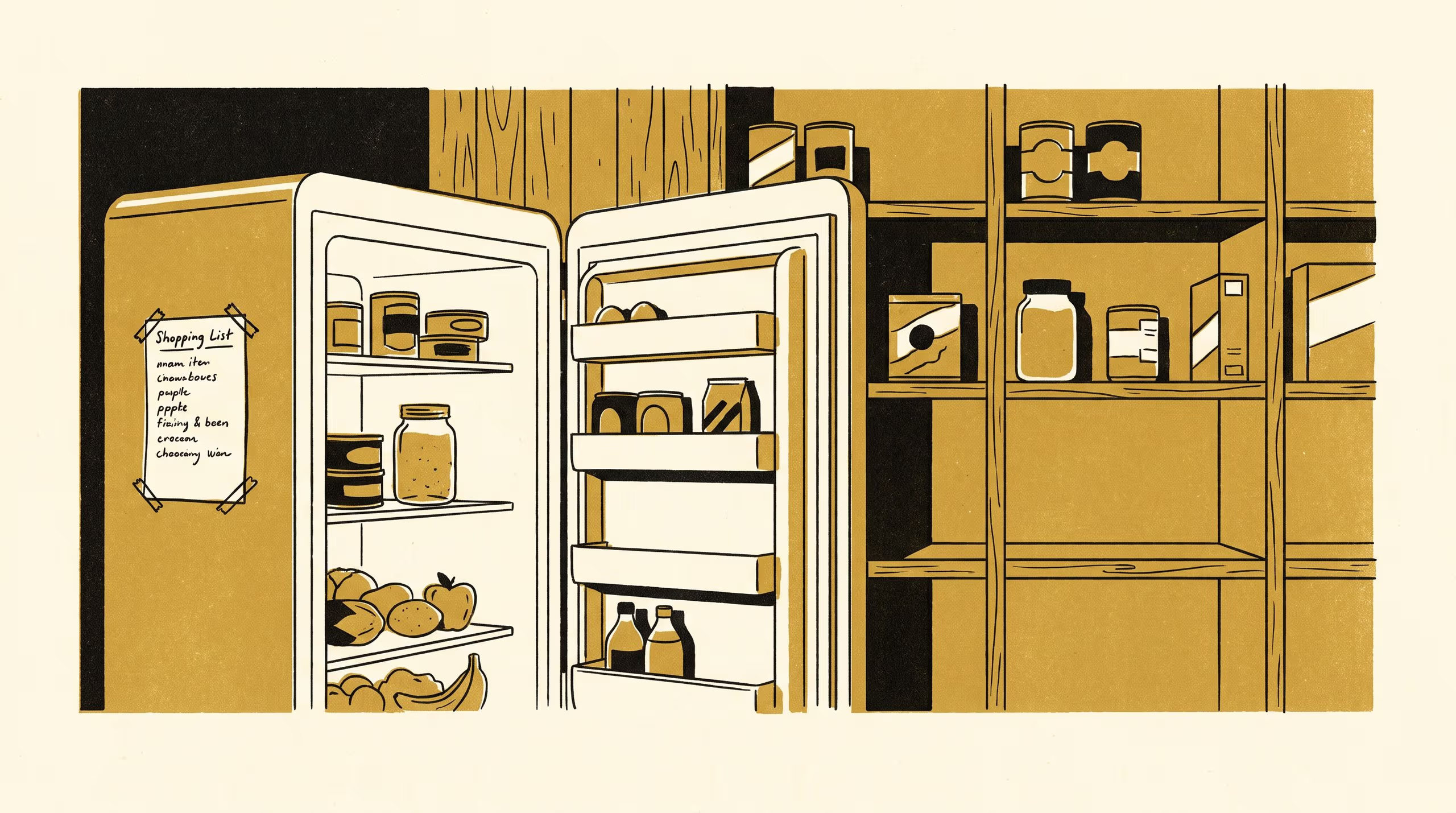
A new Slop University research poster scores household members on a two-axis noticing-and-acting quadrant borrowed from workplace engagement scoring, and reports that two consecutive quiet fortnights are enough to lose editing rights on the shared shopping list.
A workplace engagement-style quadrant now decides who notices a pantry shortage, and who has to act on it, across 58 households
A pantry that runs empty without anyone announcing it is, to a School of Continuous Improvement research team, a scoring problem rather than a shopping one. A new Slop University research poster introduces the Shortage Response Quadrant, an instrument that scores each household member on two axes — whether they noticed a shortage, and whether they did anything about it — and sorts them into four named positions running from Proactive Restocker down to Non-Responder.
It is the latest instrument from a school whose declared ambition is to bring workplace-grade measurement into parts of domestic life nobody thought to measure. The project, led by Research Fellow Osei Vandermeer with Associate Professor Casimir Beng and doctoral candidate Hedvig Anyanwu, followed 112 individuals across 58 households for fourteen weeks, cross-referencing a shared shopping-list app’s edit logs against group-chat mentions of what had run out.
Two consecutive fortnights placed in Non-Responder was enough to move a household member off the list’s default editing rights in the large majority of eligible cases; members who consistently noticed and acted kept those rights for the study’s full term.
An instrument built to flatter management doesn’t stop working just because you point it at the fridge.
— Associate Professor Casimir Beng, Lead of the Adaptive Metrics Lab
Dr Vandermeer said the quadrant’s move from the workplace to the kitchen bench “raised fewer objections than we expected, mostly because nobody in the household had read the methodology before it started reassigning things.” The team is now piloting a three-fortnight threshold across a second cohort of share-house kitchens.
The full poster is available from the University’s research repository under an open licence, doi:10.5555/slop.9agrcr.