Slop University reports that a suburban sports club's training-load self-report scale held flat under the escalation trigger that inflated an office wellbeing score, and the club is keeping the trigger regardless.
A finding about self-report inflation didn't repeat itself in training sessions, so the trigger behind it stays and the score changes instead
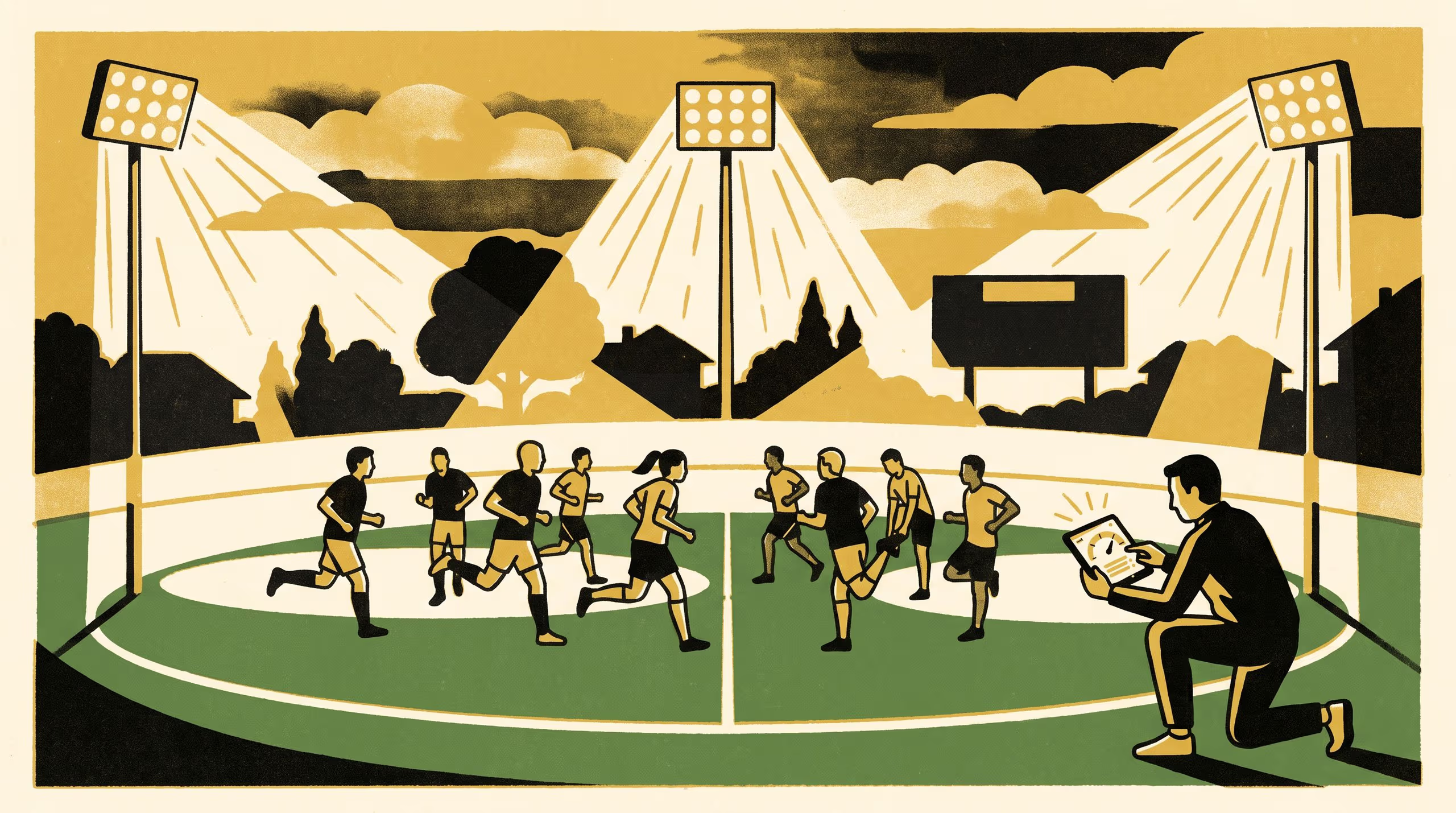
A suburban sports club’s weekly training-load survey didn’t move. Over a full season, players’ self-reported fatigue held level whether or not a missed-session rule had just flagged them for a catch-up chat with their coach, and the School of Emergent Priorities has published the poster explaining why.
The design repeats an earlier University finding, first observed in an office wellbeing survey, where a self-reported score climbed once a two-week rule began escalating flagged staff into a meeting. Inside the club, the same rule produced no such climb: reported fatigue tracked a coach’s independent estimate throughout, trigger or no trigger.
The School has added the result to its running case that a measure only bends once someone has a reason to bend it.
A replication doesn’t need to succeed to be useful. A measure that won’t move tells you as much about the room it’s in as the room it was built for.
— Associate Professor Kwame Lindqvist, Director, Master of Priority Studies
Senior Lecturer Ronja Oyelaran called the club’s decision to keep the trigger anyway “the more interesting finding of the two.”
The poster sets a season of self-reported training-load scores against a coach’s independently logged estimate for the same sessions, mirroring the office study’s design and its two-week escalation rule, and finds the self-report holding level where the earlier score had not.
The club is retaining the two-week check-in for the coming season and moving to a more sensitive, wearable-derived load measure in its place, a decision the poster’s own result gave it no particular reason to make.
The full poster is available from the University’s research repository under an open licence, doi:10.5555/slop.g3ppjn.