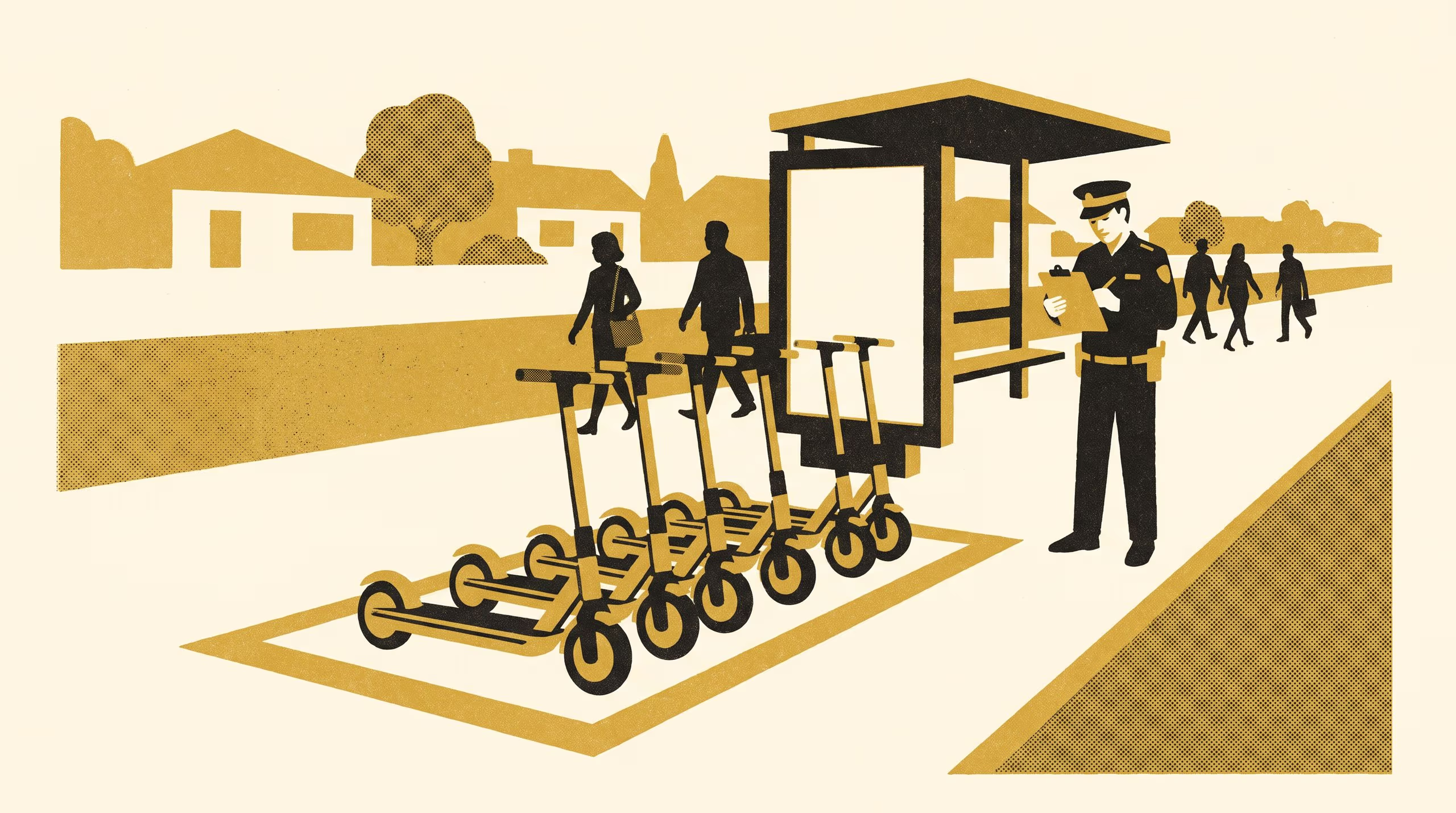
A new Slop University paper reports that a local transport unit now ties an e-scooter operator's fleet-cap growth at each bus interchange to a five-level maturity score, withheld until footpath return-point discipline reaches Level Three.
Nine bus-interchange precincts are scored fortnightly against a five-level maturity model, and a local transport unit won't approve a bigger fleet below Level Three
A local transport unit has stopped taking an e-scooter operator’s word for how well its rides end. Since this term, growth in the operator’s authorised fleet cap at any of nine bus-interchange precincts is tied directly to a five-level maturity score the School of Emergent Priorities built to grade footpath return-point discipline, and the unit will not approve an increase below the model’s third level.
The Return-Point Maturity Model, developed with the School of Continuous Improvement’s Adaptive Metrics Lab, scores each precinct fortnightly on a blend of signage, geofencing, the operator’s own end-of-ride verification, and an independent footpath audit, moving a precinct through five named stages from Ambient to Self-Auditing. Across a 24-week deployment the composite score tracked the independent audit closely enough, the researchers report, to justify handing it a real consequence.
A score is only as convincing as what happens when it says no.
— Lecturer and Convenor Ingrid Vasseur, School of Emergent Priorities
Once a precinct clears Level 3, its fleet-cap increase holds for a full assessment cycle regardless of a single subsequent dip — an arrangement the transport unit adopted, rather than one the University recommended outright, and one the researchers say protects the increase’s usefulness as a permission rather than a running commentary. Associate Professor Casimir Beng said the Lab was “comfortable putting a real number behind the word ‘ready’, and just as comfortable saying which precincts aren’t there yet.”
Two of the nine precincts remain at Level 2, and the model’s next scheduled reassessment falls at the close of the current teaching period. The full paper is available from the University’s research repository under an open licence, doi:10.5555/slop.f30mbu.