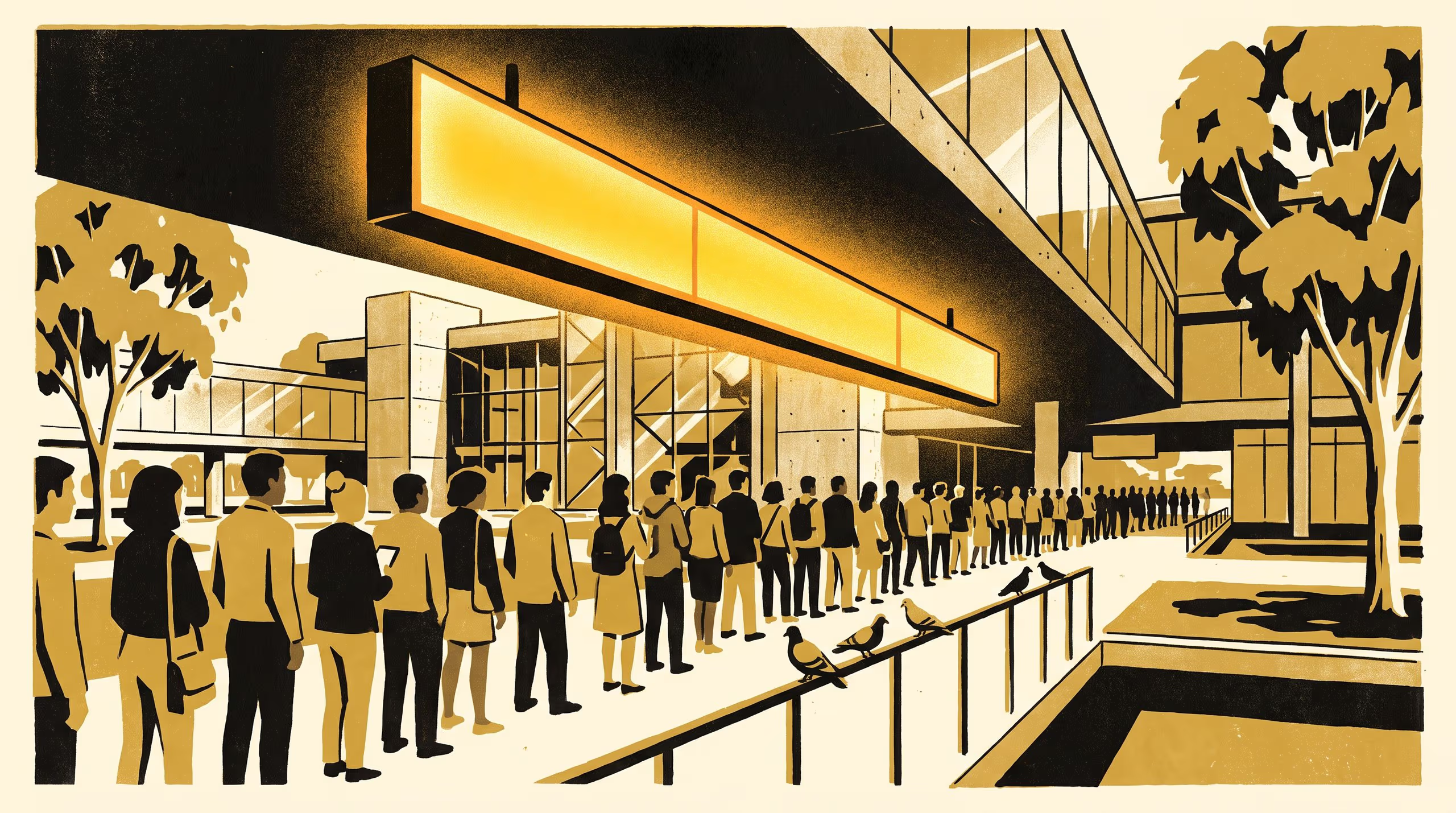
Slop University reports that a campus cafe queue-length sign's fixed eight-person cutoff drives a sharp rise in customer abandonment through its colour change alone, and the finding is becoming policy for every metered service point on campus.
A regression-discontinuity study of one campus counter is now the basis for a university-wide signage standard
A campus cafe’s queue-length sign has turned up something its vendor never designed it to measure. The School of Emergent Priorities logged 1,142 arrivals at one of the University’s busiest counters over a full term and found that the instant the sign flips from green to amber, at a fixed count of eight people waiting, the odds of someone walking away jump by more than twelve percentage points. The wait itself barely moves. The colour does the work.
The study set arrivals just under the eight-person threshold against arrivals just at or over it, holding everything else about the queue constant, and traced the jump to the signage cutoff rather than to congestion building gradually as the line grew. The School of Emergent Priorities is treating the result as a template for how a service cue ought to be checked before anyone trusts it.
Every signal earns a certain amount of trust just by being installed, and it’s worth asking every so often whether it’s still earning it.
— Dr Iben Chikere, Lecturer, School of Emergent Priorities
Postdoctoral Fellow Dr Anouk Mensah said the finding “raises a fair question for every sign on campus that claims to be reporting something rather than causing it.”
On the strength of the result, the Office of Research Outputs is extending the validated eight-person, green-to-amber threshold to every metered service point on campus, from library help-desk queues to gym check-in lines, with local recalibration permitted only after an approved re-validation study of its own.
The full poster is available from the University’s research repository under an open licence, doi:10.5555/slop.z3ccf7.