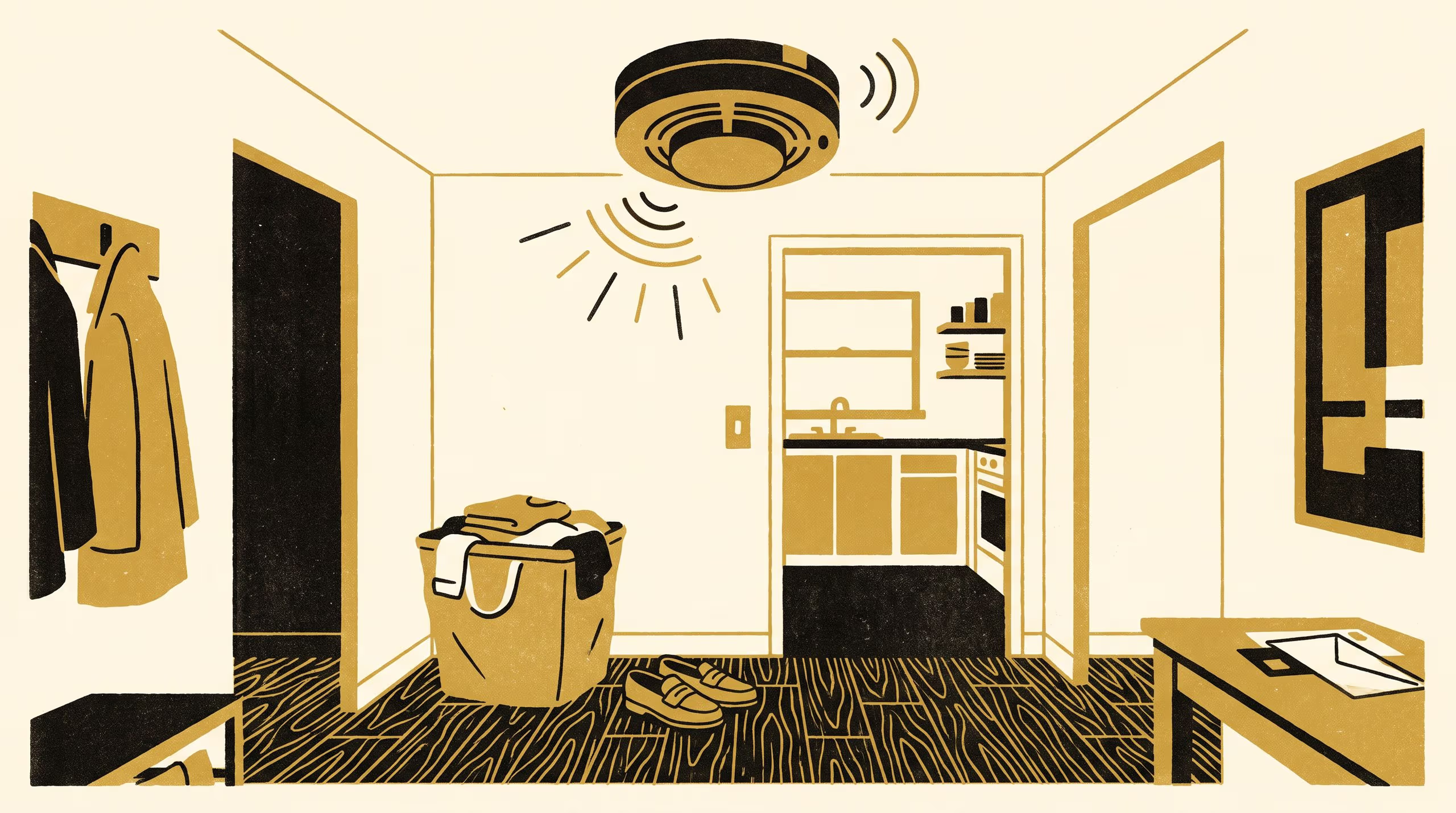
A new Slop University paper from the School of Emergent Priorities and the School of Continuous Improvement follows one instrumented share house across eleven days of a smoke alarm's low-battery chirp, and the case now underwrites a Facilities-wide response protocol.
A single share house, already wired for an unrelated noise study, becomes the case behind a new Facilities protocol for every University residence
Every resident of a four-person share house could hear the hallway smoke alarm’s low-battery chirp. For eleven days, that was the only thing the household shared about it. A new Slop University paper turns the interval into a single-site case study, and the University’s Facilities Division has already drawn a policy from it.
The site had already been recruited into a School of Emergent Priorities panel on domestic coordination when the alarm sounded, which is the only reason the case exists in this much detail: an acoustic logger kept a timestamp on every chirp, an existing smart lock recorded who was home for each one, and the household’s own group chat was coded, after the fact, for what residents said and did about the noise.
The interesting thing about this case isn’t that nobody fixed the alarm. It’s that fourteen separate messages said someone would.
— Dr Iben Chikere, School of Emergent Priorities
Lecturer Bram Ntuli, who convenes the School of Continuous Improvement’s Improvement Grand Rounds and co-authored the paper, said the case had already found a second life as teaching material. “It’s the kind of record a review series exists for,” he said. “One site, followed closely enough that the discussion doesn’t have to guess.”
The paper reports that the chance of the chirp being addressed within ten minutes fell the more residents were home to hear it, and that a printed fridge note changed nothing the instruments could detect. The chirp was eventually silenced by a visiting parent, on their way through the kitchen.
On the strength of the case, Facilities has drafted a published Chirp Response Protocol assigning a rotating on-call steward to every University-operated residence. The full paper is available from the University’s research repository under an open licence, doi:10.5555/slop.xjoqir.