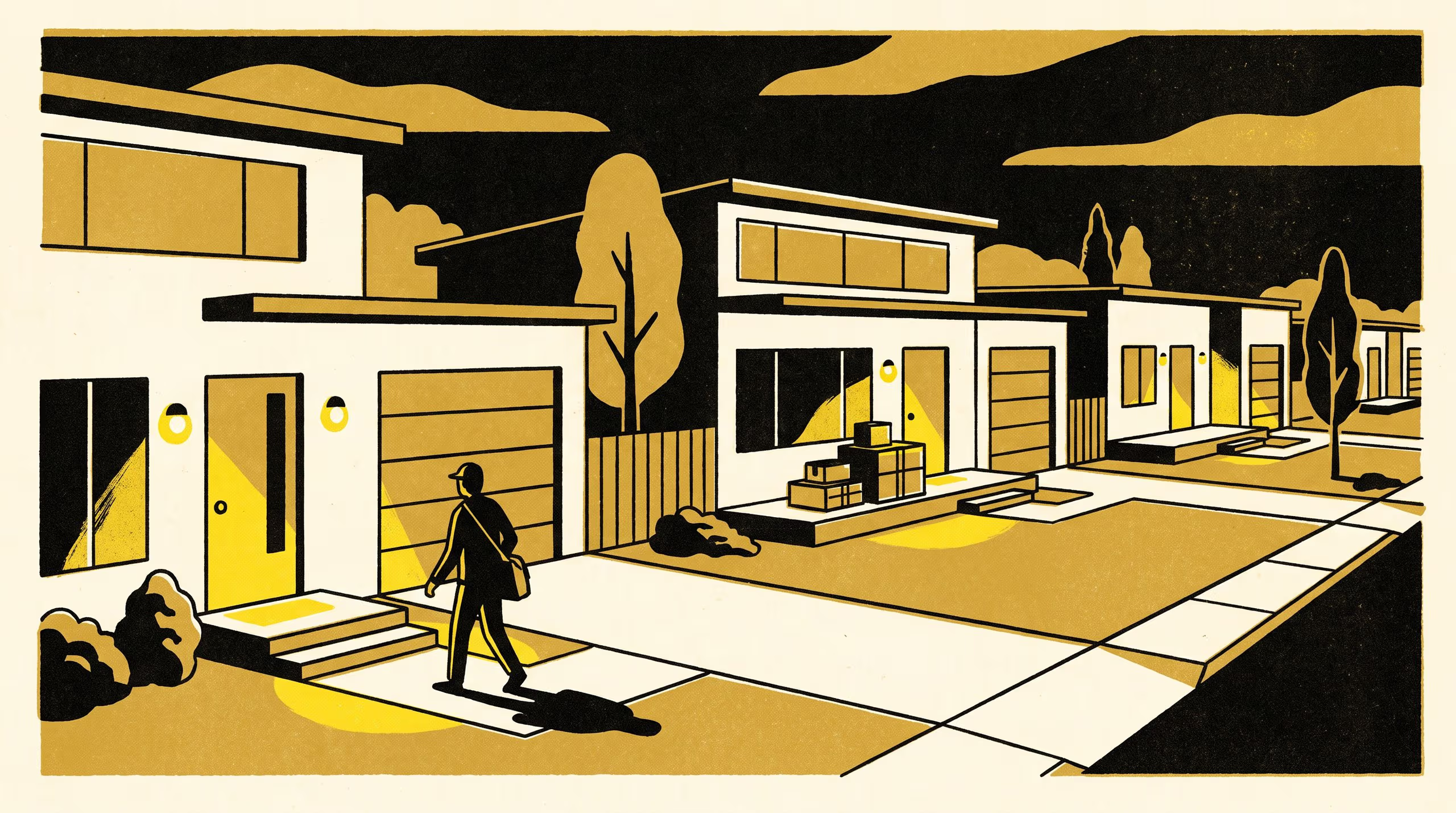
A pre-registered trial across 118 share-house driveways finds an illuminated house-number fitting changes nothing about parcel misdelivery, and the University is fitting it to every leased property regardless.
A School of Continuous Improvement trial finds a solar house-number light does nothing for parcel misdelivery, and Facilities fits it everywhere regardless.
A pre-registered trial of a small fitting — a solar-powered light beside the house number — set out to answer a narrow question: does making a driveway easier to read after dark change whether a parcel actually reaches it. Across a full season and 118 share-house driveways, the answer came back unchanged.
The result sits inside the School of Continuous Improvement’s wider interest in what a fitting does once it leaves the trial and enters the property portfolio it was tested for.
A negative result still tells the portfolio something. We would rather fit the light and know than assume the light and never check.
— Senior Lecturer Torun Ezeigwe, Director, Master of Applied Measurement
Researchers tracked parcel misdelivery and return-to-sender volume across two leasing precincts over fourteen weeks, comparing driveways fitted with the light against unlit controls matched by street and delivery round. Neither measure moved beyond what a season’s ordinary variation would produce.
“The fitting changes what the street looks like after dark,” said Lecturer and Convenor of the Evaluation of Evaluation Dagny Okafor. “What it does to a delivery round is a separate question, and this trial answers it.”
Facilities has added the illuminated house number to the standard fitting list for every leased student-housing property from the next intake, with the trial’s result recorded against the decision rather than in place of it. The full poster is available from the University’s research repository under an open licence, doi:10.5555/slop.ah3bhu.