A research poster finds camera-only queue counts at the campus café are reliably inflated by loitering pigeons, and the RFID-fused fix has been adopted as the reference occupancy signal for unrelated campus queues.
A School of Emergent Priorities poster fuses RFID taps with camera counts to fix pigeon-driven overcounts, and the fix is being extended to unrelated queues campus-wide.
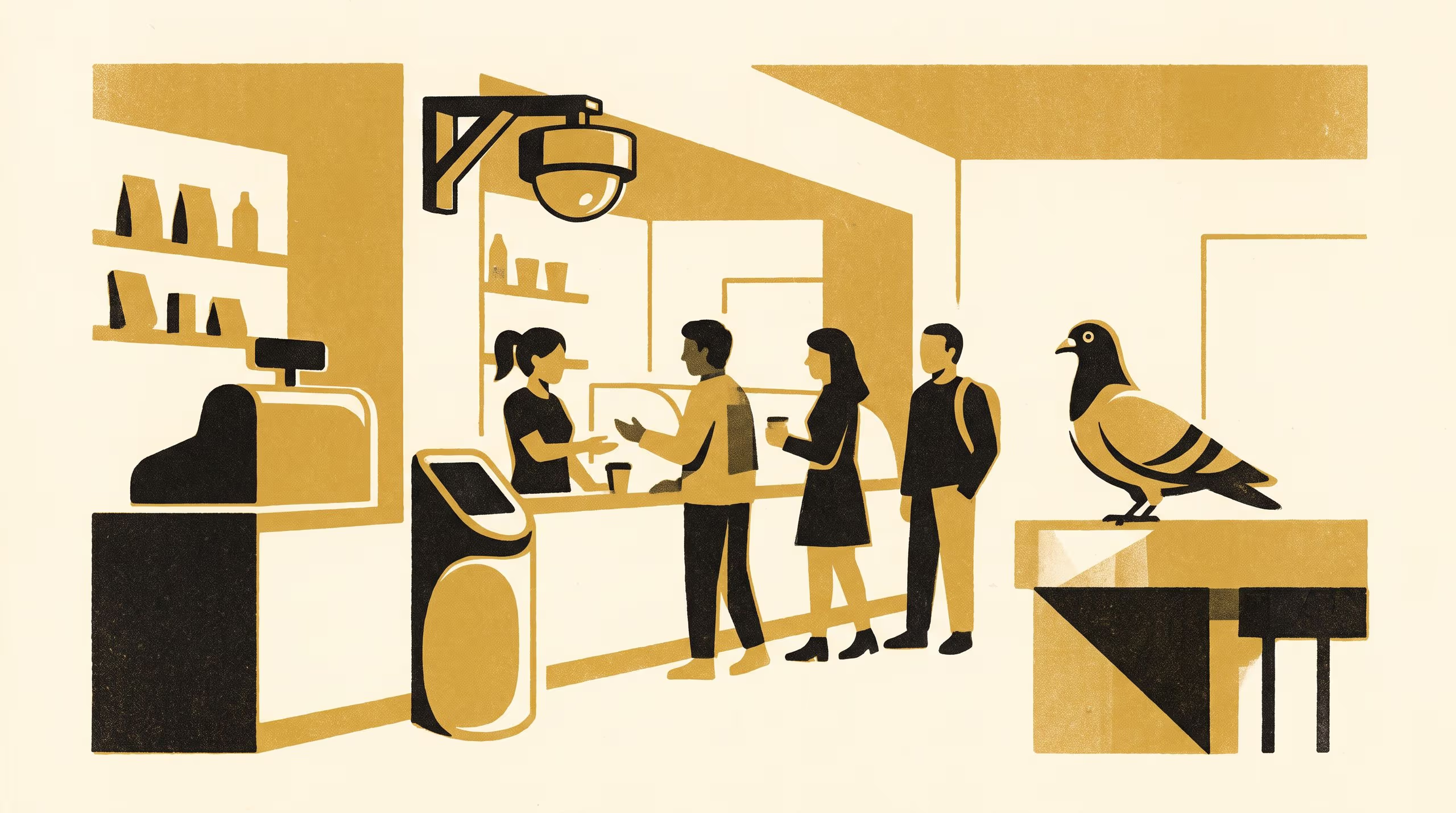
A pigeon that lingers near the till counts, to a camera, exactly like a customer, and until this week the University’s queue-length feeds could not tell the difference. A research poster published today by the School of Emergent Priorities describes the fix: a low-cost rail pairing an RFID tap post with the existing overhead camera at the campus coffee counter, cross-checking every camera-flagged occupant against a confirmed order tap before it counts toward the queue.
Led by Dr Iben Chikere with Dr Osei Vandermeer and Dr Marit Osayande, the fourteen-week deployment across three café sites found the camera-only feed had been overcounting by several people a day whenever pigeons settled near the counter, an error the tap-confirmation layer largely absorbs. The University’s Shared-Amenity Fairness Register has since adopted the fused rail’s reading as its reference occupancy signal, unmodified, for queues well beyond the one it was built to watch.
A number that survives its first handover rarely survives it unchanged, and this one has already been asked to mean something at the printer queue that it was only ever built to mean at the counter.
— Dr Iben Chikere, Lecturer, School of Emergent Priorities
Dr Marit Osayande, co-author on the poster, said the rail’s early appeal was exactly its ordinariness: “Nobody audits a coffee queue closely enough to notice when its instrument starts doing someone else’s job.”
The School frames the rail as the kind of unglamorous infrastructure its priorities agenda exists to follow: built to settle one small dispute, then quietly relied upon to settle several it was never asked about.
The full poster is available from the University’s research repository under an open licence, doi:10.5555/slop.4cy6wo.