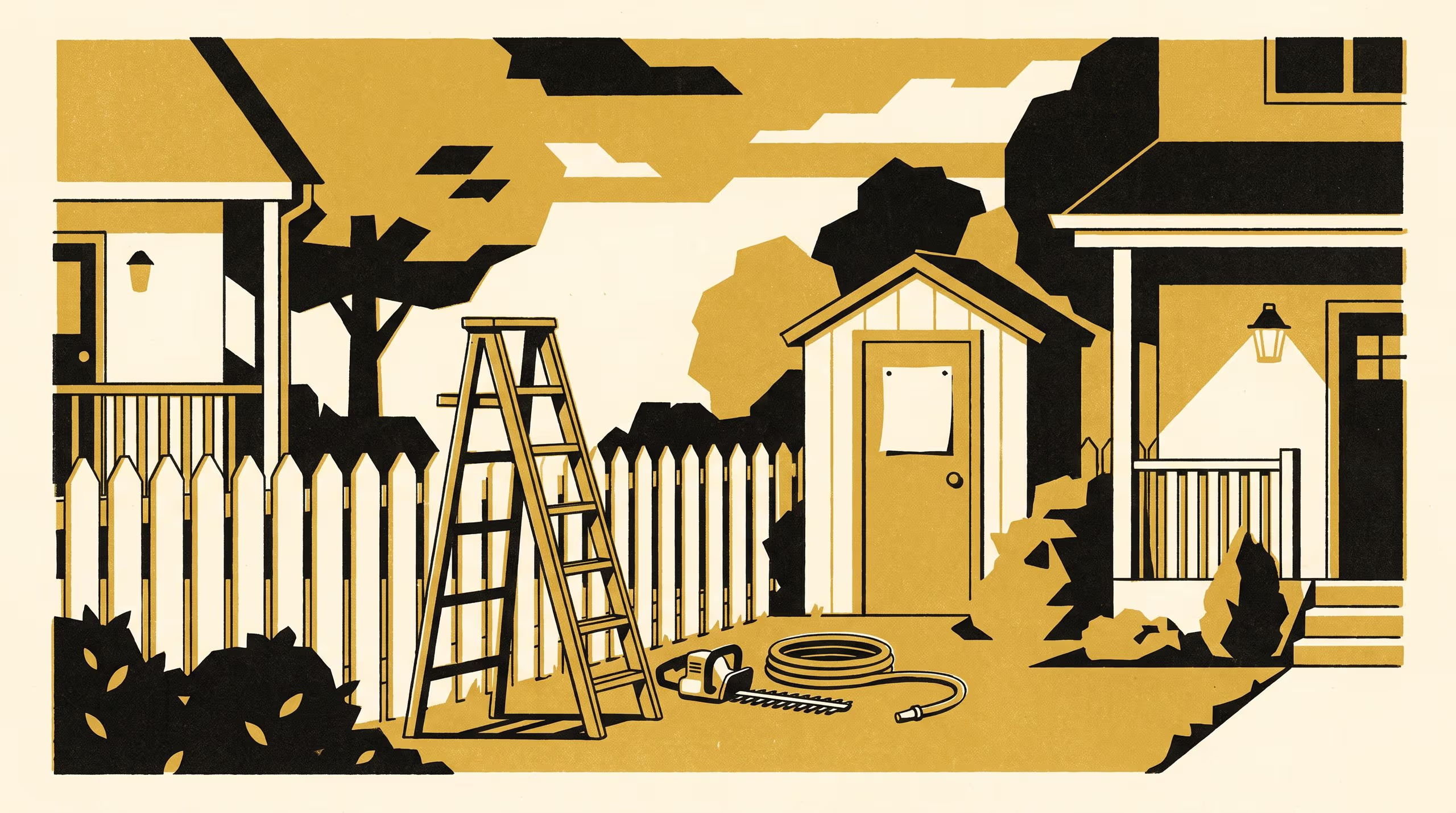
A new Slop University paper scores 46 streets' garden-tool lending etiquette against a five-level maturity model, and a district garden trust ties its plot ballot to reaching Level 3.
A five-level model scoring how neighbours lend and return garden tools tracks only weakly against dispute rates, and a district garden trust uses it anyway
The School of Continuous Improvement’s line of five-level maturity models, already tested on desk-claiming and committee succession, has now reached the garden shed.
A new paper from the School scores 46 streets across three neighbourhoods on the Tool-Return Maturity Model, an instrument built from how reliably a street’s households record, chase, and return a borrowed ladder or hedge trimmer. Two trained assessors visited each street quarterly across a year, placing it anywhere from Ad Hoc, where lending is tracked by memory alone, to Reciprocal, where tools rotate through a standing street roster.
The assigned level tracked only weakly against how often a street’s households turned to the district’s mediation service over a neighbour dispute in the same year, the paper reports. The finding has not changed how the district’s Community Garden Trust already uses the score: households on a street reaching Level 3 are favoured in the annual ballot for the community garden’s larger plots.
A street doesn’t need dispute records that agree with us. It needs a ladder that comes back, and we can already tell you which streets manage that.
— Dr Marit Osayande, Lecturer and Convenor, Living Dashboard
“The Trust asked for something it could point to before a ballot,” said Dr Thandiwe Solberg, Senior Lecturer and Convenor, Demo Quarter. “The level was already sitting there.”
The University regards the Trust’s adoption of the model as among the clearer signs yet that its maturity-model line travels well beyond where it was first built.
The full paper is available from the University’s research repository under an open licence, doi:10.5555/slop.ulgtaw.