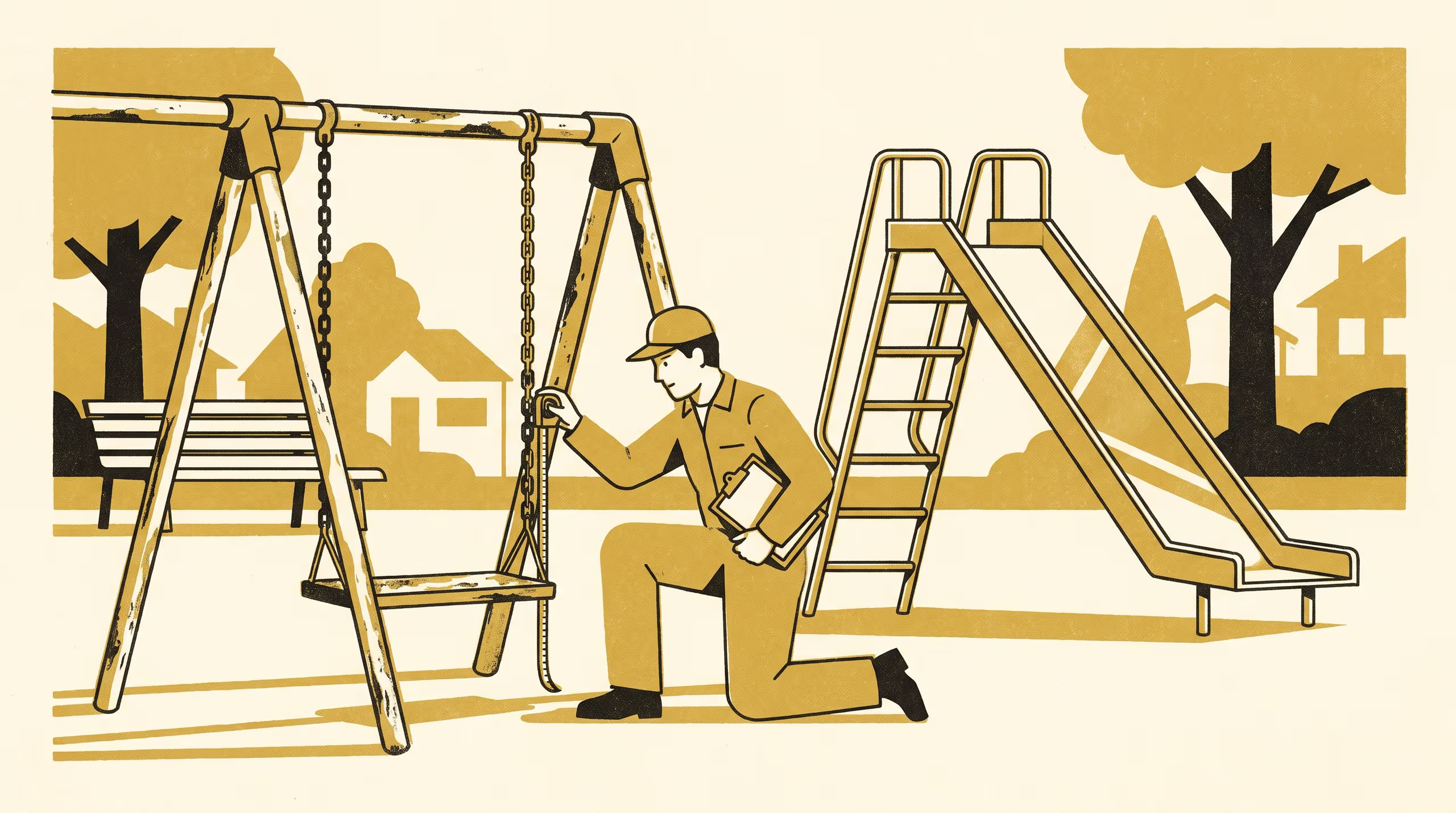
A new Slop University brochure profiles the Trajectory Analytics Group's age-and-traffic framework, which now decides a shire's playground upgrade funding with no discretionary override.
The Trajectory Analytics Group's age-and-traffic framework leaves capital works no room to weigh anything else
A shire’s playground upgrade queue used to leave room for a site visit, a councillor’s judgement, or a resident’s letter. Not any more. A new Slop University brochure profiles a Trajectory Analytics Group framework that reduces the whole decision to two measurements already sitting in every shire’s own maintenance register: how old a playground’s equipment is, and how many people still use it.
The framework, developed within the School of Emergent Priorities’ wider programme on how a priority is sensed and carried through into a durable commitment, sorts every registered playground into one of four named categories, then binds the shire’s next round of capital works to that sorting alone. A worn, well-used playground moves straight to the front of the queue; a worn, quiet one is filed for monitoring only, with no route back to the front short of the numbers moving themselves.
A funding rule usually keeps a line open for the case nobody measured. This one doesn’t, and that was the point of building it.
— Dr Iben Chikere, Lecturer, School of Emergent Priorities
The University counts the framework as its clearest demonstration yet of anticipatory capability moving from a research question to an actual capital-works decision. “Most of what we study is a priority still forming,” said Dr Ronja Oyelaran, Senior Lecturer, School of Emergent Priorities. “This is one that finished forming and started spending money.”
The brochure sets the finding beside seven further published studies of the instruments an ordinary week already keeps, from a council’s street-tree watering rounds to an open-plan floor’s desk-claim model.
The full brochure is available from the University’s research repository under an open licence, doi:10.5555/slop.e4qv8x.