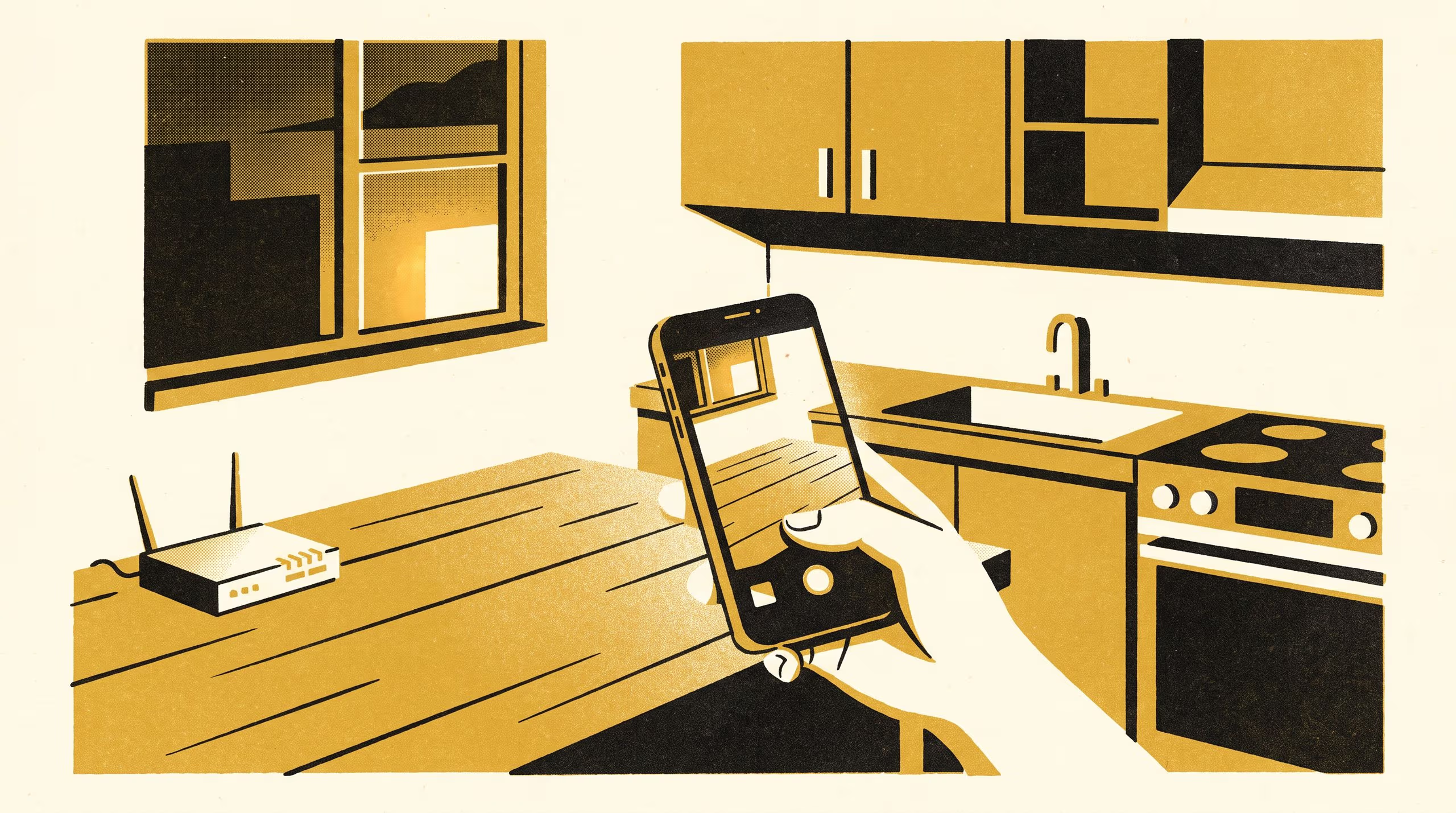
A new Slop University paper reports a household Wi-Fi captive portal that restores internet access on a photographed chore, and a staff subsidy that now renews on the certified compliance streak alone.
A ten-week, 41-household trial finds the same photo clears the gate however many times a family reuses it, and a staff router subsidy now renews on the certified streak alone
A paper released today by the School of Continuous Improvement asks whether an evening internet connection can be made to depend on a chore that happened somewhere else in the house, and reports what forty-one households did once it could.
Dr Osei Vandermeer led the project, which fitted household routers with Latch, an overlay that intercepts a device’s evening connection and asks for a timestamped photograph of a nominated chore area before restoring it. Across a ten-week deployment, fleet-wide compliance climbed within the first month and held there for the rest of the term. The University’s Home Connectivity Program has since made the certified streak, lodged with the Indicator Commons each quarter, the sole condition for renewing a participating staff household’s router subsidy.
The router can’t see whether the bench got wiped. It can only see whether the photo looks like the one already on file, and that turns out to be a question households answer quickly.
— Dr Osei Vandermeer, Research Fellow and Convenor, Review Cadence Observatory
Associate Professor Casimir Beng, Lead of the Adaptive Metrics Lab and a co-author on the paper, said the deployment gave the Lab its clearest look yet at how fast an unsupervised verification system finds its own shortcut, calling the plateau in the fleet’s compliance figures “the moment a household and a classifier quietly agree on what counts.”
The paper also reports that a proposed safeguard, requiring the submitting phone to be connected to the home network at the moment of upload, made no measurable difference to the result. The team has kept the safeguard in place regardless.
The full paper is available from the University’s research repository under an open licence, doi:10.5555/slop.2z4okd.