A new School of Emergent Priorities research poster reports on DRAW, a raffle-draw verification system that voids and reschedules any club raffle a device fails mid-draw, with no manual fallback.
DRAW's cryptographic seed check gates thirty-eight clubs' raffles, with no fallback to the barrel when the device fails.
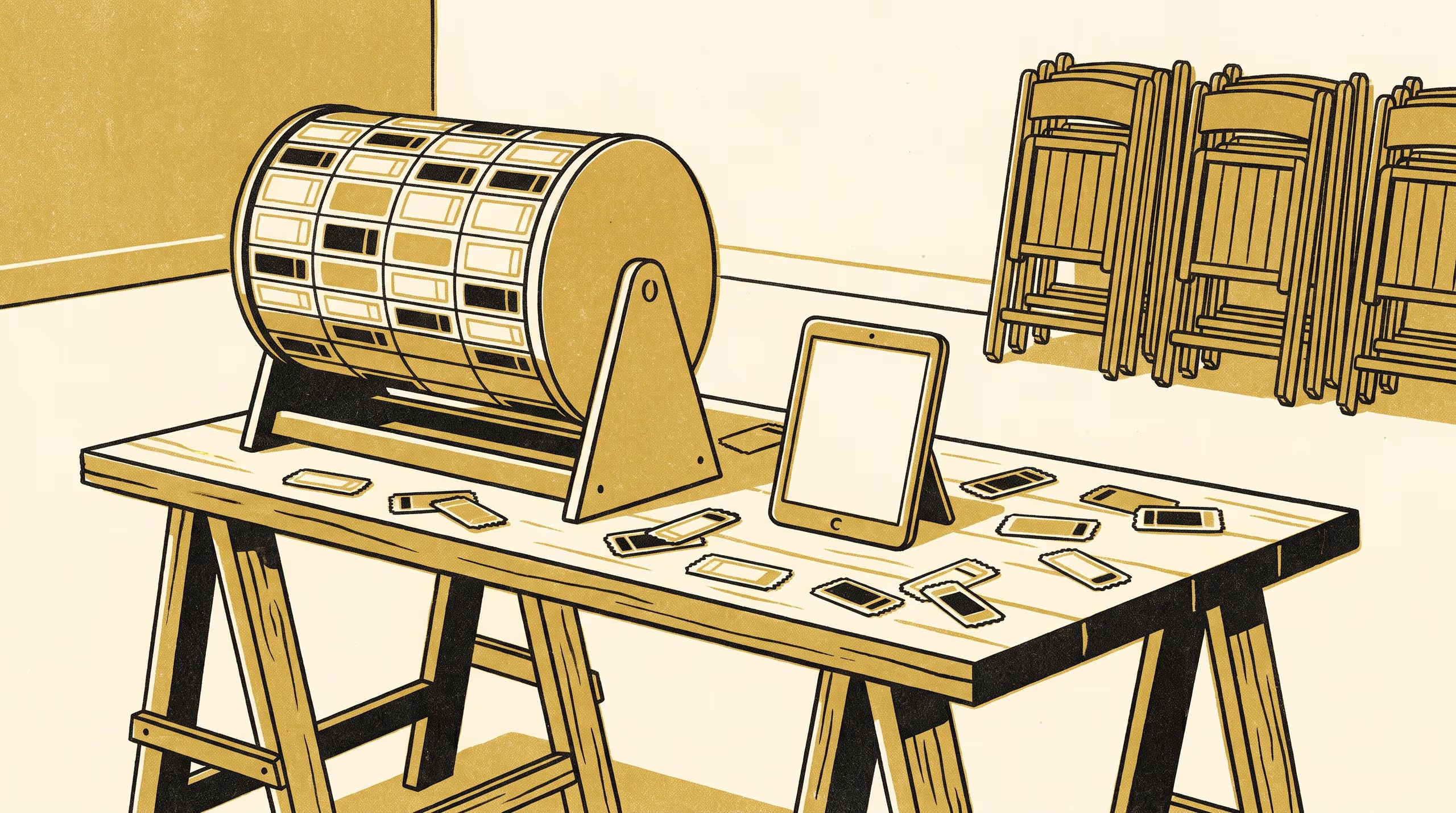
Six suburban clubs spent this season’s raffle night twice: once at the trestle table, when a verification tablet declined to confirm a barrel draw was fair, and again days or weeks later, once Slop University’s protocol finally let the draw stand.
The protocol, DRAW, asks a raffle to publish a sealed random seed before ticket sales close, then checks the eventual draw against that seed in front of the room. Where the tablet can’t complete the check, the draw itself no longer counts until it is rerun — a substitution the School of Emergent Priorities’ rollout now carries across thirty-eight affiliated clubs, with no return to the unassisted barrel.
The result belongs to a wider University habit of taking a volunteer-run institution’s smallest customs and holding them to a standard built for something considerably larger.
A device that can fail is not the same claim as a device that makes failure visible. We built for the second, and the raffle nights are where we’re finding out what that actually costs a room.
— Associate Professor Casimir Beng, Lead of the Adaptive Metrics Lab
Dr Iben Chikere, Lecturer in the School of Emergent Priorities, said the rollout’s most useful failures weren’t the device faults at all, but “the reschedule gap they open — that’s the same gap our handover archive keeps finding, just measured in days instead of pages.”
DRAW’s takings threshold now applies to any club fundraiser clearing it in a single sitting, and the School has no plan to reinstate a manual fallback for a failed device.
The full poster is available from the University’s research repository under an open licence, doi:10.5555/slop.1zd7bh.