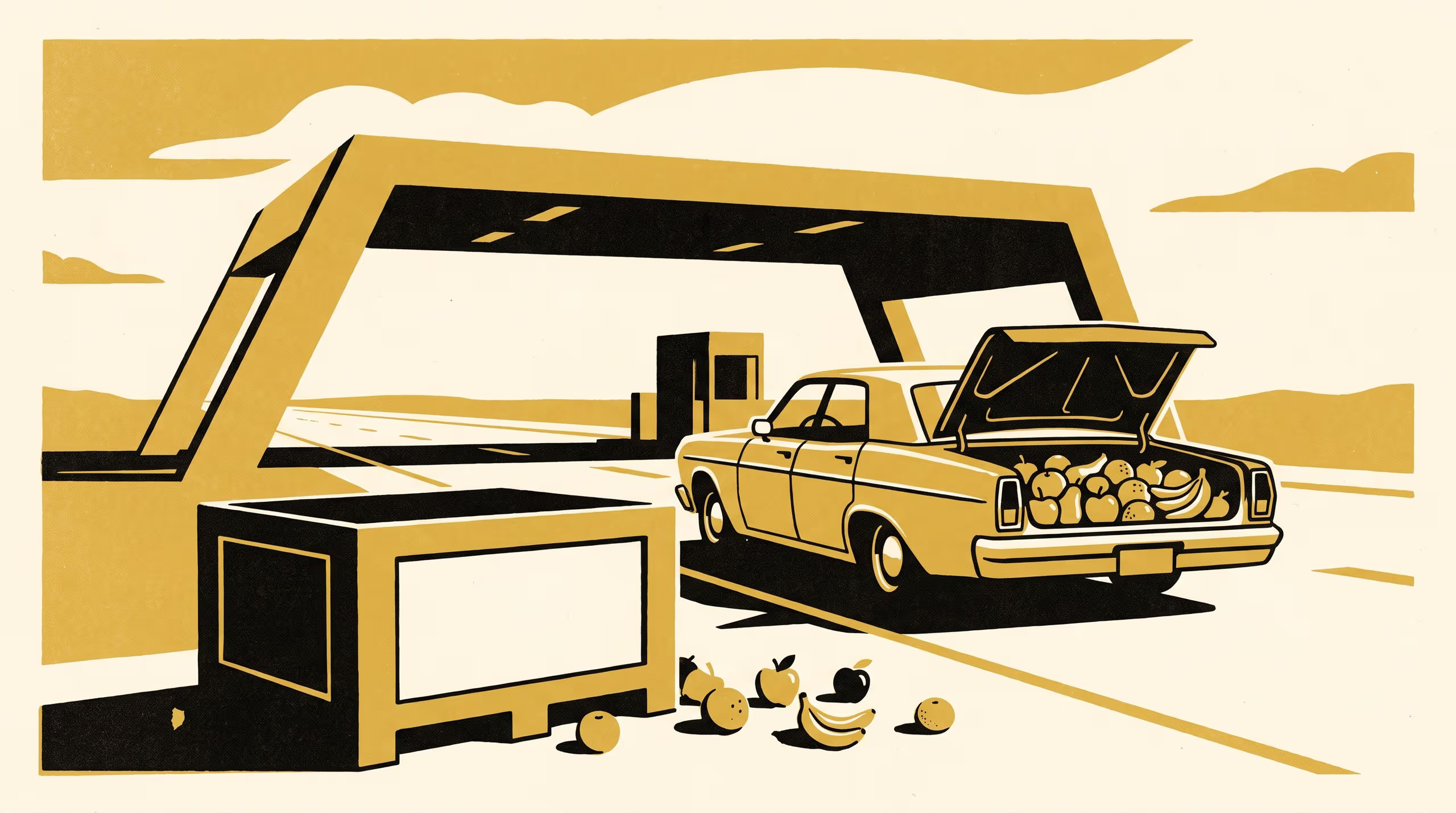
A new brochure from the School of Emergent Priorities treats a produce-declaration bin as the inspection at one state-border station, and binds civic placements to that clearance.
A School of Emergent Priorities brochure takes one inspection station as the standing civic case of the Master of Priority Studies
The produce-declaration bin at a state border inspection station clears the boot before anyone looks. A new brochure from the School of Emergent Priorities takes that finding as the standing civic case of the Master of Priority Studies, and invites a cohort to work the file.
Associate Professor Kwame Lindqvist, Director of the Master of Priority Studies, led the brochure with Lecturer Ingrid Vasseur, Convenor of Futures in Committee. The case is a single site. The teaching note names the station, the canopy, the bin, and the sequence of a clearance. It does not name a second site.
The bin is not a prompt for a better inspection. It is the inspection the station already runs.
— Associate Professor Kwame Lindqvist, Director, Master of Priority Studies
The School has made this station the civic file of the present intake. Civic placements are treated as in the field once the bin has received its drop, and are not un-cleared while the declaration register still shows an open item. Field days are called from the bin. A visit can arrive after the instrument has already released the vehicle.
Lecturer Ingrid Vasseur, Convenor of Futures in Committee, said the seminar holds the case between those visits, and that students are taken to the canopy to watch a clearance that has already happened. The looking the public expects of a border is, at this site, a step the bin has already absorbed.
The full brochure is available from the University’s research repository under an open licence, doi:10.5555/slop.zu9hvz.