A new marketing brochure carries a market-day queue-display trial's null result onto the Review Cadence Observatory's published log, closed to further review for ten years.
A market-day queue-number display shows no measurable effect on customer wait behaviour, and a new brochure enters the finding on the Review Cadence Observatory's log as closed for a decade.
The School of Continuous Improvement’s Review Cadence Observatory has a standing rule for a null result that lands cleanly: the file closes, and it stays closed. A new Slop University brochure, At the Food Truck Row, puts that rule to work on its most recent test case.
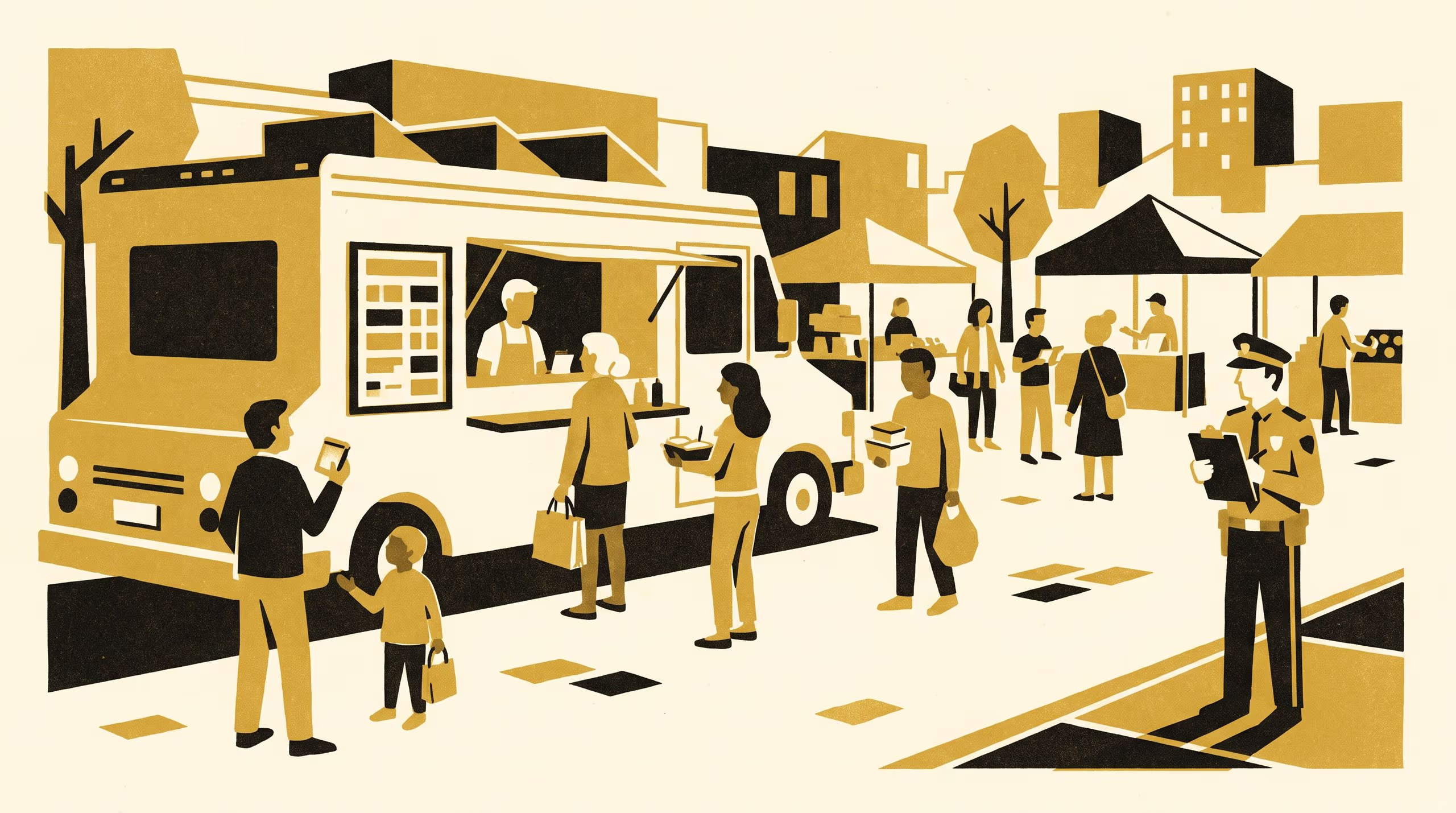
A market-day duty officer spent a trading morning watching a food truck’s queue-number display board, installed to spread customers evenly along the footpath rather than into a single line. The fieldwork found no measurable change in how far people actually wandered while waiting, with or without the display switched on. Rather than propose a redesign, a retune, or a second trial, the Observatory entered the finding on its published cadence log as Closed — No Review Scheduled, its strongest rating. Under standing policy, nothing carrying that rating returns to the review cycle for ten years.
The brochure sets the trial alongside five other published findings from across the University’s two schools, presenting the closure itself as the achievement the release marks.
The temptation is always to add one more caveat, one more follow-up study. We resist it. A clean null result is a finished piece of work, and we file it as one.
— Osei Vandermeer, Research Fellow and Convenor, Review Cadence Observatory, School of Continuous Improvement
“A foresight exercise usually ends with an open question for committee,” said Lecturer Ingrid Vasseur, who leads the University’s fieldwork placements. “This one didn’t have one left to give them.”
At the Food Truck Row is available from the University’s research repository under an open licence, doi:10.5555/slop.j34bid.