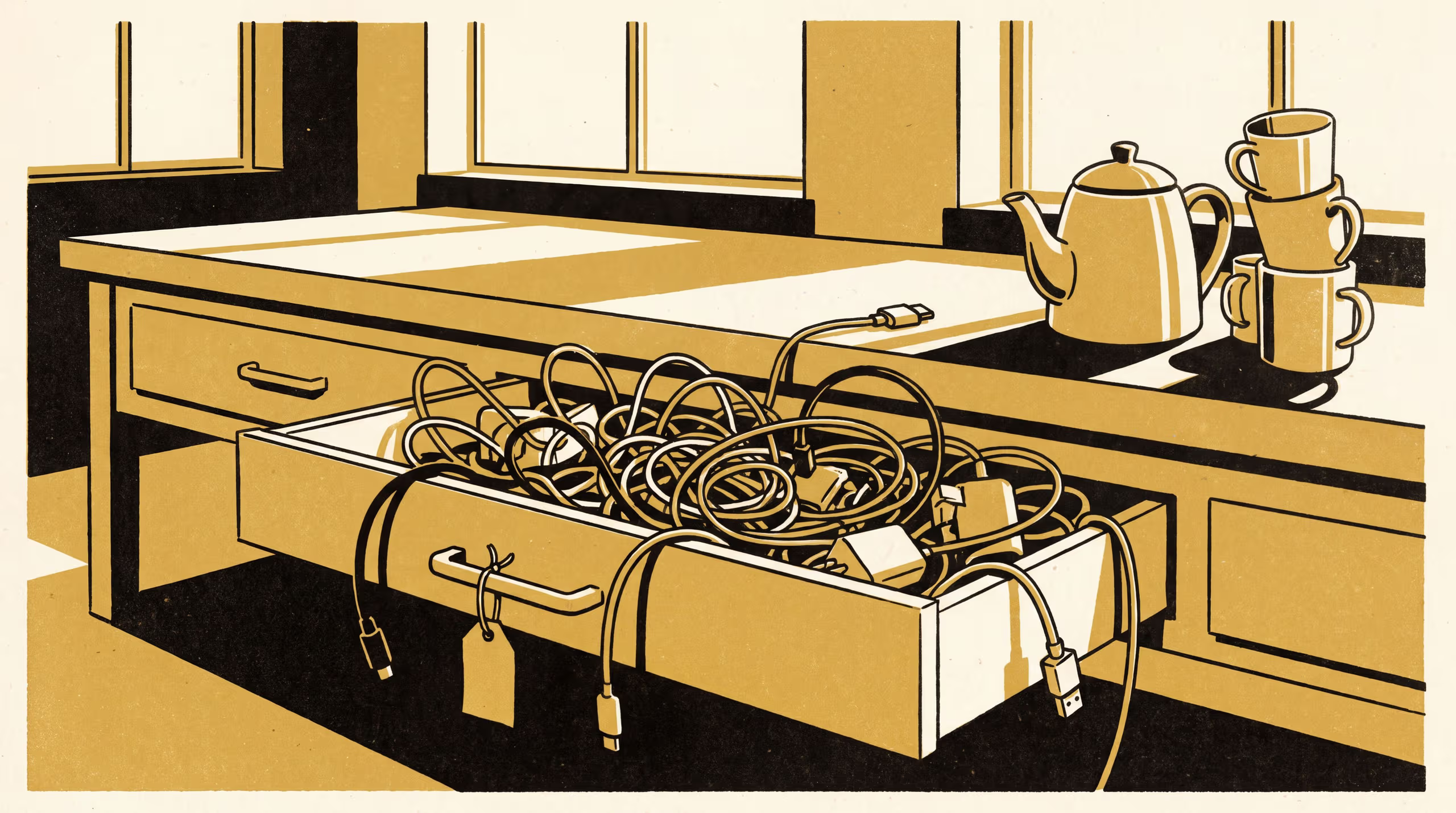
A new research poster introduces a four-kind taxonomy for the tea-room's shared charging drawer, and the disposal timetable it now sets.
CORD, a four-kind taxonomy of drawer cables, now sets how long Facilities keeps each kind before it's cleared
The School of Continuous Improvement’s Evaluation of Evaluation program has turned its attention to one of campus life’s smallest disputes: the shared charging drawer in the tea room. A new research poster released today introduces CORD, a four-kind taxonomy — Claimed, Orphaned, Derelict, and Untested — that sorts every cable found there, and a disposal timetable that follows from the kind alone. The work reflects the School’s long-running interest in giving an informal judgement call a defensible, auditable shape.
A drawer nobody is responsible for still needs a decision made about it every day. Giving that decision four names and a clock doesn’t remove the judgement, but it does mean two people asked to make it will finally agree.
— Dr Dagny Okafor, Convenor of Evaluation of Evaluation in the School of Continuous Improvement
Over a 28-week deployment across six shared drawers, the team catalogued 214 cables and tracked how long each sat unclaimed before Facilities cleared it, first under the site’s usual ad hoc practice and then under the CORD timetable. The taxonomy’s kind proved a better predictor of eventual clearance than a cable’s visible condition, and the University is now extending the same four-tier standard to every shared amenity point on campus.
“Once a cable has a kind, it has an audit,” said Lecturer Solveig Adeyemi, a co-author on the poster. “That was true of the tea room before we arrived; we’ve just written it down.”
The full poster is available from the University’s research repository under an open licence, doi:10.5555/slop.ejf8qe.