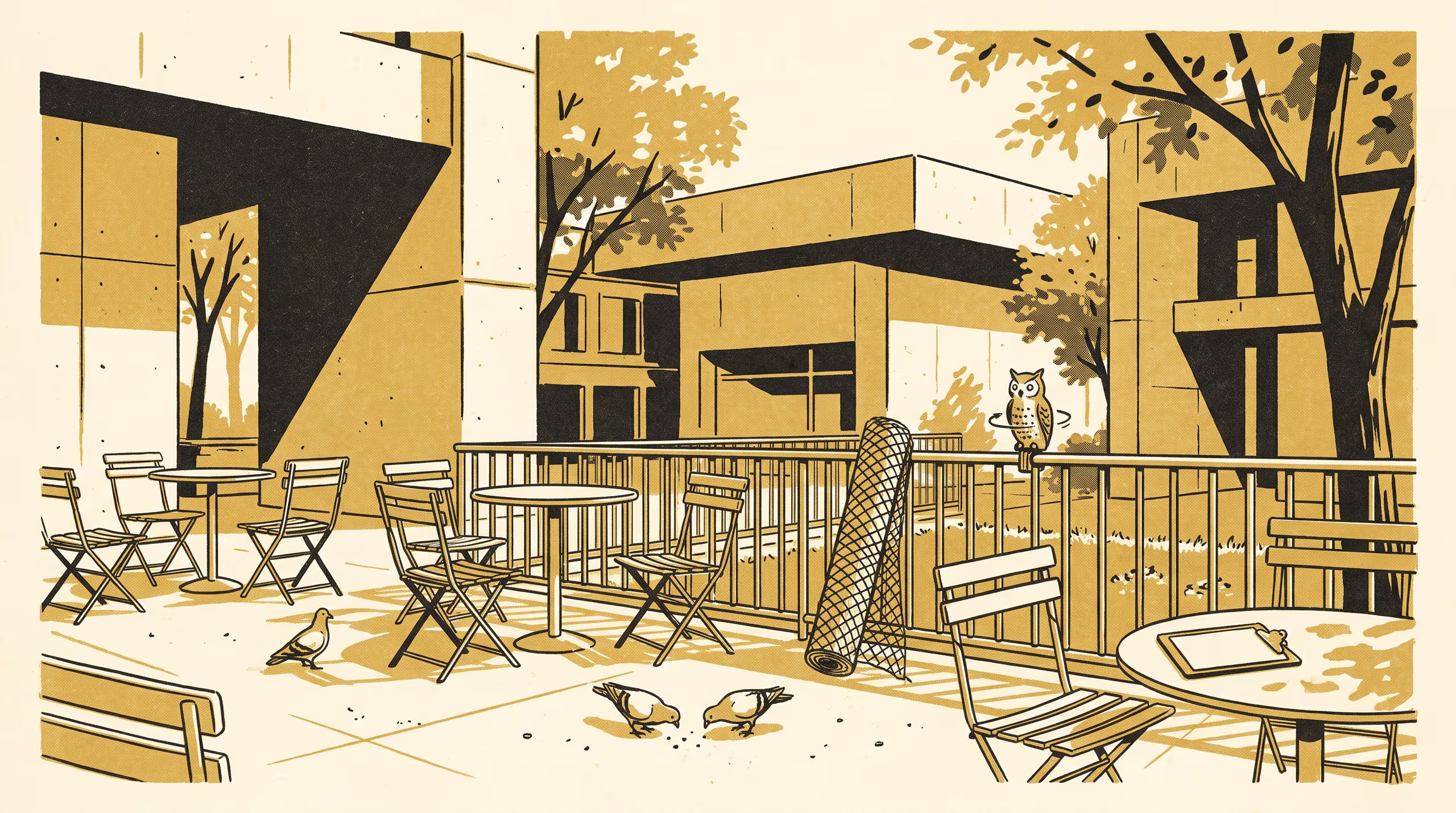
A new paper from the School of Emergent Priorities finds a courtyard's rostered duty officer predicts its pigeon-deterrence maturity level better than any hardware on site, and that reassigning underperforming officers left affected courtyards worse off.
A five-level maturity model meant to lift courtyard practice instead restarts the clock each time a stalled building's officer is reassigned
A courtyard’s rostered duty officer turns out to matter more to pigeon deterrence than the courtyard itself. The University’s five-level Pigeon Deterrence Maturity Model was built to grade a courtyard’s netting, rotation, and scheduling discipline; a new paper from the School of Emergent Priorities finds it tracks who has held the post, and for how long, more closely than it tracks any of that.
The paper, led by Dr Runa Adegoke, Senior Lecturer and Convenor of the Strategic Drift Survey, with Dr Osei Vandermeer of the School of Continuous Improvement and Dr Anouk Mensah, followed forty-one campus courtyards across eight terms. Duty officer tenure outweighed courtyard size, foot traffic, and incident history combined in predicting a courtyard’s attained level. Fourteen courtyards that stalled below the second level for two consecutive terms had their duty officer reassigned under the Campus Amenities Board’s standing rule; their average level fell rather than recovered in the two terms that followed.
The School treats the result as a caution for any programme that ties a person’s posting to the very score their tenure was quietly producing.
A ladder measures whoever is standing on it at the time. We had not expected how much of a courtyard’s climb belonged to one officer’s tenure rather than to any deterrent we could point to on site.
— Dr Runa Adegoke, Senior Lecturer and Convenor, Strategic Drift Survey
Dr Vandermeer said the pattern was one the School expects to hold “wherever a score and a person’s posting are renewed on different clocks.”
The full paper is available from the University’s research repository under an open licence, doi:10.5555/slop.7c1cw3.