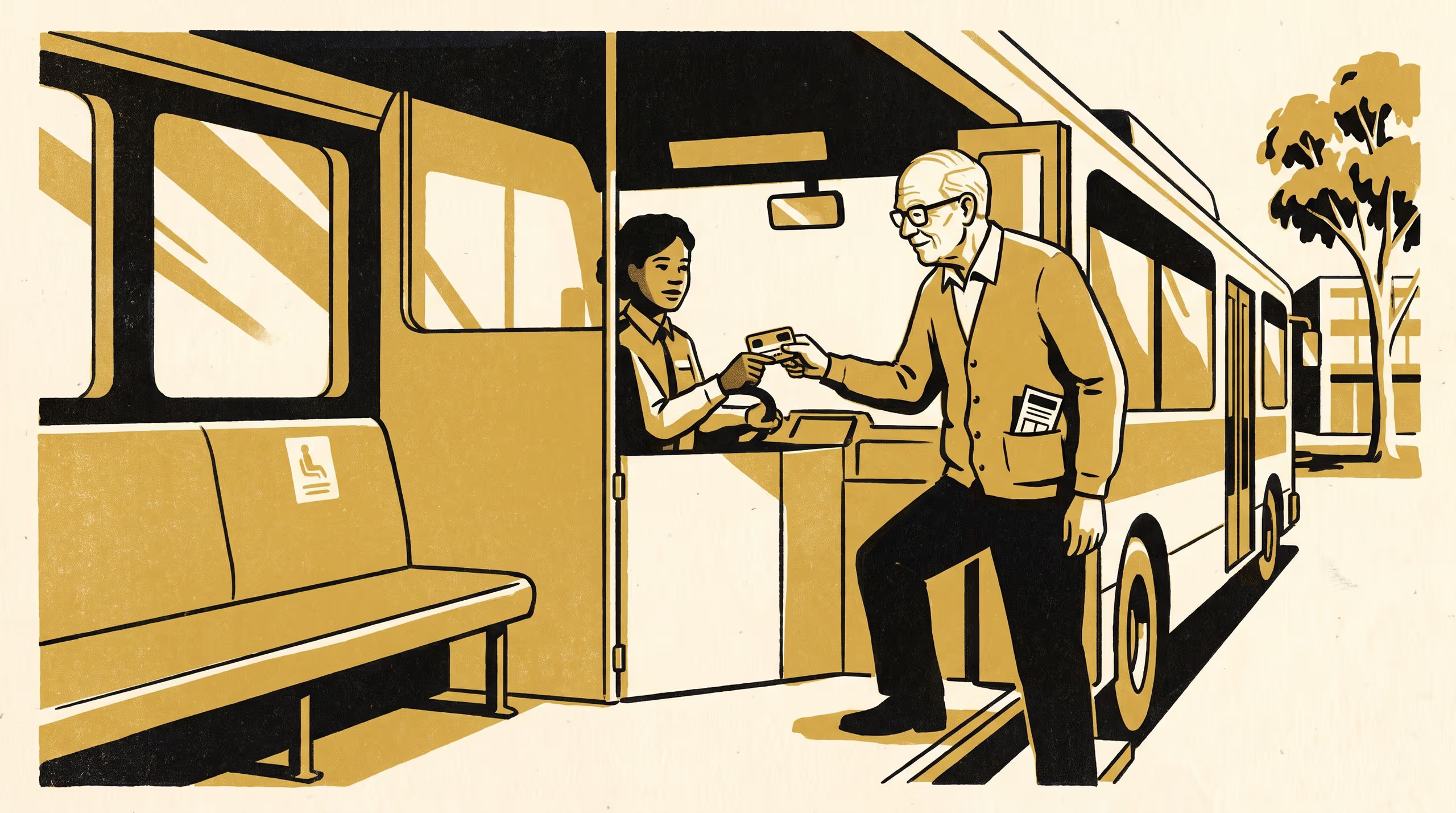
A new Slop University paper interviews 52 seniors travel-concession cardholders about how they named their linked pass's companion, and reports the scheme's rule that the entry, once fixed, can only be revisited through a medical review panel.
Once a cardholder names their regular companion, only a medical review panel built to assess capacity can change it, never a change in circumstance alone.
When a state seniors travel-concession cardholder filled in the box asking who their regular companion would be, most treated it the way anyone treats a form: quickly, and without much thought for how long the answer would stand. A new paper from the School of Emergent Priorities and the School of Continuous Improvement finds the answer stands for the life of the card.
Researchers interviewed 52 cardholders across the scheme’s first three renewal cohorts about how they came to name a companion, and tracked, cohort by cohort, which kinds of person most often get the honour. The resulting picture holds together at the level the scheme reviews it — the overall ranking barely shifts from year to year — even as individual cardholders describe the person they actually travel with changing underneath it.
A number that holds steady across three years and a name that stops being true after three months can both be correct at once. We built the study to notice when they are.
— Dr Petra Umbile, Postdoctoral Fellow, School of Emergent Priorities
For the two Schools, the finding sits inside a shared interest in what a stable-looking aggregate can quietly be hiding at the level of one person’s card.
“The panel exists to ask a capacity question,” said Associate Professor Casimir Beng, Lead of the Adaptive Metrics Lab, School of Continuous Improvement. “A circumstance question arriving at the same desk was never going to get the same hearing.”
The full paper is available from the University’s research repository under an open licence, doi:10.5555/slop.kg6u58.