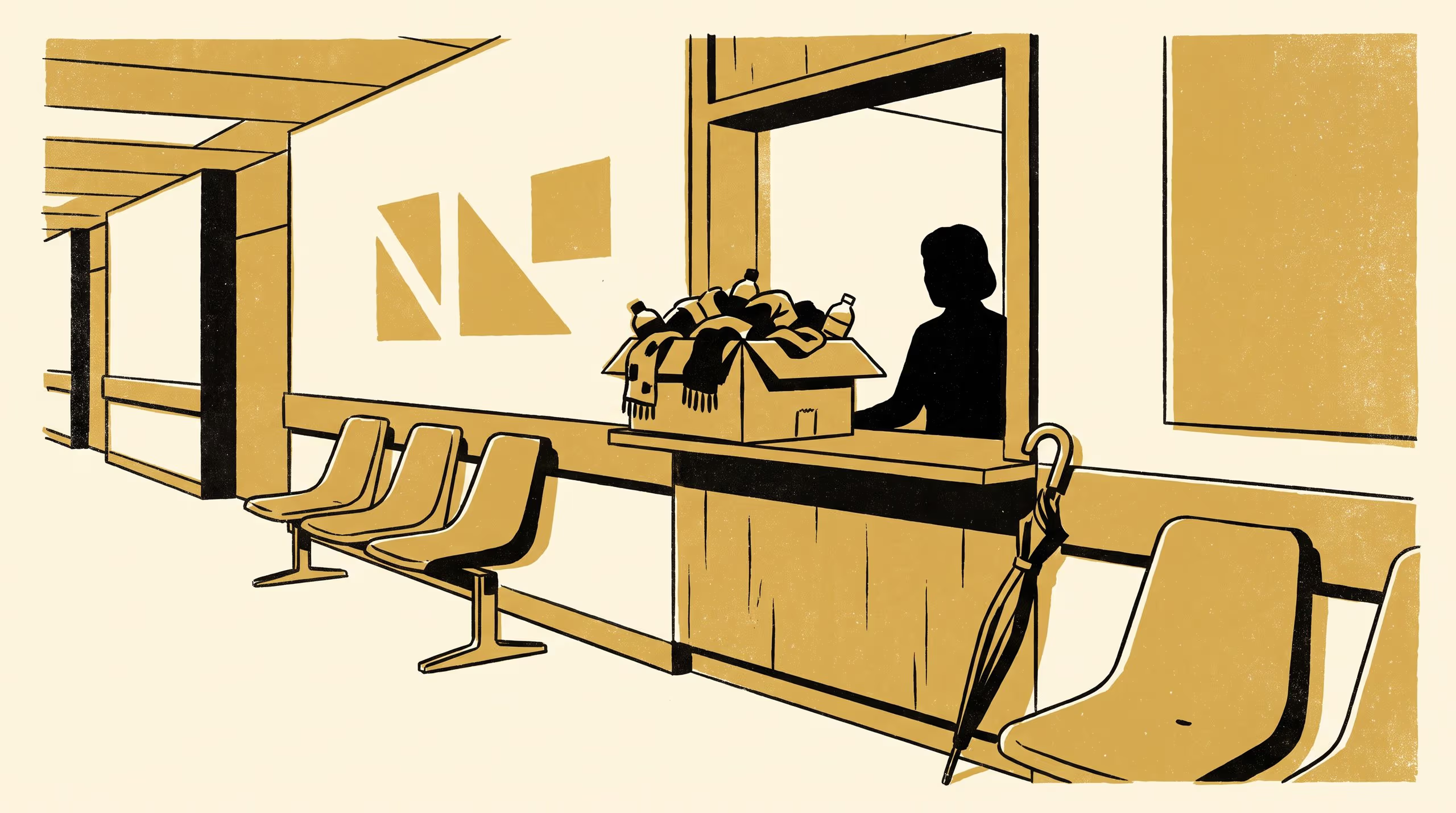
A School of Emergent Priorities research poster reports that faculty lost-property windows attaining Closed on a five-level claim-maturity model had their collection hours withdrawn at the next review cycle.
Fourteen faculty hatches scored on a five-level claim-maturity model; eleven of those that reached Closed had hours withdrawn at the next review cycle.
Fourteen faculty lost-property windows were scored against five named levels. Eleven of those that reached Closed had their collection hours withdrawn at the next review cycle, and items still in those buildings were recovered at 9 percent against 61 percent at windows that stayed Windowed.
Dr Ronja Oyelaran, Senior Lecturer in the School of Emergent Priorities, led the study with Dr Iben Chikere, Lecturer, and Hedvig Anyanwu, Doctoral Candidate. The attendant at each hatch applied a pre-registered claim-maturity model — Ad hoc, Logged, Windowed, Reunited, Closed — across five termly censuses and 3,812 logged items, with an independent observer counting unlogged items in drawers and cupboards at every round.
Closed is the level at which there is nothing left to hand back. Once that is the published finding, the hours are the next thing the cycle can withdraw.
— Dr Ronja Oyelaran, Senior Lecturer, School of Emergent Priorities
The School of Emergent Priorities places the work alongside its other studies of how a named level, once published, is taken up by the unit that keeps the hours. From the next teaching period, collection hours are withdrawn from any faculty that attains Closed, with no restored-hours exception sustained for more than a single review cycle. Windows remaining at Windowed or Reunited keep their advertised hours.
Hedvig Anyanwu, Doctoral Candidate on the study, said the follow-on census “is of the drawers, not of the hatch,” the place attendants reported items returning to once the window had shut.
The full poster is available from the University’s research repository under an open licence, doi:10.5555/slop.gdp6fn.