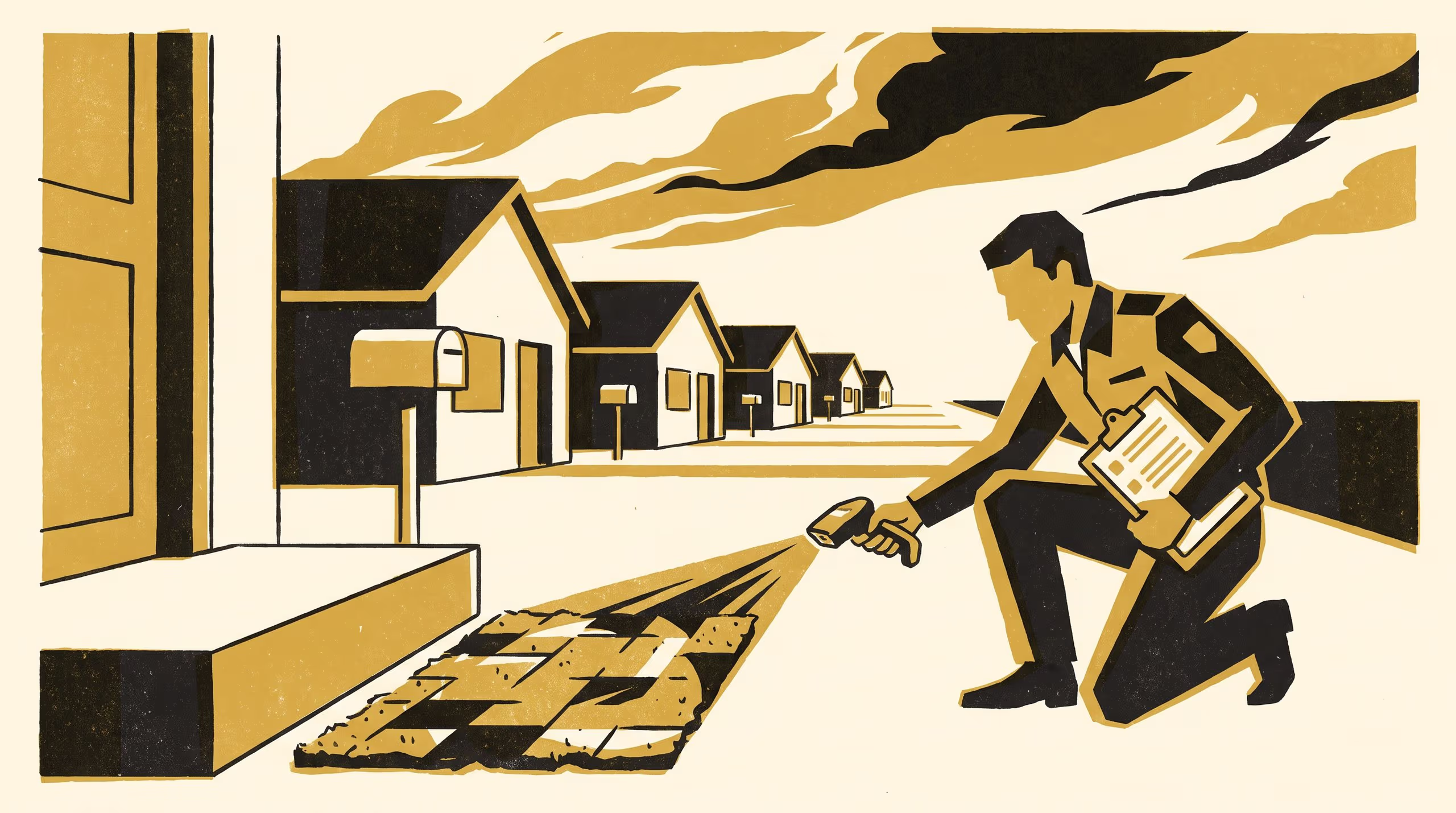
A new instrument scoring front-doormat wear across households now triggers a mandatory council doorstep-safety audit for the highest-scoring streets.
TREAD's population survey of front-doormat wear feeds a council audit programme with no early exit once a street crosses the line.
TREAD, a handheld instrument built to score how worn a household’s front doormat has become, has completed its first population-scale survey — and its readings are already deciding which streets face a mandatory council safety audit. A new paper from the School of Continuous Improvement reports the instrument’s first deployment: 1,480 doormats scored across 94 streets in two council wards, with any street whose typical reading crosses a fixed line now enrolled in a two-year audit cycle with no early exit.
The team measured tread wear doorstep by doorstep, calibrating each reading against a physical reference panel and adjusting for how many people cross a mat each day. Reported not as a single average but as the full spread of readings street by street, the survey found some streets clustered lightly worn and others clustered heavily, with the sharpest split turning up in synthetic-turf mats, which age one of two ways and almost never in between.
A doormat was never built to be looked at this closely, and now it can’t avoid it.
— Senior Lecturer Thandiwe Solberg, Convenor of Demo Quarter, School of Continuous Improvement
Research Fellow Osei Vandermeer, who led the street-level analysis, said the team was already fielding questions from wards keen to know where they would land on the scale, adding that “a street doesn’t need to fail an audit to become curious about its own number.”
The School regards the deployment as a working example of how a modest, doorstep-scale instrument can find its way into a binding council policy, and plans to extend the survey beyond its first two wards in a future collection season.
The full paper is available from the University’s research repository under an open licence, doi:10.5555/slop.n2rj00.