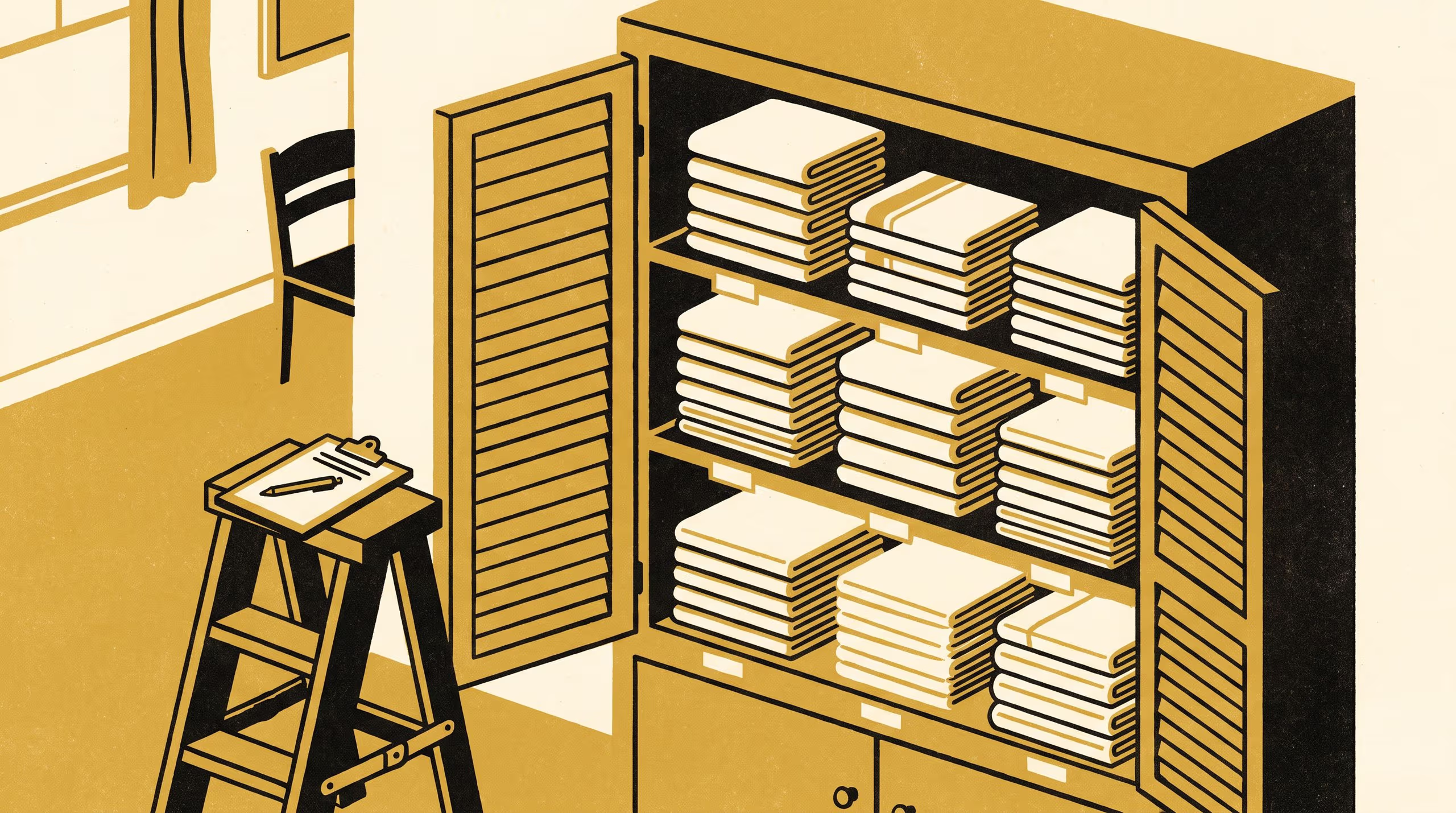
A new Slop University paper audits 118 host-family linen cupboards against a five-level maturity model and finds the score no more predictive of a blinded item-retrieval trial than chance, while a regional homestay consortium ties new host registrations to the same score.
A blinded retrieval trial found the score no more predictive of whether a student could find their own sheets than chance; a homestay consortium adopted it as a registration requirement regardless.
A regional homestay consortium’s cupboard walkthrough used to run on a coordinator’s eye and a clipboard. A new paper from the School of Continuous Improvement gives it a name instead: the Household Linen Maturity Model (HLMM), a five-level rubric scoring a host family’s linen cupboard from Loose through to Self-Sustaining, published today alongside the consortium’s own decision to require it.
Solveig Adeyemi, Dagny Okafor and Mirela Hanke scored 118 volunteer host cupboards against HLMM’s four criteria, then ran something no audit of this kind had tried before: an unannounced trial in which the hosted exchange student, not the auditor, was timed finding a specific item inside. The score and the trial moved independently of one another. The consortium’s own registration policy did not wait to find out; from the third intake term, a Level Three score became a condition of hosting, and the share of audited households clearing that bar rose from 42% to 70% across the two terms the policy bridges.
A cupboard is easy to photograph and hard to live out of; a criteria sheet was always going to reward the first thing before anyone checked the second.
— Dr Solveig Adeyemi, Lecturer, School of Continuous Improvement
“We built HLMM to give the consortium something steadier than a coordinator’s memory,” said Dr Mirela Hanke, Postdoctoral Fellow and Deputy Convenor, Living Dashboard. “What the rubric should have to check next is the more interesting question the paper leaves open.”
The study adds to the School of Continuous Improvement’s account of what a published standard does once a household starts meeting it: a folding technique, a shelf label and a rotation habit, each independently observable, standing in for an outcome none of the three was ever asked to guarantee.
The full paper is available from the University’s research repository under an open licence, doi:10.5555/slop.cu8h43.