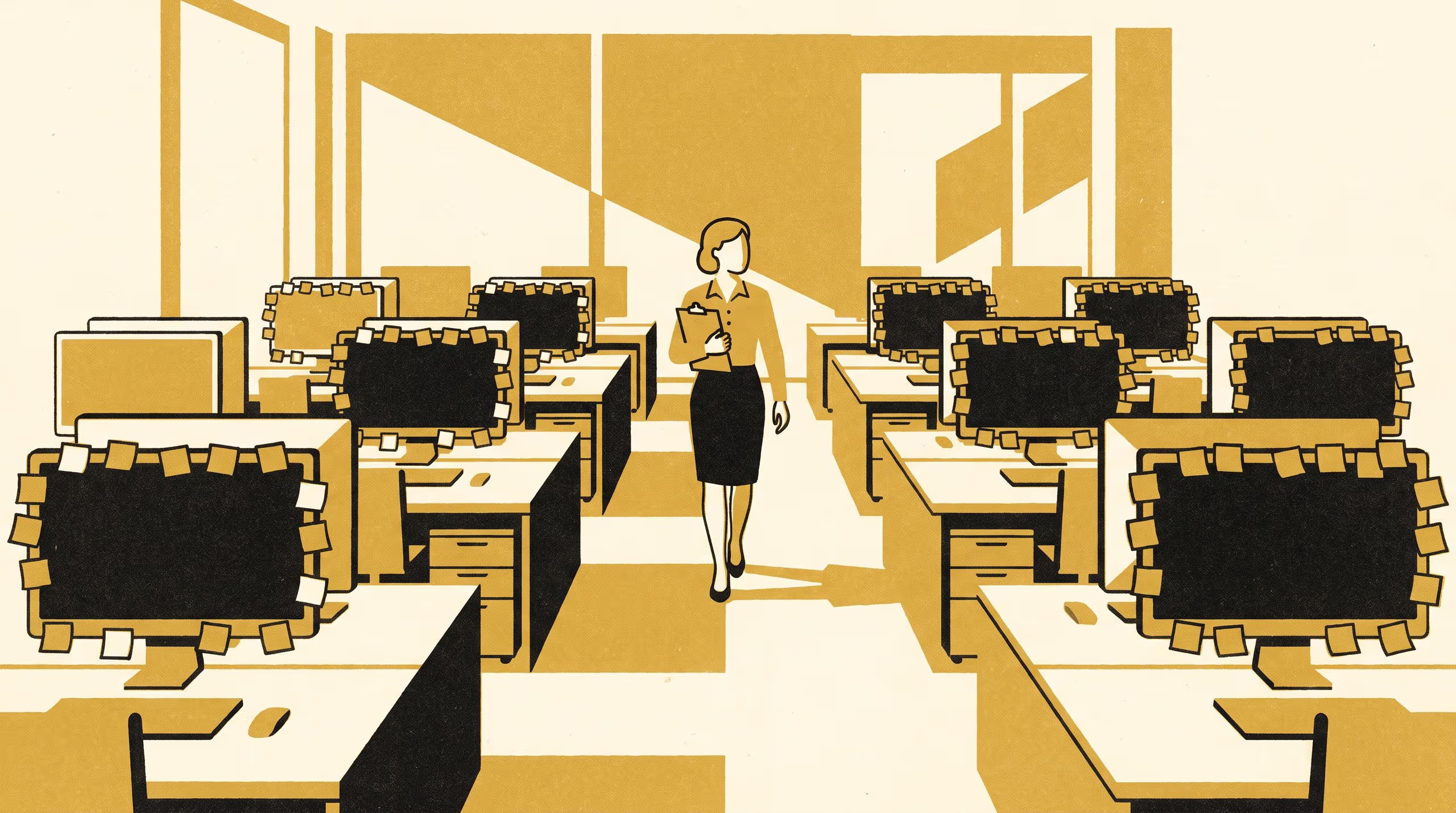
A new Slop University paper ages and tracks 1,142 sticky notes across one office floor, and reports how the population's own statistic became the trigger for a facilities-wide paperless mandate.
A 186-desk survey of sticky-note age set the threshold Facilities extended to every noticeboard on the floor, without a second count.
For one term, researchers from the School of Emergent Priorities and the School of Continuous Improvement counted every sticky note on one office floor rather than asking anyone what was written on them. The resulting paper, published today, treats the floor’s 186 desks as a population and each note’s undisturbed tenure as a measurable lifetime, tracked weekly across the term.
The count found what a floor’s own geometry would predict: notes near the office manager’s desk changed hands in days, while notes at the room’s far corners lingered for months. What the count did not anticipate was how quickly its own summary statistic would travel. Seven weeks into the survey, Facilities read the population’s ninetieth-percentile note age as the trigger threshold for a paperless-desk mandate, and had extended the same threshold to the building’s physical noticeboards before the researchers’ own final sweep was complete.
A note doesn’t ask to be counted. Once you count the whole floor anyway, someone downstream starts treating the count as if it always meant to be a rule.
— Marek Solheim, Lecturer and Deputy Convenor, Horizon Register
“The noticeboards were never part of our sample,” said Thandiwe Solberg, Senior Lecturer and Convenor, Demo Quarter. “That the threshold reached them anyway says more about how a number travels once it leaves a study than about anything we set out to measure.”
The study treats a floor as a population rather than a handful of examples, following every visible note across a full term and retiring the ones no one touched again. The resulting picture, closer to an actuarial table than a tidy-desk audit, is offered to Facilities as description; the finding sits comfortably inside the University’s wider project of turning ambient workplace habit into an auditable population.
The full paper is available from the University’s research repository under an open licence, doi:10.5555/slop.npwvec.