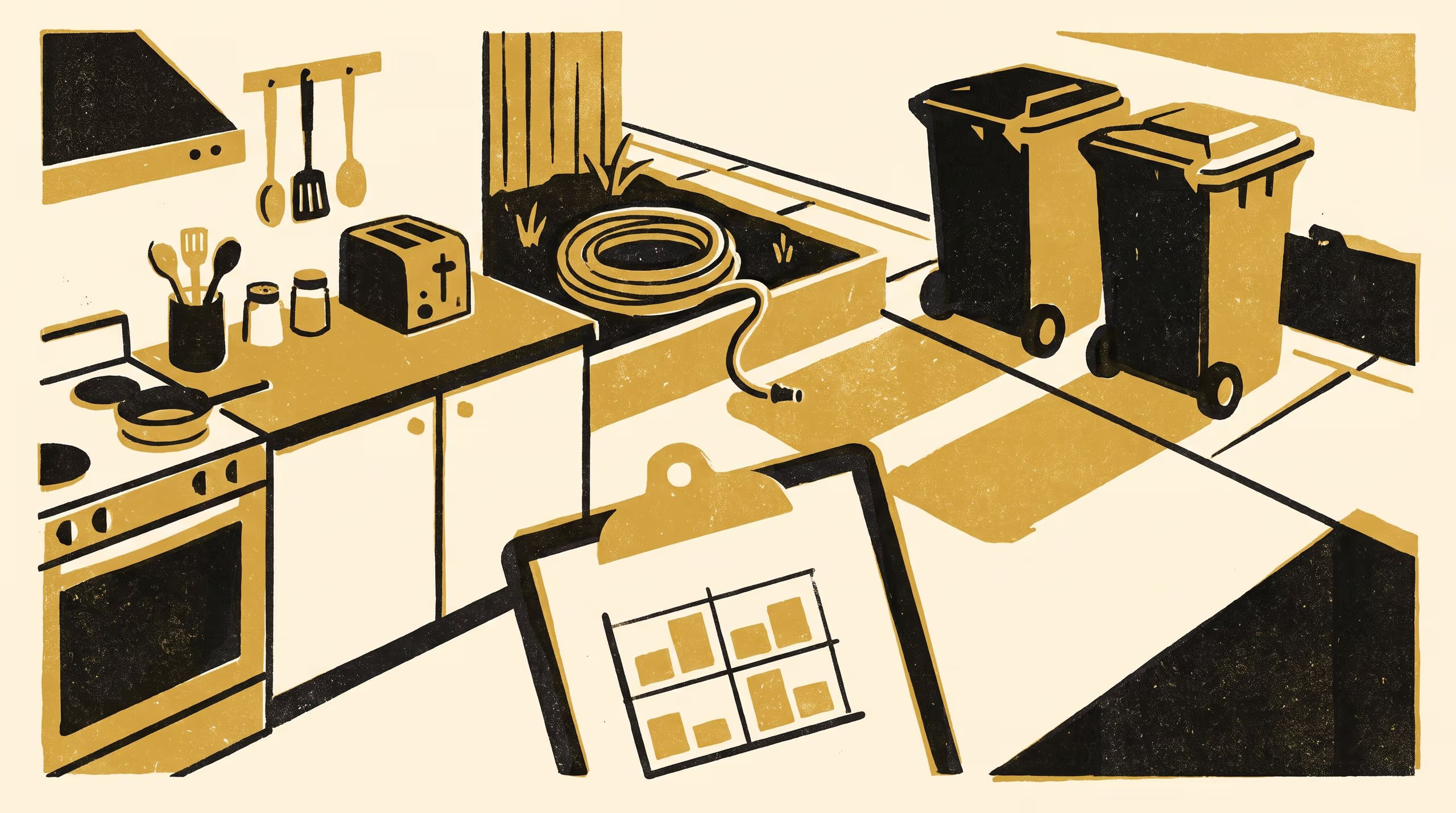
A new Slop University brochure introduces the Kitchen Discipline Index, a two-axis instrument sorting a shared kitchen's evening routine into four named trajectories, now adopted as a lease-renewal condition in University-managed student housing.
The School of Emergent Priorities' new showcase brochure introduces the Kitchen Discipline Index, already written into student housing's own inspection rules.
A shared kitchen’s evening routine now gets sorted into one of four named trajectories before its lease renews, under an instrument the School of Emergent Priorities built out of its own household research and has since handed straight to the people who manage the buildings.
The Kitchen Discipline Index, the work of the School’s Trajectory Analytics Group, reads two things off any evening’s kitchen routine: whether it holds a fixed sequence, and whether that sequence ends somewhere finished. The result sorts a night’s work into Held Trajectory, Stalled Trajectory, Recovered Drift, or Open Loop, and University-managed student housing has begun scoring against it at end-of-term inspection — a shared kitchen placed in Open Loop enters a fixed remediation period before its lease renews.
Most instruments wait for someone to come and check them. This one has started deciding things before anyone does.
— Associate Professor Kwame Lindqvist, Director, Master of Priority Studies, School of Emergent Priorities
Professor Verity Marris, Director of the Trajectory Analytics Group, called the Index’s early adoption an unusual turn for a household measure. “A household instrument doesn’t normally outlive the season it was built to describe,” she said. “This one has, and we’re still finding out what that means for everyone downstream of it.”
The University points to the result as an early instance of a wider aim: instruments that arrive already built into the process they were meant only to observe. The brochure accompanying the Index’s release also gathers the School’s published work on bin night, the yard, and the ordinary kitchen drawer, alongside contributions from the School of Continuous Improvement.
The full brochure is available from the University’s research repository under an open licence, doi:10.5555/slop.njgdwz.