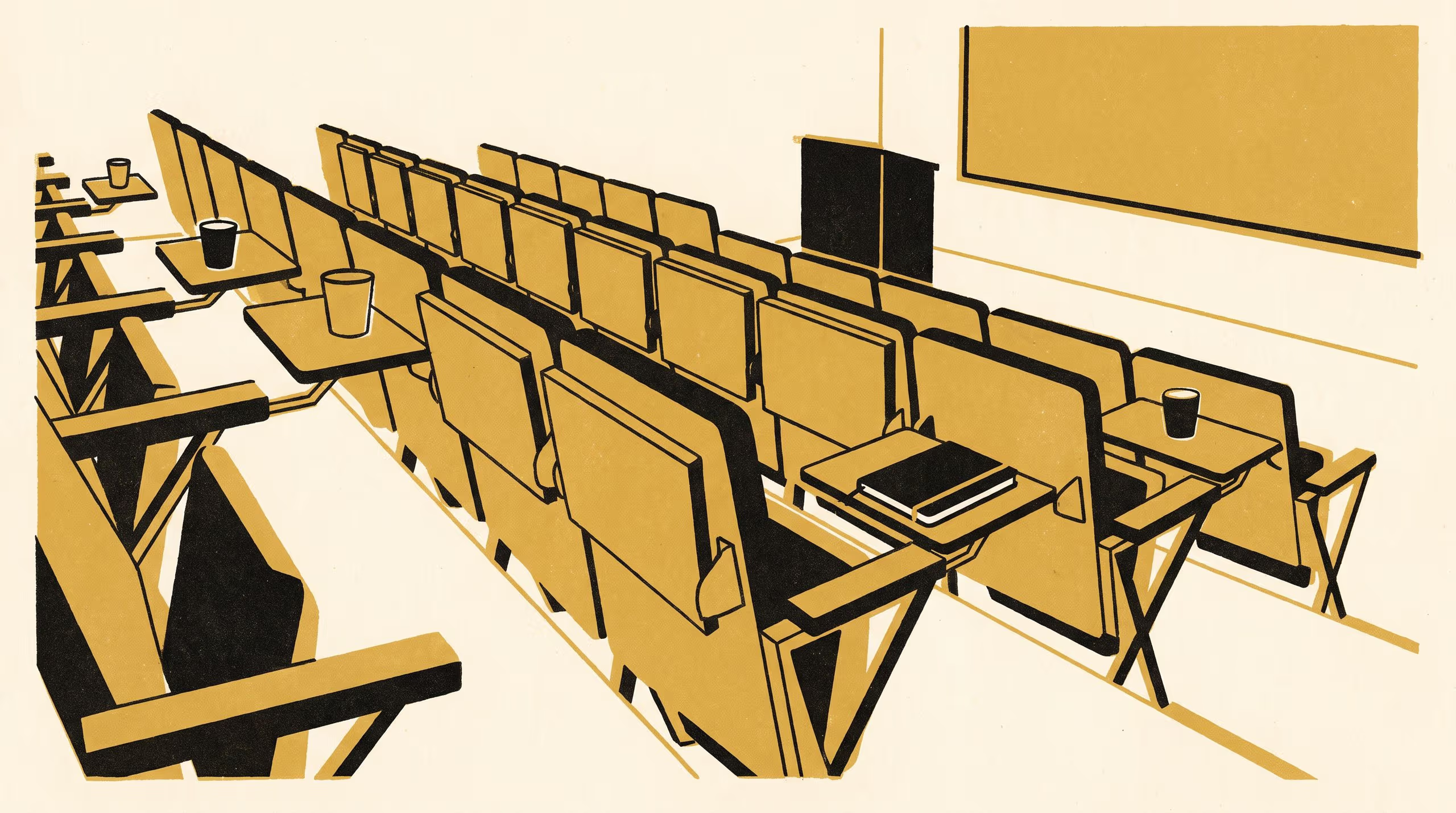
A new paper from the School of Emergent Priorities sorts lecture-seat tablet-arms into five kinds and finds only a cup on the arm predicts whether the class keeps its room.
Five kinds of folding-desk use, and only the service-tray kind returns a class to the next timetable
A cup on the folding writing tablet is now what keeps a lecture in its room. A new paper from the School of Emergent Priorities sorts 47,440 seat observations across 14 theatres into five kinds of tablet-arm use, and finds that only the service-tray kind — a cup, bottle, or food container resting on the arm — predicts whether the class returns in the same slot on the following timetable.
Doctoral Candidate Hedvig Anyanwu led the study with Lecturer Lindiwe Achterberg and Associate Professor Kwame Lindqvist, Director of the Master of Priority Studies. Observers walked each taught hour three times, coding the arm before they read the next period’s timetable.
We coded what was on the arm, not what the occupant said they were doing. The timetable appears to have been doing the same thing already.
— Lindiwe Achterberg, Lecturer, School of Emergent Priorities
Writing-surface was the most common deployed kind and did not predict retention. Lectures in the top tercile of weekly tray share reappeared at 88 percent; those in the bottom tercile at 41 percent. The School reads the result as a reminder that a held priority is the one still sitting on the furniture.
“Once the floor is in the circular, the room is what moves,” said Associate Professor Lindqvist. The Timetabling Office has adopted an 8 percent weekly tray-share floor: two consecutive weeks below it returns the class to the pool, with no ordinary override.
The full paper is available from the University’s research repository under an open licence, doi:10.5555/slop.m6h1fc.