A new Slop University paper finds that an office-restack finding linking crate-opening order to project priority does not reproduce on 58 households' house-move boxes, and reports the School's decision to require a priority audit on partnered removals regardless.
A doctoral candidate's office-restack finding does not reproduce on 58 households' house-move boxes, and the School audits priority stickers regardless.
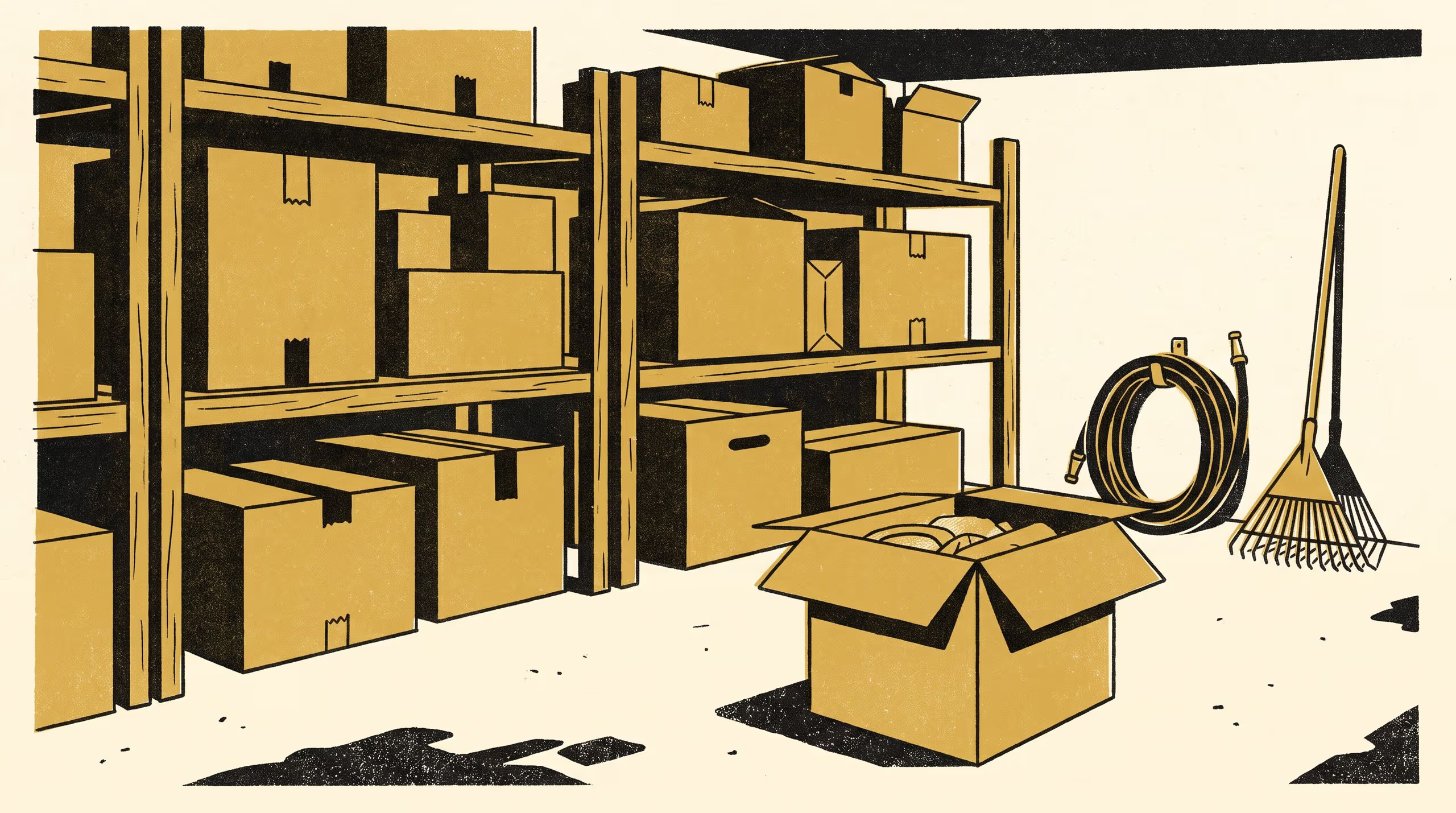
A box that goes into the garage after a house move often does not come out again until a council truck takes it away.
A new paper from the School of Emergent Priorities tests whether that ordinary fact undermines one of the School’s own instruments. Doctoral candidate Hedvig Anyanwu’s earlier study of four office restacks found that the order staff opened their allocated crates tracked which projects a team already treated as urgent. With Senior Lecturer Dr Ronja Oyelaran and Lecturer Dr Iben Chikere, she has now run the same design on 58 households moving house, tracking 612 boxes from packing tape to spare-room shelf.
An office crate has colleagues watching it. A garage shelf has nobody watching it at all, which turns out to matter more than what’s inside the box.
— Dr Ronja Oyelaran, Senior Lecturer, School of Emergent Priorities
Self-rated priority predicts almost nothing about how soon a household box gets opened; where it physically sits does. Boxes shelved at eye level are opened within a fortnight about half the time; boxes left on the garage floor mostly are not, regardless of what a household said mattered when it packed them. Boxes still sealed after nine months are mostly cleared unopened at a single kerbside hard-rubbish collection.
“A finding that only works in front of an audience is still a finding,” said Ms Anyanwu. “We just now know whose audience it needs.”
The School’s Trajectory Analytics Group treats the result as a boundary condition rather than a defeat, and is extending its packing-day protocol into a Household Priority Audit requirement for any move booked through the University’s staff-relocation scheme, waived for no household.
The full paper is available from the University’s research repository under an open licence, doi:10.5555/slop.90amlj.