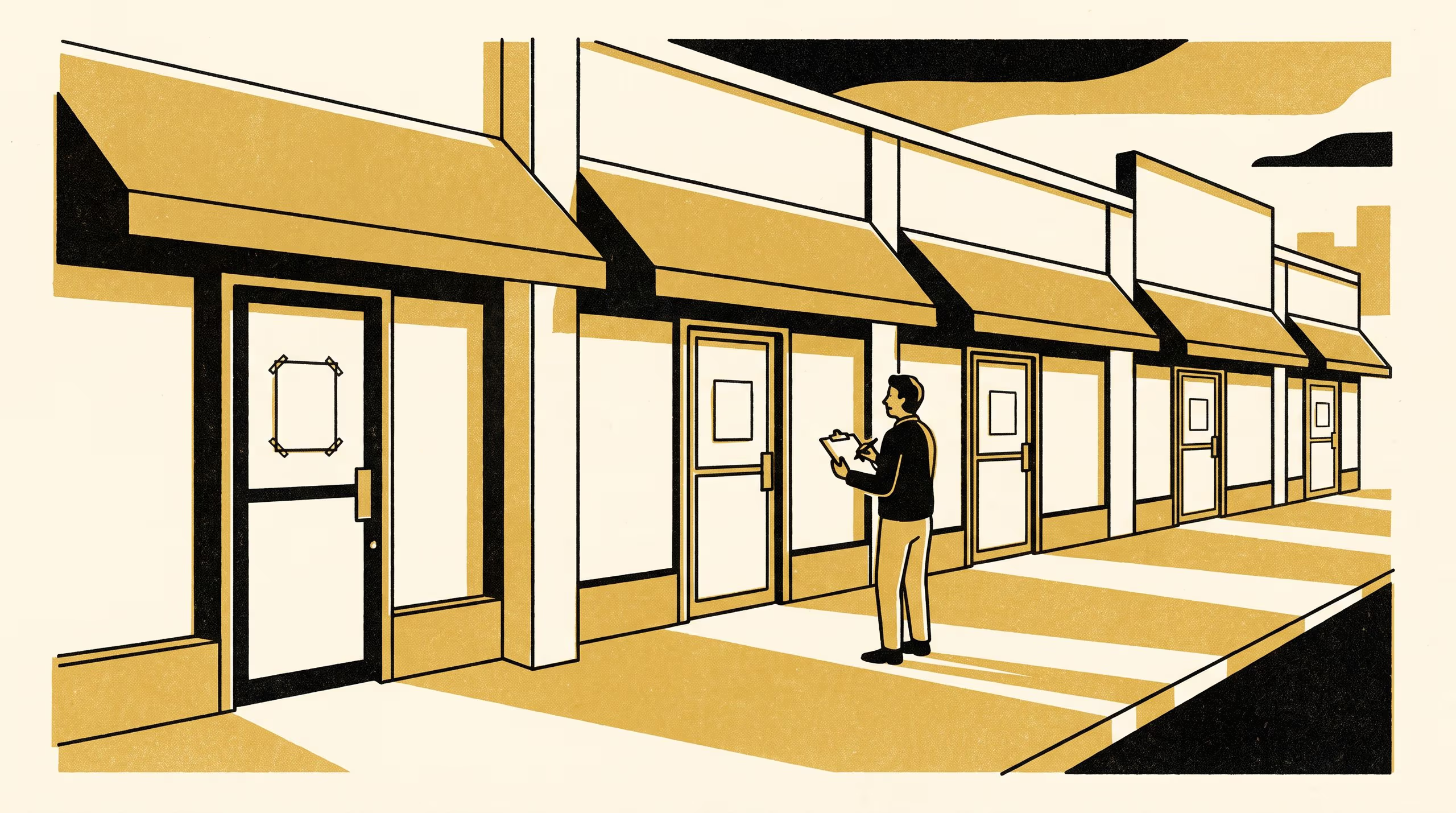
A School of Emergent Priorities paper sorts strip-mall closed-today signage into five kinds and traces its adoption into a shopping-centre operator's lease-renewal risk score.
A five-kind taxonomy of strip-mall closed-today signage proves reliable, and now feeds a shopping-centre operator's lease-renewal risk score.
Sixty-eight strip-mall sites and fourteen months of routine photography have given the School of Emergent Priorities a five-kind account of why a shopfront goes dark on any given day. A new paper from the School reports what happened once a shopping-centre operator’s Leasing and Retention Office started reading that account as evidence, rather than as the data-quality exercise it began as.
A sign taped to a door was never trying to be a data point. We think the taxonomy stayed honest about that; what the risk score does with it afterwards isn’t really the taxonomy’s decision to make.
— Ingrid Vasseur, Lecturer and Convenor, Futures in Committee, School of Emergent Priorities
The team worked from photographs collected on ordinary site rounds rather than a purpose-built survey, sorted 1,142 of them into five recurring kinds, and checked whether the sorting held up under a second, independently briefed set of eyes before saying anything about what use it was put to afterwards. Two of the five kinds — signs giving no reason at all, and signs whose stated return time had already passed — turned out to be the ones the operator’s risk score leaned on hardest, and the ones the traders behind them were least placed to contest.
Postdoctoral Fellow Anouk Mensah said the training ablation was the result she trusted most, “because a finding that survives removing the thing you assumed mattered is usually telling you something about the thing, not about the removal.” The work sits comfortably inside the School’s wider practice of taking small, overlooked institutional records seriously enough to ask what else they end up doing.
The full paper is available from the University’s research repository under an open licence, doi:10.5555/slop.i0l2it.