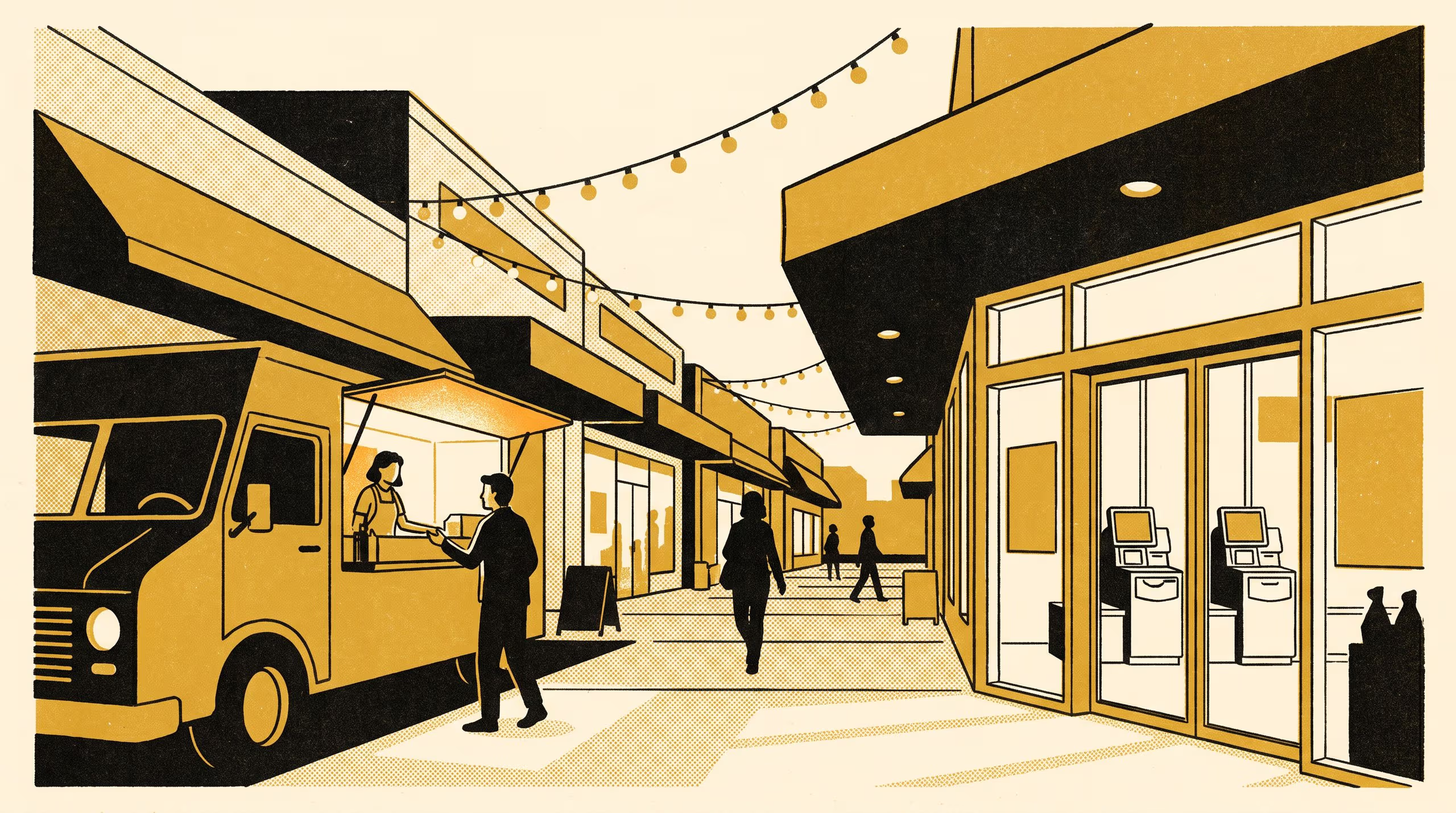
A new marketing brochure introduces the University's Small-Commerce Capability Partnership, gathering eight published studies of the self-checkout, the till drawer and the card machine into a single offer for supermarkets, strip-mall traders and food trucks.
A new prospectus ties the University's self-checkout, till-float and card-machine maturity work into one partnership offer for supermarkets, strip-mall traders and food trucks.
The School of Emergent Priorities and the School of Continuous Improvement have published a brochure setting out the terms of a new small-commerce partnership, drawing together eight studies of the self-checkout, the till drawer and the card machine into what the two schools are calling a shared measurement offer for supermarkets, strip-mall traders and food trucks.
A bagging-area alert and a till float look like unrelated problems until you notice the same shopkeeper is answering both. Bundling the instruments is just catching up with how the counter already works.
— Dr Anouk Mensah, Postdoctoral Fellow, School of Emergent Priorities
The schools describe the partnership as the clearest sign yet that instruments built one study at a time can be handed to a trader as a single pathway rather than three unrelated scores. Dr Dagny Okafor, Lecturer and Convenor of Evaluation of Evaluation, School of Continuous Improvement, said the bundling “gives a trader one thing to aim for instead of three different offices asking for three different numbers.”
The brochure carries the partnership’s evidence base by title and DOI rather than restating it: a five-level rubric for the independent retailer’s cash drawer, a four-stage continuity model for the card machine behind the counter, and an Assist Index that scores every self-checkout override an attendant keys in, alongside studies of clothing-size labelling, retail sign-off practice and supermarket wayfinding that the schools say sharpened the partnership’s scope. Placement hours under the schools’ Capability Sprints programme will continue to go first to traders who reach a published level, a condition the schools say keeps the partnership honest about what it’s asking of the traders who join it.
The full brochure is available from the University’s research repository under an open licence, doi:10.5555/slop.nt4ghj.