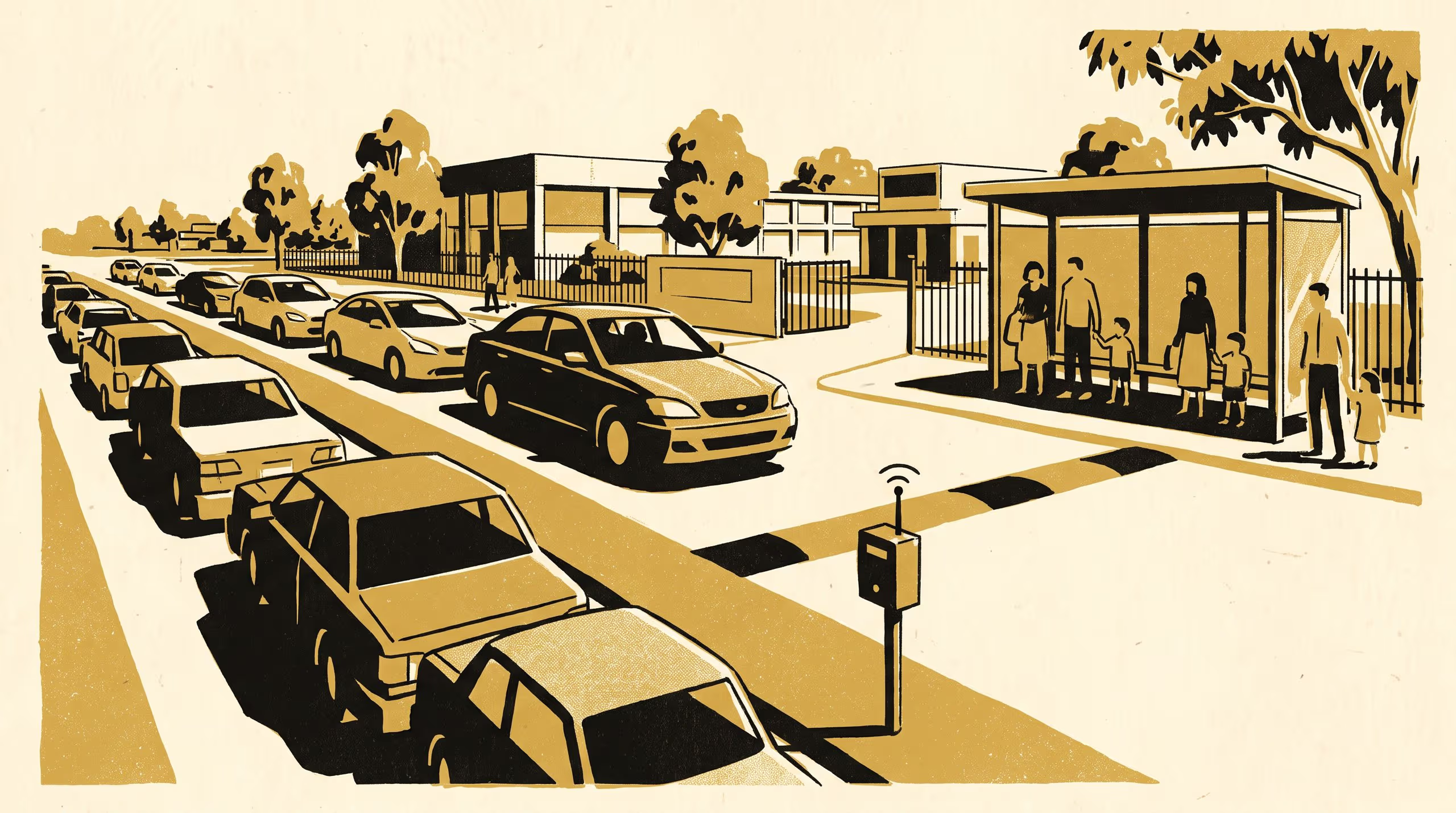
A School of Continuous Improvement research poster finds a sharp jump in school car-queue dwell time at a free-bus eligibility boundary, and follows the finding into a binding quarterly boundary redraw.
A regression-discontinuity study of the free-bus eligibility boundary is now the sole input to how often it gets redrawn.
A walking-distance line that already decided which households get a free school bus has given the School of Continuous Improvement’s Adaptive Metrics Lab a natural experiment it did not have to build. A new research poster compares kerbside car-queue time on either side of the boundary and finds a sharp jump exactly where free-bus eligibility ends.
The line was drawn to decide who needs a bus seat. We’re glad it turned out to decide something else worth knowing too.
— Dr Bram Ntuli, Lecturer and Convenor, Improvement Grand Rounds, School of Continuous Improvement
The team paired kerbside dwell-time sensors with routing-API distance measures across fourteen government primary schools over a full term, comparing car-queue behaviour for households just inside and just outside the eligibility line. The design treats the boundary itself as evidence, isolating what the line changes from everything else that varies between nearby streets. Associate Professor Casimir Beng, Lead of the Adaptive Metrics Lab, said the finding gives the Lab “a boundary that updates itself against the thing it was always meant to prevent.”
The School counts a boundary earning a second job as a measurement instrument, without anyone having to design one, among exactly the kind of finding its remit exists to catch. From Term 4, the resulting kerbside dwell-time index becomes the sole audited input to the boundary’s quarterly redraw across participating schools, applied street by street with no manual override.
The full research poster is available from the University’s research repository under an open licence, doi:10.5555/slop.i1ex0b.