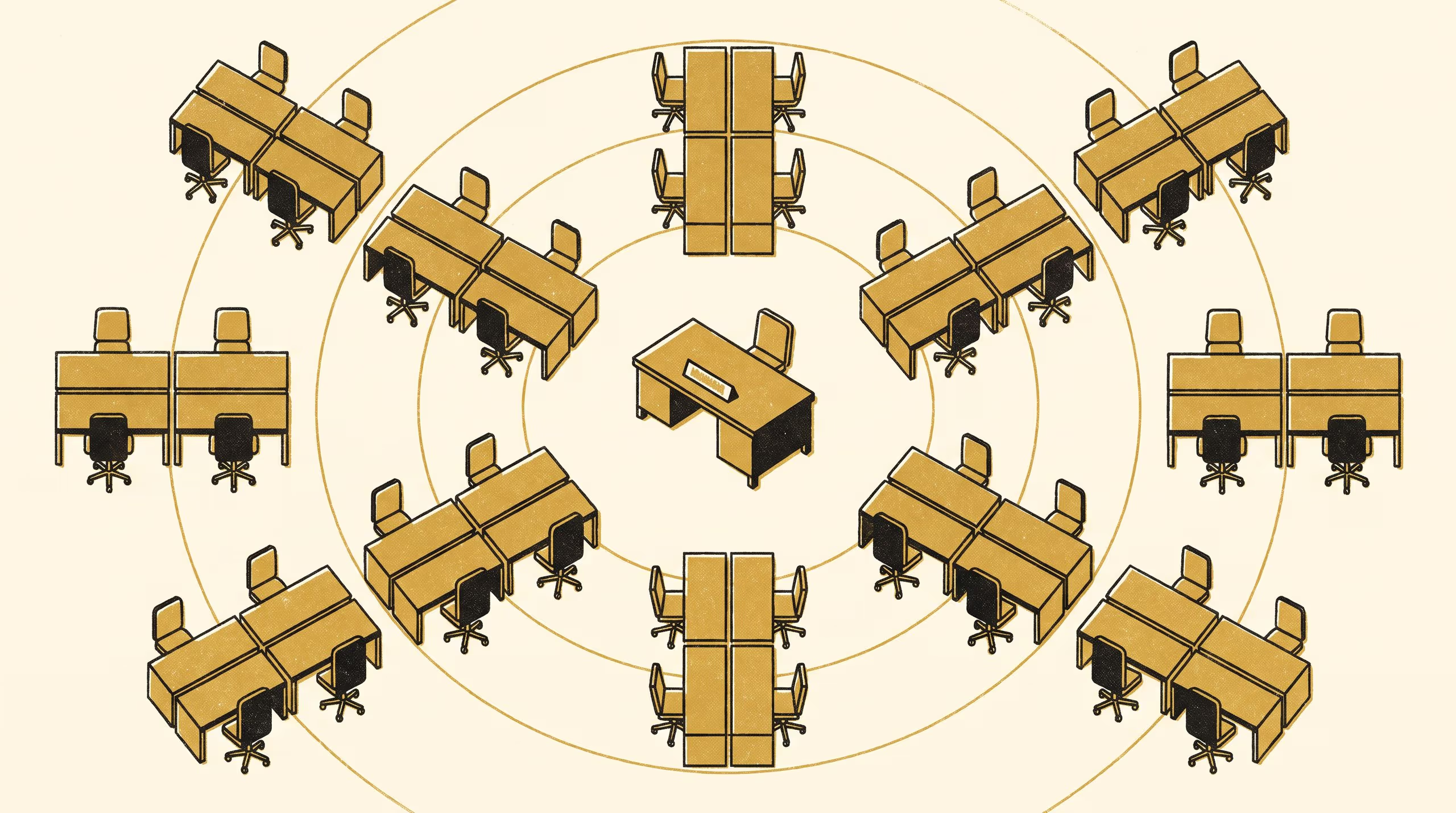
A School of Continuous Improvement research poster audits stretch-assignment nominations across four open-plan floors and reports the University keeping its proximity-based seating chart as the nomination default despite finding no link to distance from the team lead.
A four-floor audit of stretch-assignment nominations found no link to seating distance, and the proximity-based seating chart is staying anyway.
Where staff sit has always seemed to matter, more than anyone had actually checked. A research poster released today by the School of Continuous Improvement’s Adaptive Metrics Lab puts a number on the assumption: across four open-plan floors of a franchise support office, a desk’s line-of-sight distance from the team lead carried no measurable relationship to who was nominated for a stretch assignment, once tenure and role band were held constant.
Dr Bram Ntuli, working with Dr Renke Sabel and Dr Torun Ezeigwe, cross-referenced badge-tap desk logs against the HR nomination record over a fourteen-week window, tracking 236 staff through a mid-study reseating that moved many of them nearer to, or farther from, the team lead’s desk without changing who went on to be nominated.
A null result is still a result. We’d rather publish the flat line than quietly retire the study.
— Dr Bram Ntuli, Lecturer and Convenor, Improvement Grand Rounds, School of Continuous Improvement
On the strength of the finding, the School’s seating chart keeps its role as the nomination office’s proximity-tier reference for the coming review cycle: desks continue to be assigned by tenure-weighted closeness to the team lead, and that tier still appears on the nomination form’s pre-filled eligibility field.
Dr Renke Sabel, Convenor of the Indicator Commons, said the chart’s survival was “exactly what an indicator does once a school has built a process around it,” rather than any failure of this study to persuade anyone.
The full poster is available from the University’s research repository under an open licence, doi:10.5555/slop.12eill.