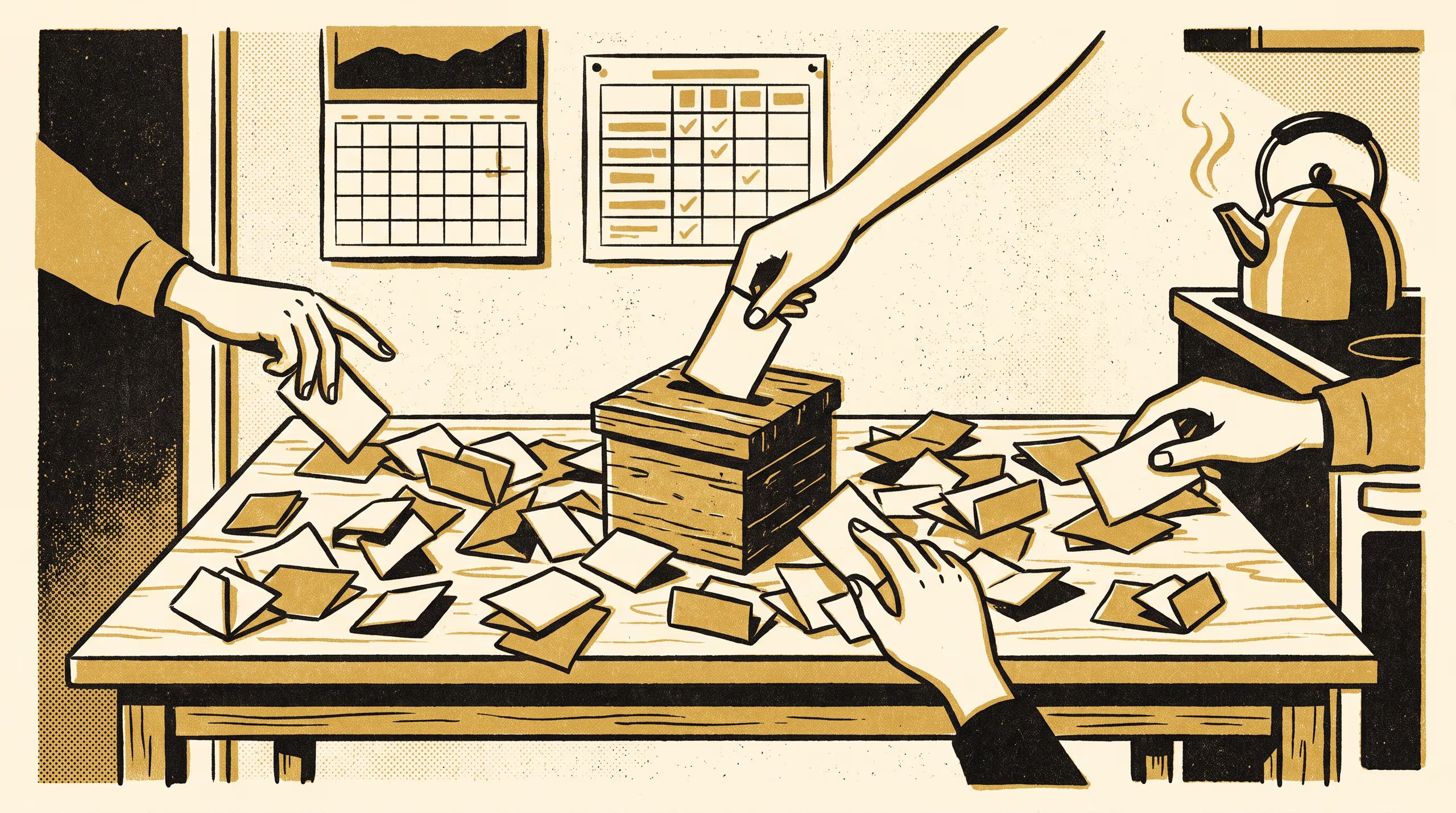
A Slop University trial replicates a retail performance-review finding inside 164 households' own fairness ballots, finds no comparable effect on formal grievances, and the Evaluation of Evaluation program adopts the redesign across every family-facing program regardless.
A household replication found the retail appeals effect doesn't reproduce, and the ballot redesign rolls out regardless.
Two grievance-flag ticks in ten weeks. That is what changed after 164 households running a shared budgeting app’s weekly fairness ballot lost the option to mark a week merely “fine”. The retail chain whose performance-review scale prompted the redesign saw formal appeals rise by more than six percentage points on the same change; the households moved four-tenths of one, a gap the trial’s own confidence interval can’t rule out as noise.
Dr Mirela Hanke and Dr Dagny Okafor, of the School of Continuous Improvement, ran the household trial as a direct replication of the University’s Evaluation of Evaluation program, tracking flagged grievances against three placebo dates either side of the app update that dropped the ballot’s middle option.
A design that changes behaviour in a boardroom and does nothing at a kitchen table tells us something about which one we actually understand.
— Dr Mirela Hanke, Postdoctoral Fellow and Deputy Convenor, Living Dashboard, School of Continuous Improvement
The School reads the null result as confirmation that households under-report rather than evidence the effect never travelled, and the Evaluation of Evaluation program is moving the four-point, no-midpoint ballot into every family-facing initiative it runs, with no exemption. Dr Okafor said the household finding “belongs in the same ledger as the boardroom one, whatever it does or doesn’t show.”
The full poster is available from the University’s research repository under an open licence, doi:10.5555/slop.9cb1mk.