A Slop University research poster describes RAIL, a fitting-room RFID system whose shrinkage-risk score a strip mall's tenancy body now uses as the sole basis for renewing a boutique's floor space.
A new poster finds a strip mall's RAIL score already rewards how fast a tenancy re-tags stock, not how much of it actually goes missing.
The rail was never supposed to grade the tenancy standing next to it. It just started doing that on its own.
— Dr Ronja Oyelaran, Senior Lecturer, School of Emergent Priorities
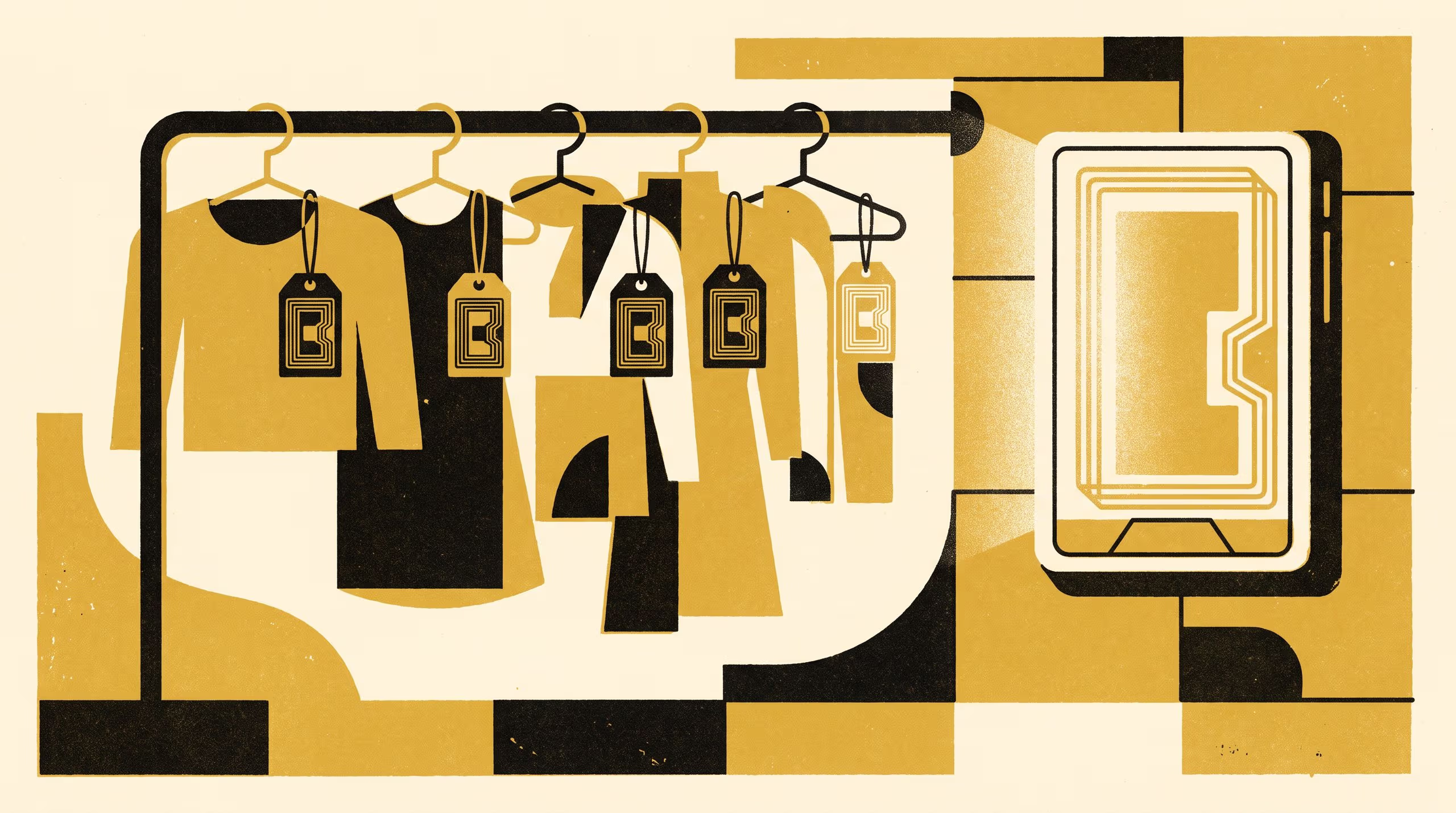
A new Slop University research poster introduces RAIL, a system that reads garment RFID tags at a fitting-room return rail to work out which item should go back to the floor first. Built and piloted across six boutiques sharing one strip mall, the system has quietly become something else along the way: the instrument the mall’s own tenancy body now checks before deciding who keeps their fitting room.
Dr Oyelaran, working with Dr Anneke Tolan and Dr Iben Chikere, fitted each boutique’s return rail with an RFID reader and trained a model to infer re-shelving urgency from which garments customers try on together. The nightly score the system produces tracks manual stocktake variance closely enough, the tenancy body decided, to fold into its six-monthly lease review as the sole test of a tenancy’s fitness to keep its fitting room, with no case-by-case exception once a boutique crosses the published line.
“A score built to help an attendant get through Saturday afternoon and a score a tenancy’s floor space now depends on turned out to be the same number,” said Dr Tolan. “Nobody planned for that to happen at the same time.”
The School of Emergent Priorities calls the overlap an early instance of a pattern it expects to keep finding: an instrument built for one small, local job outgrowing the job once somebody notices what it’s already measuring.
The full poster is available from the University’s research repository under an open licence, doi:10.5555/slop.viuoft.