A School of Continuous Improvement paper times how long newcomers wait to be greeted at 187 community clubs and reports the University's Community Partnerships Office tying a discounted insurance pool to the resulting percentile bands.
The Welcome Latency Register timed 1,842 arrivals across sports clubs, sheds, choirs, allotment societies and raffle nights, and the University's Community Partnerships Office has adopted its percentile bands as the renewal test.
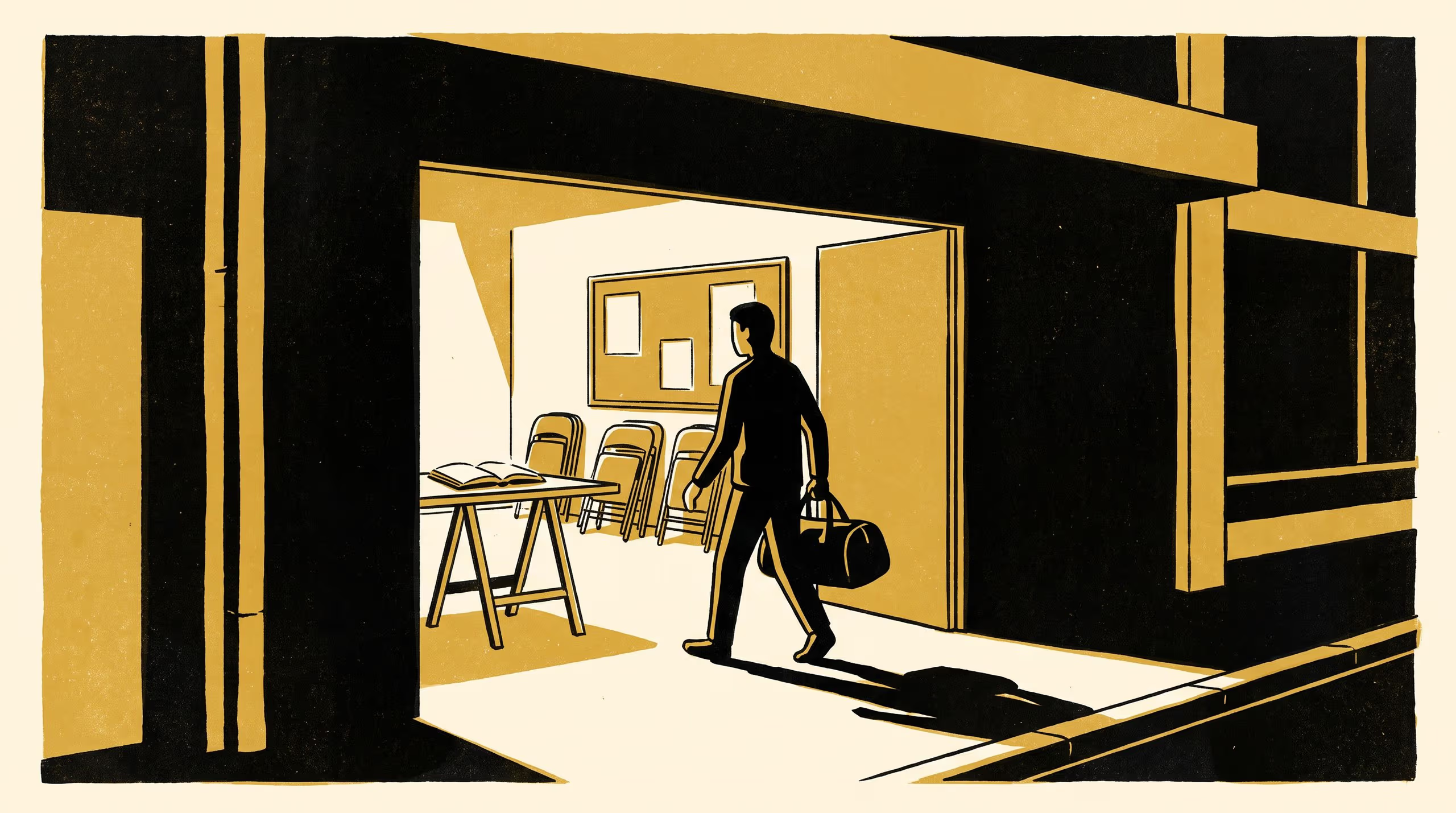
A door does a lot of quiet work for an organisation that depends on people showing up more than once. A School of Continuous Improvement paper puts a number on exactly how much: the interval between a newcomer crossing a clubroom’s threshold and the moment anyone notices them there.
Associate Professor Casimir Beng, Dr Joost Nwosu and Dr Thandiwe Solberg timed 1,842 arrivals across 187 community organisations affiliated with the University, spanning sports clubs, sheds, choirs, allotment societies and raffle nights, and found the wait varies considerably by kind of club, from a raffle table’s near-immediate acknowledgement to a choir rehearsal’s much longer pause at the door.
The resulting Welcome Latency Register sorts every surveyed club into a percentile band, and the University’s Community Partnerships Office has adopted that banding as the test for renewing a discounted group-liability insurance concession: clubs outside the fastest three-fifths lose the concession at their next review, with no manual exception. For a School built on the conviction that almost anything can be measured usefully, the team counts the finding among its more literal applications yet.
A door is the cheapest instrument we have ever fielded, and it turns out to measure something real.
— Associate Professor Casimir Beng, Lead of the Adaptive Metrics Lab
Dr Thandiwe Solberg, Senior Lecturer and Convenor of Demo Quarter, said the Register “owes its existence to the volunteers who let a stranger with a clipboard stand near their door for three weeks without asking why,” and that the School was still deciding how much of that patience it could reasonably keep asking for.
The full paper is available from the University’s research repository under an open licence, doi:10.5555/slop.zgcddg.