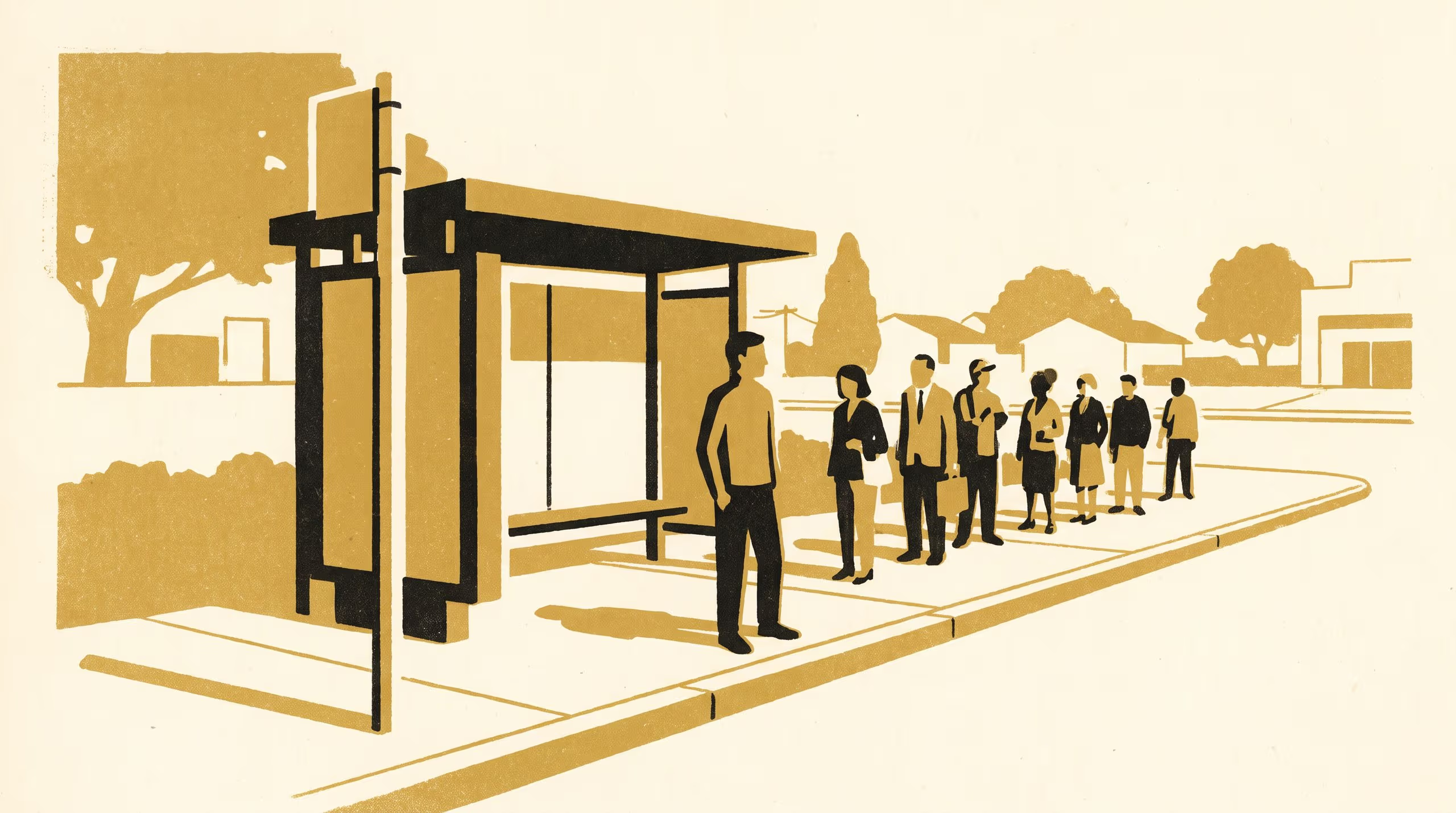
A School of Emergent Priorities research poster times 214 boarding events at 18 suburban bus stops and reports the University piloting a marked, audited boarding-order register at the stops where riders queue earliest.
A survey of 214 boarding events at 18 suburban stops found riders on quieter routes staking out the door-mark up to six minutes early, and the University now wants that claim written down.
Nobody assigns a place in line at a bus stop, and somehow everyone still has one. A new research poster from the School of Emergent Priorities has measured exactly how early that place gets claimed — and the University now wants the claim written down.
Dr Petra Umbile, Postdoctoral Fellow in the School of Emergent Priorities, working with Dr Fenna Okoro and Associate Professor Kwame Lindqvist, tracked 214 boarding events across eighteen suburban stops over eleven weeks, timing how many minutes before a scheduled departure each rider took up the exact spot where the doors would open. On the University’s busiest routes the claim arrives with the bus, more or less; on its quietest, a reliable minority stake out the mark six minutes early or more, and the split held for the length of the study.
An unscheduled queue is still a queue. We just measured how far in advance people start forming one.
— Dr Petra Umbile, Postdoctoral Fellow, School of Emergent Priorities
The Office of Research Outputs has taken the finding to the nine quietest stops directly: each will carry a numbered floor mark, checked against the driver’s own manifest, with no route back to the front of the line for a rider who arrives after their number has passed.
Associate Professor Kwame Lindqvist, Director of the Master of Priority Studies, said the register turns “a hedge nobody had to justify into an entitlement somebody now has to defend,” a shift he expects commuters to notice well before the University does.
The full poster is available from the University’s research repository under an open licence, doi:10.5555/slop.ieoq88.