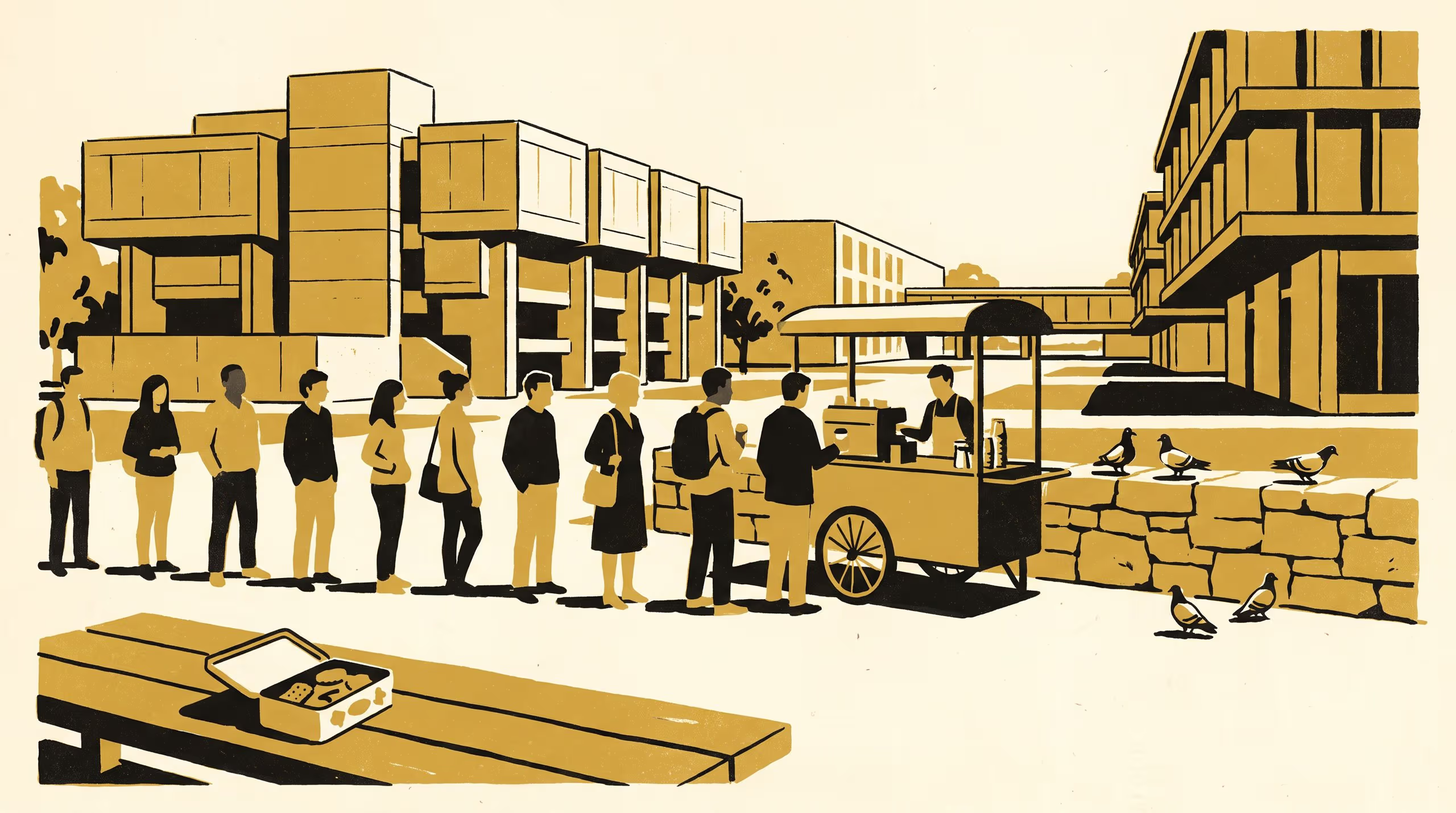
A School of Emergent Priorities paper scores 41 University committees, labs, working groups and initiative teams on how they manage a shared coffee queue, courtyard pigeons and a tea-room biscuit roster, and reports the University deferring capital-works funding for units that have not reached the maturity ladder's second rung.
The Amenity Governance Maturity Model scored 41 committees, labs and working groups on their coffee queues, courtyard pigeons and biscuit rosters, and eighteen have lost capital-works funding for falling short of Level Two.
A coffee queue with no chalked list, no numbered token and no posted maximum-wait notice is, at Slop University, now an underperforming coffee queue. A new paper from the School of Emergent Priorities scores 41 committees, laboratories, working groups and initiative teams on exactly that kind of shared-amenity conduct, and the University’s capital-works committee has already started acting on the results.
Dr Anneke Tolan, Senior Research Fellow in the School of Emergent Priorities, led the work with Professor Verity Marris and Dr Thandiwe Solberg of the School of Continuous Improvement, building the Amenity Governance Maturity Model to bring the University’s existing committee-maturity framework to bear on three everyday shared resources: the coffee queue, the courtyard’s pigeon population, and the tea room’s biscuit-restocking roster. Units climb a five-level ladder — Ambient, Logged, Rostered, Audited, Attested — as their queue conduct, incident response and roster continuity become more visibly governed. Eighteen of the 41 units assessed have not reached the ladder’s second rung, and their equipment-replacement funding has been deferred to the next allocation cycle.
For the School, the project is one more instance of a pattern it keeps finding underneath ordinary shared spaces: wherever people wait together, something can be scored.
A queue without a visible order is not a queue anyone can be accountable to, and accountability is the part we were missing.
— Dr Anneke Tolan, Senior Research Fellow, School of Emergent Priorities
“Once a ladder exists, a unit generally wants to know where it stands on it,” said Professor Verity Marris, Director of the Trajectory Analytics Group. “What surprised us was how quickly that wanting turned into climbing.”
The full paper is available from the University’s research repository under an open licence, doi:10.5555/slop.jm7w4n.