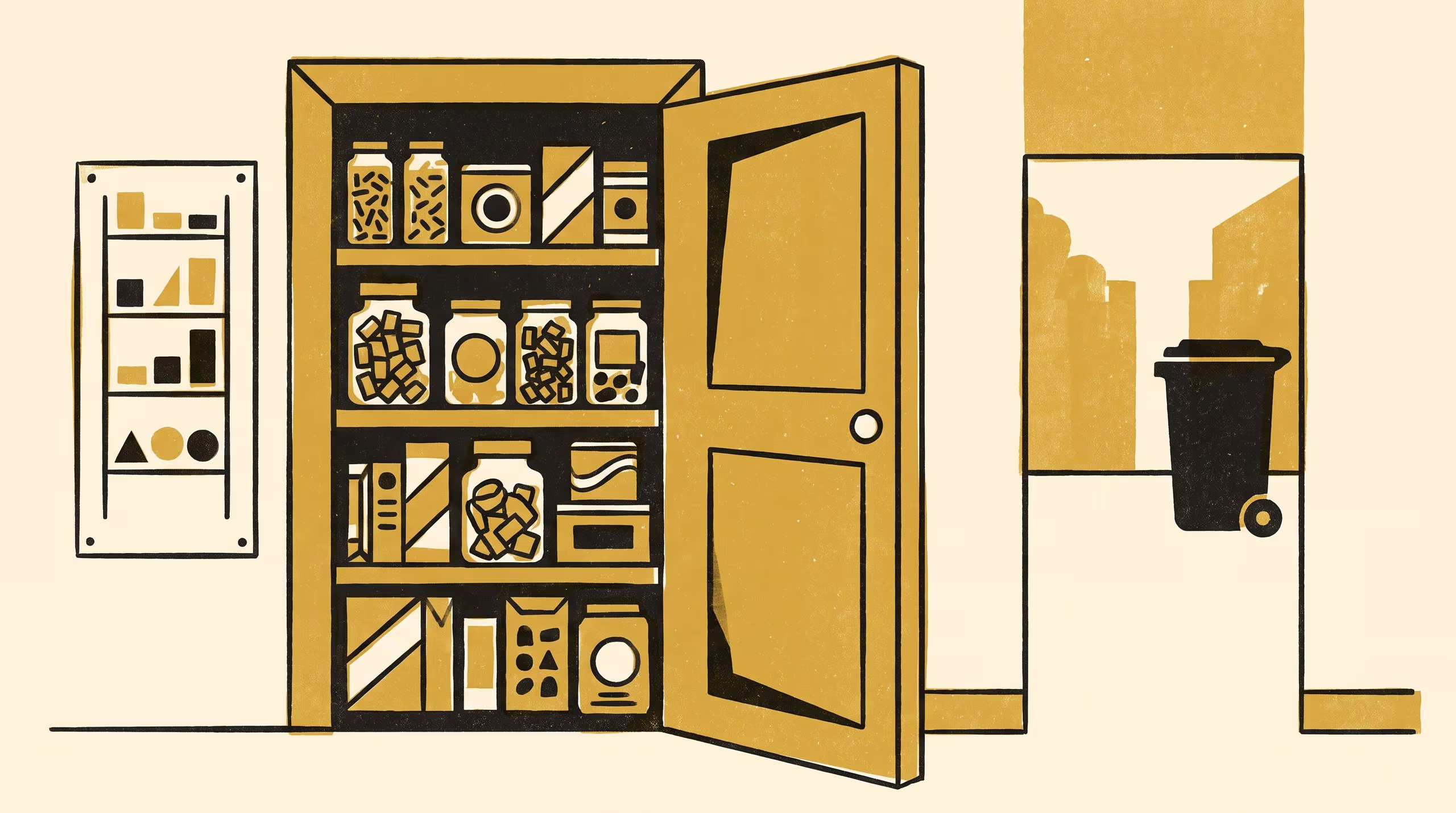
A School of Continuous Improvement impact report reviews five years of measurement instruments built for domestic life, from a pantry FIFO-labelling maturity model that now gates entry to a street's shared preserve-swap night, to a fridge early-warning ensemble and a verge-tidiness league table.
The School of Continuous Improvement's new impact report reaches from the pantry shelf to the kerb, and the FIFO scorecard is the one with a waiting list.
The School of Continuous Improvement has used its new five-year impact report to make explicit a premise it has mostly left implied until now: a household is a measurement system in its own right, not a smaller version of the workplace the School more often studies. The report gathers four case studies built between 2021 and 2026, and the one drawing the most attention outside the University is also the smallest: a pantry.
The Pantry Stock-Rotation Assurance Office’s five-level FIFO-labelling maturity model, led by Dr Ingeborg Nwachukwu, Lecturer and Convenor of Capability Sprints, scores how consistently a household rotates stock to the front of the shelf. Since 2024, a household’s own street has used the score to decide who gets through the door on preserve-swap night — participation now requires clearing Level Three, and the Office has stopped spot-checking any pantry that does.
A pantry that keeps rotating its own stock without anyone watching is the boring outcome we’re actually after. Level Three tells us less about compliance than it does about habit.
— Dr Ingeborg Nwachukwu, Lecturer and Convenor, Capability Sprints, School of Continuous Improvement
The same report describes a fridge early-warning ensemble built with a regional university network, a verge-tidiness ranking that Dr Bram Ntuli’s team now ties to a street’s turn with the shared mower, and a bin-night improvement cycle convened by Dr Thandiwe Solberg to act on an earlier School finding rather than simply cite it again. Taken together, the School reads the report as evidence that its instruments travel further into ordinary life than its own strategy documents tend to admit.
The full report is available from the University’s research repository under an open licence, doi:10.5555/slop.407g6l.